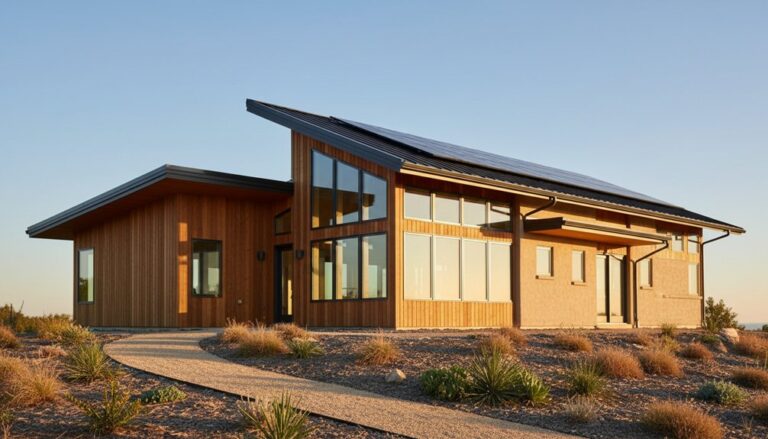
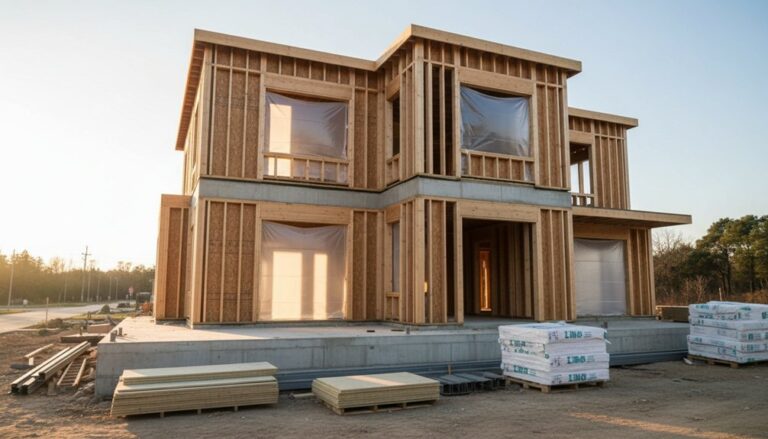
You’ll get premium exterior finishes by budgeting for the whole envelope: substrate prep, WRB/membranes, thermally broken fixings, trims, sealants, flashings, and access. Match materials to building massing and set joint lines that align with openings and modules. Choose cladding, brick, or render based on drained-cavity detailing, movement tolerance, and maintenance cycles, not warranties. Specify roofing by pitch and ventilation, and install low-U, airtight, PAS 24–grade windows and doors. Next, you’ll see how each assembly performs in detail.
Key Takeaways
- Budget beyond the finish: include substrate prep, membranes/WRB, trims, fixings, flashings, and access scaffolding to avoid cost overruns.
- Choose cladding, brick, or render by moisture control, thermal-bridge risk, movement tolerance, and maintenance—not just appearance or warranty.
- Detail water management: drained cavities, weeps, drip edges, compatible sealants, and kickout flashings to prevent staining, decay, and efflorescence.
- Select roofing for pitch and exposure: correct underlays, ventilation, stainless fixings, and movement detailing for tiles, slate, or standing-seam metal.
- Specify high-performance windows/doors: low U-values, low-e glazing by orientation, airtight taped interfaces, and PAS 24–rated security hardware.
How to Choose Premium Exterior Finishes: Budget, Style, Lifespan

If you treat exterior finishes as a performance system—not just a color and texture choice—you’ll make better decisions on cost, appearance, and long-term durability. Start by fixing a realistic budget that includes substrate prep, membranes, trims, fixings, and access; these “hidden” items often drive installed cost.
Match style to massing and openings, then check module sizes and joint lines so elevations don’t look forced. For lifespan, compare UV stability, corrosion resistance, impact rating, and expected recoating/cleaning intervals, not just warranty length.
Detail water management: drained cavities, flashings, drip edges, and compatible sealants reduce decay risk. Tie your choice to energy efficiency by confirming continuous insulation strategy and thermal-bridge control at brackets.
Coordinate landscaping options to protect splash zones and allow maintenance clearances.
Premium Exterior Finishes: Cladding vs Brick vs Render

Although cladding, brick, and render can all deliver a “premium” look, they behave very differently as envelope assemblies, so you’ll choose best by comparing moisture management, thermal-bridge risk, movement tolerance, and maintenance demands—not just the finish.
With rainscreen cladding, you specify a ventilated cavity, robust WRB, and thermally broken fixings to limit condensation and cold-spot staining; you’ll also detail flashings and insect mesh.
Brick veneer gives durable impact resistance and UV stability, but you must design cavity drainage, weeps, and shelf angles to avoid bridging and salt efflorescence.
Rendered systems can be lightweight and crisp, yet they’re crack-prone unless you control substrate movement, mesh reinforcement, and joint layout.
Coordinate exterior color schemes with material porosity and sun exposure, and plan landscaping integration to protect splash zones and plinths.
Premium Exterior Finishes for Roofing Longevity (Tile, Slate, Metal)
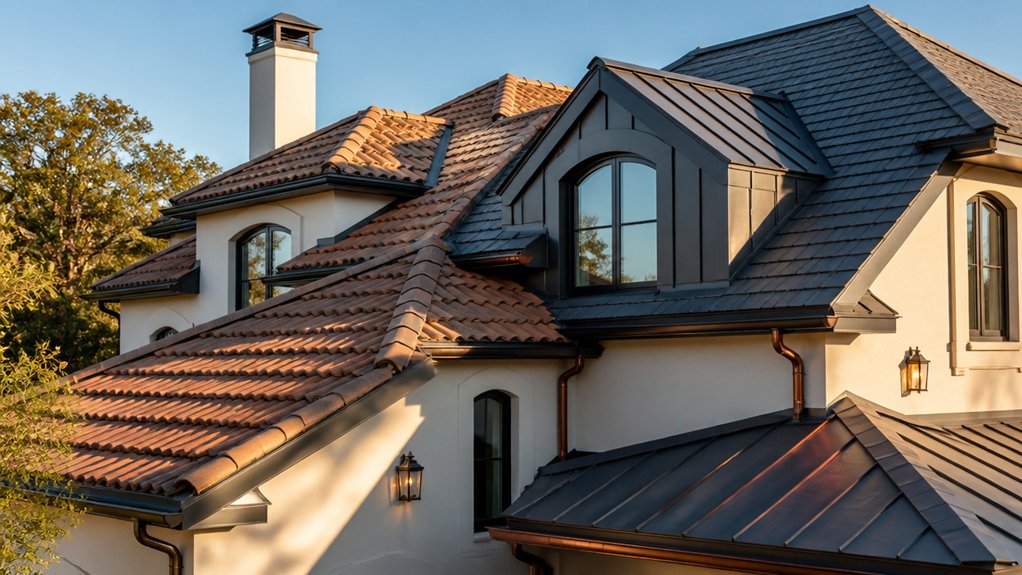
Because your roof finish sets the pace for weathering, UV exposure, and thermal cycling, you’ll get the longest service life by matching tile, slate, or metal to the pitch, fixing method, and underlay/ventilation strategy rather than picking on appearance alone.
Concrete/clay tiles suit moderate pitches; specify frost-resistant grades, stainless fixings, and correctly lapped membranes to prevent capillary ingress.
Natural slate needs lower nail corrosion risk, tighter gauge control, and robust battens; use headlap sized for your exposure zone.
Standing-seam metal excels on low pitches when you detail clips, thermal movement, and acoustic backing; pair it with continuous ventilation to limit condensation.
Dark finishes can raise deck temperatures, so balance Landscaping aesthetics with reflective coatings and insulation continuity for Energy efficiency.
Detail eaves, valleys, and ridges meticulously.
Premium Exterior Finishes for Windows and Doors (U-Values, Security)
When you spec premium windows and doors, treat the frame material, glazing build-up, and installation detailing as a single thermal-and-security system rather than separate upgrades. Target low U-values with multi-chamber uPVC, thermally broken aluminum, or engineered timber frames paired with warm-edge spacers and argon-filled double or triple glazing.
Specify low-e coatings tuned to orientation to improve energy efficiency without overheating risk. Control air leakage with continuous gaskets, compression seals, and taped frame-to-wall interfaces; a great unit performs poorly if you leave gaps.
For security, choose laminated inner panes, multi-point locking, hinge bolts, and PAS 24–rated hardware, then anchor frames to structure with corrosion-resistant fixings.
Prioritize material durability with UV-stable finishes, anodizing or powder coat, and stainless thresholds. Verify installation tolerances, packers, and drainage paths.
Trims, Lighting, and Gutters: Weatherproof Finishing Touches
High-performance windows and doors only hold their line if the surrounding trims, lighting penetrations, and gutter interfaces manage water, air, and movement just as well. Specify rot-resistant trim (PVC, fiber cement, primed cedar) with back-priming, capillary breaks, and a sealed end-grain strategy so exterior paint doesn’t fail at joints.
You’ll want shingle-style flashing: head flashing with end dams, tape-compatible WRB laps, and gasketed fasteners.
For exterior lights, use sealed backplates, butyl gaskets, and service loops so you don’t tear the air barrier during swaps.
Set gutter hangers into solid blocking, slope 1/16 in./ft, and add kickout flashing at roof-to-wall terminations.
Finish with downspout discharge tied to landscape integration: splash blocks, drains, or rain gardens.
Frequently Asked Questions
Do Premium Exterior Finishes Increase Property Value and Resale Appeal?
Yes—premium exterior finishes typically increase property value and boost resale appeal because you deliver higher perceived quality, durability, and lower maintenance risk.
You’ll attract more buyers by aligning with Exterior color trends and specifying Sustainable material options such as fiber-cement siding, thermally modified wood, or recycled-content metal cladding.
You also improve curb impact through tighter panel reveals, UV-stable coatings, and corrosion-resistant fasteners, which appraisers and inspectors often flag as value-positive.
What Warranties Are Typical for Premium Exterior Materials and Installation?
Of course, you’ll get “lifetime” coverage—until you read the exclusions. Typically, you’ll see 20–50 year limited material warranties on fiber cement, metal, or masonry.
10–30 years on coatings/finishes; and 1–5 years workmanship warranties from installers.
You should confirm Exterior durability clauses: UV fade, corrosion, impact, freeze-thaw.
Demand written Material sourcing documentation and compatibility specs, plus transferability, labor coverage, and required maintenance records.
Are There Planning Permissions or Building Regulations Affecting Exterior Finish Choices?
Yes—you’ll often need planning permission, and you must comply with building regulations, depending on cladding type, location, and visual impact.
In conservation zones, Historic preservation rules can restrict color, texture, and profiles, and you may need listed-building consent.
Building regs cover fire performance (reaction-to-fire ratings), weather resistance, and thermal bridging.
You’ll also address Environmental impact via sustainability statements, runoff control, and embodied-carbon disclosures for materials.
How Do Premium Finishes Impact Home Insurance Costs and Cover Requirements?
A 10% rise in rebuild cost can lift your Insurance premiums by roughly 2–5%.
You’ll pay more if premium cladding, stone, or timber increases replacement value, needs specialist trades, or raises fire/exposure risk.
You must disclose combustible façades, thatch, zinc, or high-end glazing and may need higher buildings sums insured, specified-perils cover, and extended match/trace clauses.
Better Exterior durability can earn discounts via reduced weathering and claims frequency.
What Cleaning and Maintenance Schedule Keeps Premium Exteriors Looking New?
You’ll keep premium exteriors looking new by scheduling quarterly rinses, biannual pH-neutral washes, and annual inspections. Every 3 months, hose off grit to protect Exterior durability.
Every spring/fall, soft-brush clean stone, fiber-cement, and coated metals; avoid acids, bleach, and high pressure.
Each year, re-caulk joints, clear weep holes, check fasteners, and spot-repair coating chips.
Every 2–5 years, reseal masonry/wood for aesthetic maintenance.
Conclusion
You’re not just wrapping a new build; you’re sealing its performance like a well-tuned envelope. Choose cladding, brick, or render with lifespan and movement in mind, so joints don’t become fault lines. Put longevity overhead with tile, slate, or coated metal, and specify flashings like armour. Demand low U-values, robust locks, and tight tolerances for windows and doors. Finish with UV-stable trims, corrosion-resistant gutters, and lighting that’s IP-rated.
About the Author