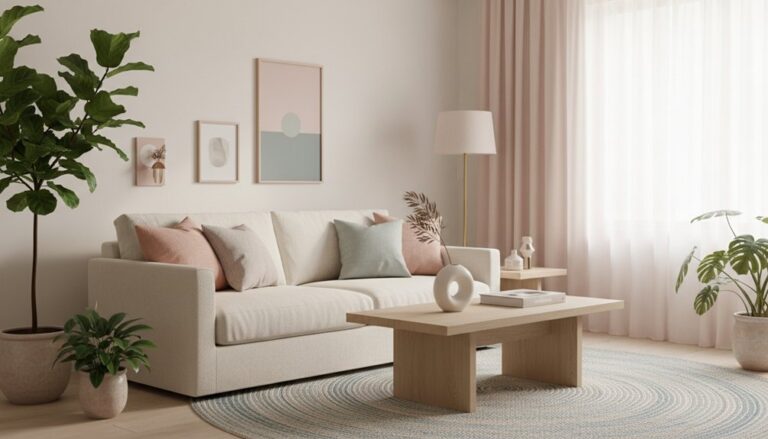
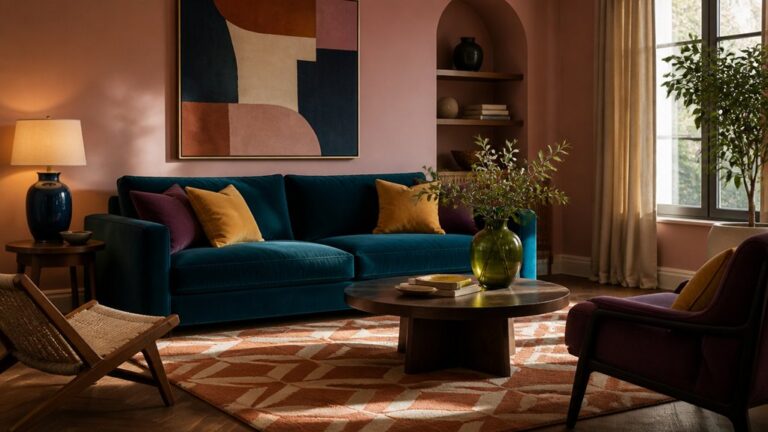
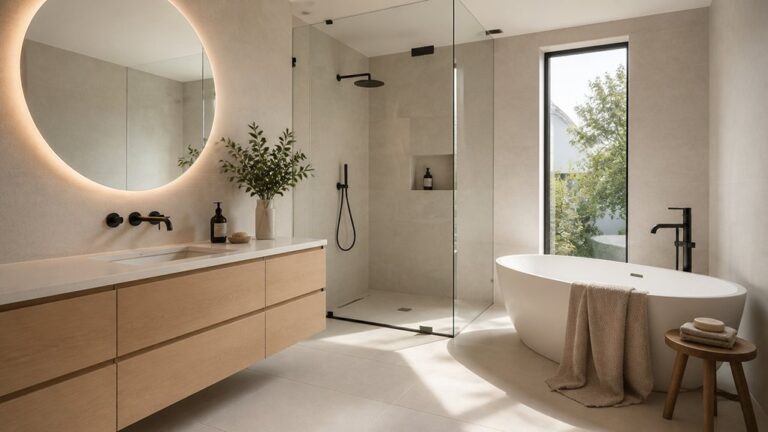
Warm up your modern interior by swapping glossy, cool finishes for matte wood, honed stone, and layered natural textiles where you live most. In entries, choose durable slate or limestone-look porcelain; in kitchens, add matte clay tile and soapstone-look counters; in baths, try tumbled travertine-style tile or microcement. Bring in white oak or walnut furniture, handmade ceramics, and travertine accents. Finish with linen drapery, wool rugs, and jute or leather details—keep going to see easy room-by-room swaps.
Key Takeaways
- Prioritize durable warm surfaces in high-traffic areas, like honed stone, slate, or porcelain that mimics limestone.
- Add wood in matte mid-tones (white oak, walnut, ash) through one statement piece, trim, or shelving to warm the room.
- Layer natural textiles—linen drapery, wool rugs/throws, cotton pillows—to add softness, depth, and better acoustics.
- Use stone, clay, and ceramics (travertine trays, plaster finishes, handmade pottery) for earthy texture and subtle light-shadow interest.
- Balance tactile materials with clean metals and glass, repeating one finish (aged brass, brushed nickel, blackened steel) for a cohesive modern look.
Choose Warm Natural Materials by Room and Budget

If you match warm natural materials to how each room gets used—and what you actually want to spend—you’ll get a richer look without overcommitting.
In high-traffic entries, choose honed stone, slate, or porcelain that mimics limestone for durability and an earthy tone.
In kitchens, lean into tactile surfaces: matte clay tile backsplashes, soapstone-look counters, or quartz with warm veining that hides wear.
For baths, specify tumbled travertine-style tile or microcement for a spa finish with fewer grout lines.
In living areas, layer natural-fiber rugs—jute, sisal, or wool—over existing floors for quick warmth.
Ask for Eco friendly sourcing like reclaimed stone, low-impact tile, and local makers, then balance with Budget friendly options such as high-quality lookalikes and strategic splurges.
Warm Up With Wood: Furniture, Trim, and Shelving

You can instantly warm up your space by choosing wood furniture in rich, natural tones—think white oak, walnut, or ash with matte finishes that feel current.
Then you’ll amplify that warmth by adding wood trim details and built-in shelving that bring clean lines and practical storage to the rooms you use most.
Start with one high-impact piece or a single wall of shelves, and you’ll get a cohesive, upgraded look without overhauling everything.
Choose Warm Wood Furniture
One well-chosen piece of warm wood furniture can reset the temperature of a room faster than any paint swatch. Start with a dining table, credenza, or lounge chair in walnut, white oak, or teak; their grain reads as texture, not clutter, and it softens hard surfaces. You’ll get the most impact when you pick mid-tone finishes with a low-sheen oil or wax that catches light without looking glossy.
Shop with sustainable sourcing in mind: ask for FSC-certified wood, reclaimed content, or transparent millwork partners. If your budget’s tight, lean on vintage finds—solid casegoods age beautifully and bring instant patina.
Then balance the piece with calm upholstery and minimal metal so the wood stays the hero.
Add Wood Trim Shelving
Where can a room gain warmth without adding visual weight? Add wood-trim shelving. A slim oak, walnut, or ash lip instantly softens drywall lines, frames your display, and reads custom without bulky built-ins. You’ll keep sightlines open while introducing grain, depth, and a tactile edge that modern interiors crave.
Choose a clear or matte finish to highlight character, or pick a fumed or limed tone for today’s quieter, nature-forward palettes. Pair the shelves with Vintage accents—ceramic vessels, worn brass bookends, or framed sketches—to make the wood feel collected, not staged.
Ask your carpenter or millworker about sustainable sourcing: FSC-certified lumber, reclaimed boards, or local species reduce impact and add story. Install adjustable standards so the look evolves with you.
Add Earthy Depth With Stone, Clay, and Ceramics

You can add earthy depth fast by layering stone surface accents—think travertine trays, soapstone ledges, or a honed marble side table that grounds the room.
Then you’ll warm things up with clay finishes and plaster, using matte, mineral texture on a niche, fireplace surround, or accent wall for that current, lived-in look.
Finish with handmade ceramic decor touches—vases, bowls, and lamps—so the space feels collected, tactile, and distinctly yours.
Layered Stone Surface Accents
Even if you’re keeping the big finishes neutral, layered stone surface accents instantly add earthy depth and a more collected, trend-right feel. You can start small: a honed marble tray on the coffee table, a soapstone catchall by the entry, or a travertine lamp base that quietly signals permanence.
Mix finishes for rustic charm without going “theme.” Pair matte limestone with a single polished piece, or contrast dark basalt with pale marble to sharpen the palette. Aim for textured surfaces—chiseled edges, tumbled tiles, fluted stone vessels—so light and shadow do the styling for you.
Keep the scale intentional: one substantial piece beats five tiny ones. If you’ve got kids or entertain often, choose denser stones and sealed tops so you get beauty that actually lives well.
Clay Finishes And Plaster
Stone brings weight and cool polish; clay finishes and plaster add the warmer, hand-worked contrast that makes a neutral interior feel alive. You’ll notice how light skims trowel marks, softening hard lines and adding depth without busy pattern.
Choose lime plaster for breathable walls in older homes, or clay plaster where you want a velvety matte and richer pigment response. Specify microcement only when you need a thinner build and higher durability, and ask for mock-ups so you can approve color, sheen, and movement.
Lean on Traditional craftsmanship for crisp corners, smooth gradations, and repairable surfaces. Prioritize sustainable sourcing: low-VOC binders, locally mined aggregates, and responsibly processed pigments.
Use these finishes on a feature wall, ceiling, or niche to anchor your stone accents.
Handmade Ceramic Decor Touches
While polished slabs and smooth plaster set the backdrop, handmade ceramic decor brings the human-scale texture that warms a room without adding visual noise. Choose one statement vessel on a console, then echo it with smaller pieces to create rhythm, not clutter. You’ll get the most impact from matte, iron-rich glazes, speckled stoneware, and hand-thrown silhouettes that catch light softly and hide fingerprints.
Layer artisanal pottery accents where your eye already lands: a shallow bowl on the coffee table, a lidded jar on open shelving, a pair of candlesticks at the dining centerline. Mix clay bodies—terracotta, porcelain, and dark stoneware—but keep a tight palette so the room feels edited.
Add a ceramic tile trivet or sculptural lamp base for functional warmth.
Layer Natural Textiles: Linen, Wool, and Cotton
If you want warmth that feels current rather than rustic, start by layering natural textiles—linen, wool, and cotton—so the room gains depth without visual clutter. Use linen for airy drapery or relaxed slipcovers; its subtle slub reads tailored when you keep the palette tonal.
Add wool through a low-pile rug or a felted throw to introduce quiet structure and sound-softening comfort. Finish with cotton in crisp pillows or a matelassé coverlet for clean, washable contrast.
You’ll also want to weigh Textile durability: choose tight weaves, reinforced seams, and performance-labeled blends where wear is highest. Ask about Natural fiber sourcing, too—certified linen, responsibly raised wool, and organic cotton help you meet sustainability goals without sacrificing a polished, updated look.
Finish With Leather and Woven Natural Fibers
After you’ve built a soft foundation with linen, wool, and cotton, bring the room to a finished, designer-level place with leather and woven natural fibers.
Start with Leather textures that feel intentional: a saddle-leather lounge chair, a cognac ottoman, or buttery pulls on a cabinet. Keep the patina in mind—these pieces age beautifully, so you’re investing in warmth that improves over time.
Then layer woven fibers for structure and calm. Choose a seagrass or jute rug to ground the space, rattan or cane on a side chair for airy depth, and baskets that organize while adding texture.
Mix tight weaves with chunkier braids so the room reads curated, not matchy. If you’re client-minded, prioritize easy-clean finishes and durable weaves in high-traffic zones.
Keep It Modern: Mix Natural Materials With Metal and Glass
Leather and woven fibers bring the warmth; metal and glass keep it feeling current. You’ll get the best results when you treat hard, reflective surfaces as clean counterpoints to tactile, matte textures. Choose blackened steel, brushed nickel, or aged brass to sharpen silhouettes without cooling the palette too much.
Pair a hand-loomed piece with a slim metal frame, or set natural grain against clear glass to let the material speak. This balance reads Industrial chic without feeling harsh, especially when you repeat one metal finish across key touchpoints.
If you want Contemporary elegance, favor thinner profiles, softly rounded edges, and low-iron glass for a clearer, lighter look. Keep contrasts intentional, not random, and your space will feel edited, modern, and warmly grounded.
Room-by-Room Swaps Using Warm Natural Materials
While a full renovation can wait, you can shift the mood fast by making smart, room-specific swaps that put warm natural materials where you touch and see them most.
In the entry, trade a lacquer console for white oak and add a woven jute runner.
In the living room, replace a glossy coffee table with travertine or solid walnut, then layer linen drapery for softer light.
In the kitchen, switch hardware to brushed brass and add a maple cutting board display; you’ll get warmth without new cabinets.
In the bath, bring in teak stools and stone trays to counter cold tile.
In bedrooms, choose wool throws and cane-front nightstands.
Tie it together with Outdoor landscape hues and Urban design lines for a polished, current look.
Frequently Asked Questions
How Do I Prevent Natural Wood Finishes From Yellowing Over Time?
To prevent natural wood finishes from yellowing, you’ll choose non-ambering water-based polyurethane or a UV-cured topcoat and ask for added UV inhibitors for finish protection.
You’ll keep wood out of direct sun with sheers or UV film, and you’ll avoid oil-based varnishes that accelerate wood aging.
You’ll maintain steady humidity, dust gently, and refresh the clear coat before it thins for best results.
Which Natural Materials Are Safest for Allergy or Asthma-Sensitive Households?
You’ll feel safest with smooth, low-dust materials: fired clay tile, stone, glass, and sealed cork underfoot—cool, clean surfaces that don’t hold dander.
Choose solid wood or plywood labeled with Natural material certifications (FSC plus CARB2/NAF) and skip fragranced oils.
Specify Allergen free finishes: zero/low-VOC, waterborne, fully cured.
Avoid raw wool, jute, and open-weave sisal if you’re highly reactive.
Favor washable cotton/linen.
What Maintenance Schedule Keeps Stone and Clay Surfaces Looking New?
You’ll keep stone and clay looking new with a simple rhythm: daily wipe with pH‑neutral cleaner and microfiber; weekly rinse and dry to prevent haze.
For Clay cleaning, avoid acids, scrub lightly, and re-wax or burnish every 3–6 months if applicable.
For Stone sealing, test yearly with a water-drop check; reseal every 1–3 years depending on porosity and traffic.
Schedule professional deep-clean annually for premium results.
How Can I Verify Leather and Wool Are Ethically and Sustainably Sourced?
Like a litmus test for integrity, you can verify ethical sourcing by demanding traceability and third-party proof.
For Leather sourcing, ask for LWG (Leather Working Group) ratings, tannery audits, and country-of-origin plus chain-of-custody documents; avoid vague “genuine leather” claims.
For Wool certification, request RWS or ZQ certificates, animal-welfare statements (mulesing-free), and farm-to-mill tracking.
You’ll align materials with your values and today’s elevated, responsible interiors.
Do Warm Natural Materials Affect Home Resale Value in Different Markets?
Yes—warm natural materials can boost resale, but results vary by market trends and regional preferences. You’ll often see premiums in coastal, design-forward metros where buyers want tactile finishes and sustainable cues.
In price-sensitive or rental-heavy areas, you’ll get better returns when you keep selections durable, neutral, and easy to maintain.
You should also match local climate and lifestyle: wool reads cozy in cold regions; leather can signal luxury in urban markets.
Conclusion
You set out to “modernize” your home, and the funny twist is you’ll do it by going back to nature. By choosing warm wood, grounded stone, handmade clay, and layered linen or wool, you make every room feel current—without chasing fads. Add leather and woven fibers for lived-in polish, then sharpen it all with metal and glass so it reads intentional, not rustic. Swap piece by piece, budget by budget, and watch the calm add up.
About the Author