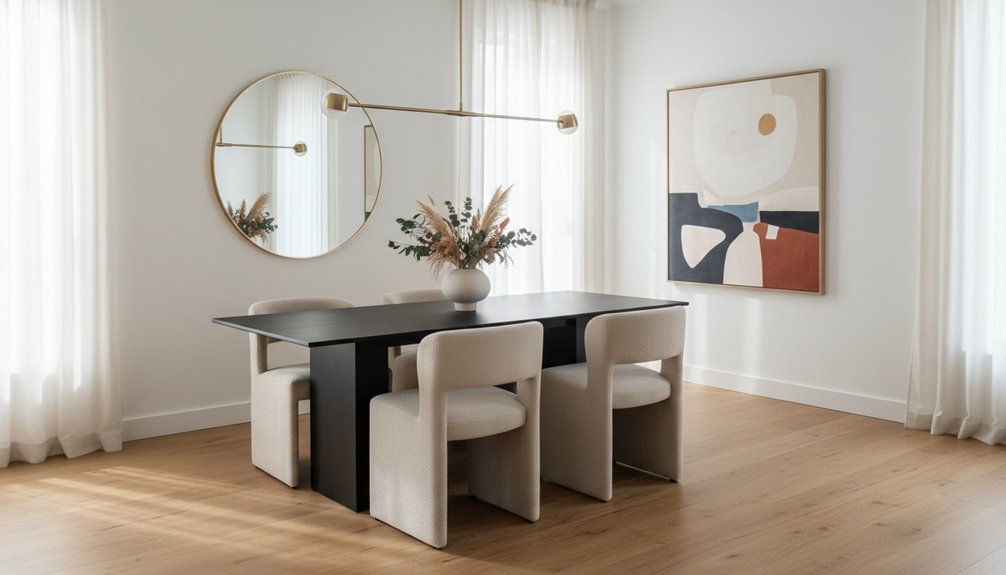
Update your dining room with contemporary decor by choosing a clear direction—warm modern or sculptural minimalism—then follow modern proportion rules: keep 36 inches of clearance, use a rug that extends 24–30 inches past chairs, and cap statement pieces at two. Swap ornate furniture for clean-line seating and a slim table, add a streamlined sideboard, and hang a bold pendant 30–34 inches above the tabletop. Finish with one sculptural centerpiece, layered textiles, and art scaled to two-thirds of the wall—next up, you’ll see how to refine each choice.
Key Takeaways
- Choose a contemporary direction (sculptural minimalism, warm modern, or eclectic) and set proportion rules for clearances, rugs, and statement pieces.
- Build a neutral base with warm whites or greiges, then add contrast via trim, textiles, and one bold accent color.
- Swap to clean-line furniture: slim table, crisp chairs, and a streamlined sideboard that emphasizes negative space and storage.
- Install a statement pendant sized half to two-thirds of table width, hung 30–34 inches above, and add dimmable sconces for layered light.
- Keep decor edited: one sculptural centerpiece, minimal table settings, cohesive materials, and intentional abstract art hung at eye level.
Choose Your Contemporary Dining Style Rules

Before you buy a single chair, decide which contemporary dining style rules you’ll follow—because that choice will steer your layout, finishes, and budget. Start by choosing a lead move: sculptural minimalism, warm modern, or a tailored Eclectic mix.
Then set proportion rules: keep table-to-room clearance at 36 inches, anchor the dining zone with a rug that extends 24 inches past chair legs, and cap your statement pieces at two (like a bold light plus standout table).
If you want Vintage charm, fold it in deliberately: one patinated sideboard or mismatched bentwood chairs, then repeat a material to unify the look.
Finally, commit to a silhouette rhythm—rounded edges or crisp lines—so every new add-on feels intentional.
Set a Modern Dining Room Color Palette

Start with a neutral foundation—warm whites, soft greiges, or charcoal—to keep the room airy and let clean-lined furniture read modern.
Then build contrast through trim, textiles, or a statement light.
Place one bold accent color with intention (think art, dining chairs, or a sideboard) so it anchors key sightlines without crowding the floor plan.
To keep the palette cohesive, balance warm woods and brass with cooler tones like slate, black, or crisp white for a current, layered look.
Neutral Foundations And Contrast
Although bold color can feel tempting, a modern dining room reads most current when you anchor it with neutral foundations—warm whites, soft greiges, pale oak, and matte black—and then layer contrast with intention. Keep walls and large upholstery in neutral palettes so the room feels open, especially in tighter footprints or open-plan layouts. Use matte paint to quiet glare, then sharpen edges with blackened steel, smoked glass, or crisp trim lines.
Build depth through contrasting textures: pair a veined stone or micro-cement tabletop with boucle or leather seating, and add a ribbed wool rug to soften acoustics underfoot. Repeat two to three finishes across the space—lighting, hardware, frames—so sightlines stay clean and the dining zone reads cohesive from every angle.
Bold Accent Color Placement
Once you’ve established a calm neutral base, use bold accent color like a highlighter, not a paint bucket, so the dining room stays modern and intentional.
Treat bold accent color placement as a map: choose one hero moment and two supporting touches. Anchor the hero on the largest visual plane you want to emphasize, like upholstered dining chairs or a statement art piece, then echo it in smaller, movable items—vases, linens, or a sculptural bowl.
Keep accents clustered rather than sprinkled, so the eye reads a deliberate composition. For visual balance, place color across the room at different heights: one low (rug detail), one mid (chairs), one high (art or pendant).
If you add pattern, keep scale large and palette tight.
Harmonizing Warm And Cool
When you mix warm and cool tones on purpose, your dining room reads contemporary instead of confused. Start with a neutral bridge—greige, soft white, or putty—on walls and large upholstery, then layer temperature contrast through wood, metal, and textiles.
Pair warm walnut or oak with cool blackened steel, brushed nickel, or slate ceramics to keep the palette crisp.
Control balance by zoning: keep the table area warmer for appetite and intimacy, while the perimeter stays cooler for airiness and depth. Use Seasonal color schemes to swap small pieces—linen, art, and glassware—without repainting.
For vintage furniture integration, echo its undertone with a modern rug or pendant, so old shapes feel intentional, not random.
Swap in Clean-Line Dining Room Furniture
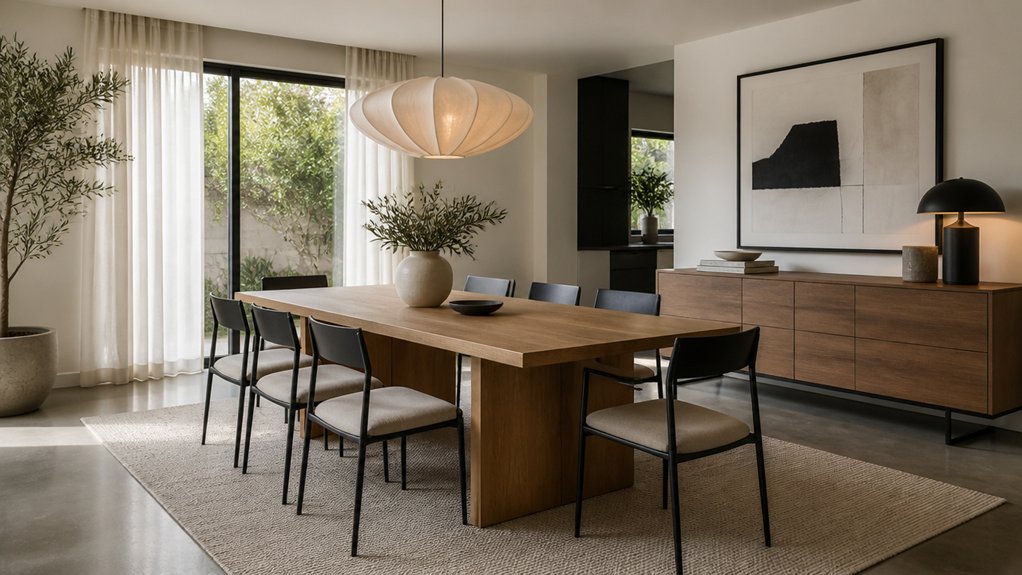
To give your dining room an instant contemporary edge, swap ornate pieces for clean-line furniture that emphasizes proportion and negative space. Start with a pared-back table: a slim profile, squared legs, or a simple pedestal that keeps sightlines open and circulation easy.
Choose dining chairs with crisp silhouettes and low visual weight; upholstered seats in performance fabric add comfort without bulk. If you’re working in a smaller room, pick armless styles and keep chair backs below the tabletop height to reduce clutter.
Anchor everything with a streamlined sideboard that floats on legs or reads as a quiet block, giving you storage without heaviness. Let Vintage china become the accent, not the architecture, and retire ornate chandeliers that compete with your new geometry.
Pick Statement Lighting (Size + Placement)
Because lighting reads as sculpture in a contemporary dining room, choose a statement fixture that’s sized to your table and hung with intention. Aim for a diameter about one-half to two-thirds of the table’s width, so it feels bold without crowding sightlines.
If you’re doing linear pendant illumination, match the fixture length to the table’s long axis and keep it centered on the seating, not the room.
For chandelier placement, hang it roughly 30–34 inches above the tabletop with standard 8-foot ceilings, then adjust slightly higher for taller ceilings or frequent standing circulation.
Use a dimmer and warm LEDs to keep the glow crisp, not harsh.
Prioritize clean silhouettes, mixed metals, or sculptural glass for a current edge.
Layer Texture With Rugs, Drapes, and Textiles
After you’ve nailed the statement light, soften and sharpen the room at the same time by layering texture underfoot and around the windows. Start with Rug placement: choose a low-pile wool or flatweave that extends 24–30 inches beyond the table so chairs slide back without catching.
In open plans, align the rug with the table, not the room, to define a clean dining zone.
Then treat the windows like architecture. Hang drapes high and wide, with a tailored ripple fold for a contemporary line; add a sheer layer if you need daytime softness.
Finish with textiles that echo your palette: seat cushions, a runner, or upholstered side chairs. Mix Textile patterns—subtle stripes, micro-geometrics, or tone-on-tone checks—to add depth without visual noise.
Hang Wall Art That Fits a Contemporary Look
Once your textiles add warmth and control glare, lock in a contemporary vibe with wall art that feels intentional, not decorative. Choose one strong focal wall and size the piece to your table: aim for art that spans about two-thirds the buffet or dining width.
Abstract prints work best when you repeat a color already in the room, so the palette reads edited. For a sharper, architectural feel, pick geometric patterns with clean lines and generous negative space.
Hang art so the center sits near eye level, then adjust for sightlines from seated height. If you’re grouping frames, keep spacing consistent and align edges for a gallery-grid look.
Finish with glare-resistant glass and tight, minimal frames.
Add Modern Finishing Touches (Tabletop + Decor)
Keep your tabletop styling minimalist so sightlines stay clean and the room feels open and contemporary.
Anchor the table with one sculptural centerpiece—ceramic, stone, or metal—that adds form without clutter.
Then layer lighting decor with a sleek pendant overhead and compact candles or a cordless lamp on the table to build mood and dimension.
Minimalist Table Styling
A few deliberate tabletop choices can make your dining room feel instantly more contemporary without adding visual noise. Start by clearing the surface so you’ve got negative space around place settings; that breathing room reads modern.
Choose one streamlined runner or skip it, then echo your room’s palette with matte stoneware, low-profile glassware, and flatware with clean lines. If you love Vintage patterns, keep them to a single accent—like napkins or a slim set of side plates—so the look stays edited.
Avoid ornate accessories and busy clusters; instead, repeat one material (oak, blackened metal, or linen) across pieces for cohesion. Keep heights low, and align settings precisely to reinforce a tailored, architectural feel.
Sculptural Centerpiece Accents
Even if your place settings stay pared back, a sculptural centerpiece can deliver that contemporary “finish” without cluttering the table. Keep the scale proportional: aim for a piece that sits below eye level when seated, or go taller only if it’s narrow and airy.
Try sculptural centerpiece ideas like a single ceramic totem, a carved stone bowl, or a matte-metal loop that echoes your chair legs.
Anchor it with negative space—leave 8–10 inches clear around it so serving pieces still land naturally.
Limit materials to two finishes so the table reads intentional, not staged.
If you want a gallery vibe, treat the centerpiece like one of your Modern art installations: place it slightly off-center, then balance it with a low stack of linen napkins or a slim tray.
Layered Lighting Decor
While the chandelier sets the mood, layered lighting is what makes a contemporary dining room feel finished and flexible from cocktails to clean-up. Add a dimmable pair of wall sconces to broaden the ambient glow and eliminate harsh ceiling shadows.
Then anchor the buffet or bar zone with a slim table lamp or cordless accent light, scaled to sit below eye level and not compete with art. For task illumination, slip an LED picture light above a sideboard, or tuck under-shelf strips into a cabinet for serveware.
Keep finishes consistent—matte black, warm brass, or brushed nickel—so your tabletop reads intentional. Finally, introduce reflective decor: a smoked-glass vase, metal tray, or mirror to bounce light across the room.
Frequently Asked Questions
How Much Does a Contemporary Dining Room Update Typically Cost?
A contemporary dining room update typically costs $2,000–$15,000, depending on scope. You’ll spend less if you refresh paint, lighting, and textiles; you’ll spend more if you replace furniture, upgrade flooring, or add built-ins.
Start with Budget planning around your room’s layout and circulation. Then prioritize Material selection—durable finishes, statement lighting, and cohesive wood/metal tones.
You can hit a high-end look by editing pieces, not overfilling.
Do I Need a Professional Interior Designer for This Refresh?
You don’t need a professional interior designer if you’re comfortable measuring, sourcing, and making decisions, but you’ll benefit from one if layout or cohesion feels tricky.
You can refresh fast by mapping clear circulation, anchoring with the right-size rug, and balancing Vintage accents with streamlined pieces.
Lock in Color schemes early, then layer lighting and art to reinforce them.
Hire help for custom millwork, tricky proportions, or a tight deadline.
How Can I Make a Rental Dining Room Look Contemporary Without Damage?
You can make a rental dining room look contemporary without damage by styling like a magician—transforming the room without touching the walls. Use peel-and-stick wallpaper or removable art ledges, then anchor the layout with a slim-profile table and sculptural chairs.
Define zones with a flatweave rug and a modern pendant on a plug-in swag. Keep a tight Color palette, then layer Vintage accents in glassware or a sideboard.
What’s the Best Way to Incorporate Smart Lighting in a Dining Room?
Start with a dimmable, warm-to-neutral Smart bulbs setup in your overhead fixture. Then layer in wall sconces or a slim floor lamp to sculpt the table zone. You’ll get flexibility for dinners, work, and entertaining without rewiring.
Use Voice control to switch scenes—“Dinner,” “Glow,” “Clean”—and tie them to schedules.
Choose high-CRI bulbs for flattering food tones, and keep fixtures visually minimal for a contemporary line.
How Do I Update a Dining Room While Keeping Existing Heirloom Pieces?
You update your dining room by anchoring it with your heirlooms, then designing everything else to support them—measure, map, and match.
Prioritize Heirloom preservation: refinish gently, reupholster in durable modern textiles, and control sunlight.
For Antique integration, balance scale by pairing one statement antique with streamlined chairs or a simple table.
Refresh with layered lighting, a large rug to zone, and contemporary art that echoes the pieces’ patina.
Conclusion
You’ve chased “contemporary” by editing, not adding—ironic, since the room finally feels richer. Stick to one clear style rule, then let a tight palette do the heavy lifting. Trade bulky pieces for clean-line furniture that gives circulation space back. Hang an oversized statement fixture low enough to anchor the table, high enough to keep sightlines open. Layer texture through rugs and drapes, add bold art, and finish with restrained tabletop styling.
About the Author