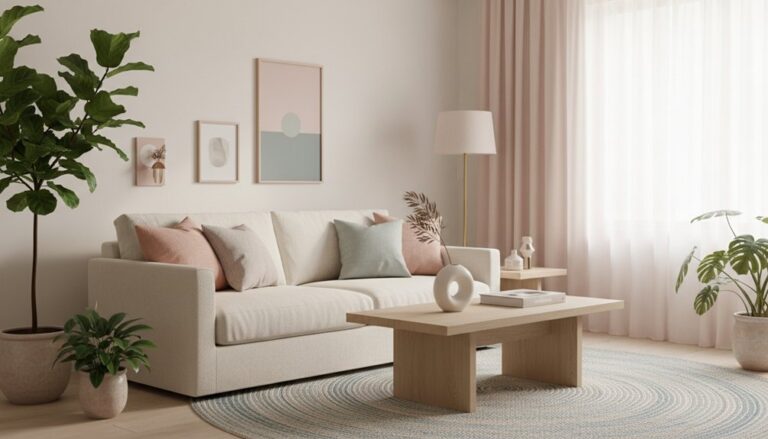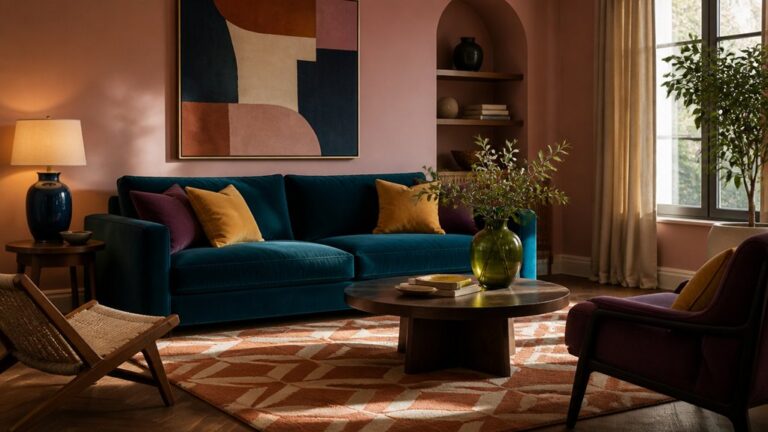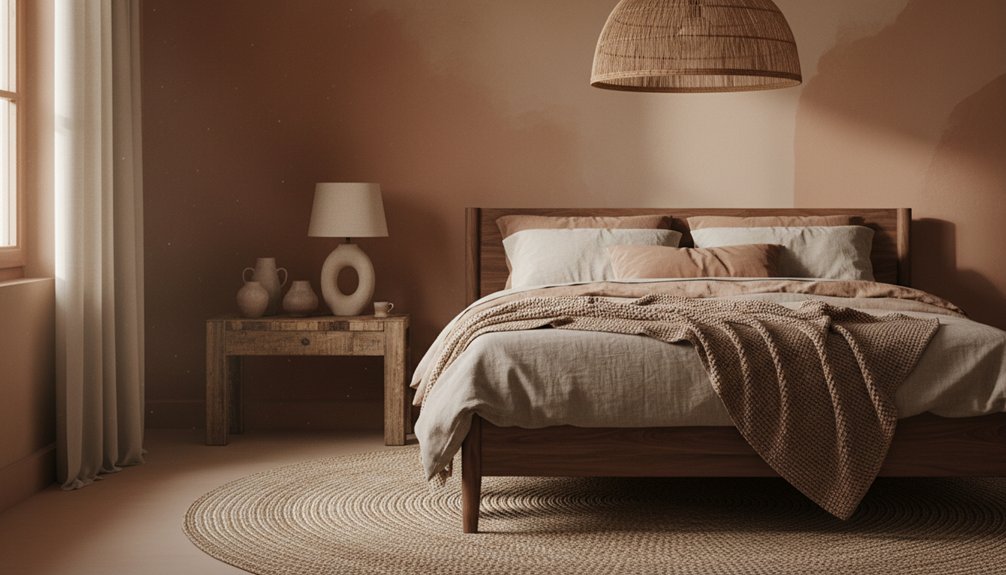
Start by locking in a tight 3–5 color earthy palette: deep clay or cocoa, sand and olive mid-tones, plus a light flax lift and one nature accent like rust or inky teal. Paint walls warm terracotta or sunbaked taupe and keep trim creamy. Layer washed linen sheets, a textured duvet, and a chunky knit throw. Ground the room with wood grain, jute, cane, and matte ceramics, then add dimmable lighting for cozy contrast—there’s more ahead to refine it.
Key Takeaways
- Choose a tight 3–5 color palette of warm neutrals, layering light, mid, and deep tones with one nature-inspired accent.
- Paint walls in warm clay, terracotta, or sand, and use creamy trim to keep contrast soft and cohesive.
- Layer bedding with varied textures—linen sheets, a textured duvet, chunky knits, and mixed pillows—to add depth without clutter.
- Add organic accents like wood furniture, woven baskets or jute rugs, and matte ceramic decor to reinforce warmth and tactility.
- Create atmosphere with layered, dimmable lighting and simplified surfaces, keeping decor to one statement item per plane.
Pick a 3–5 Color Earthy Bedroom Palette
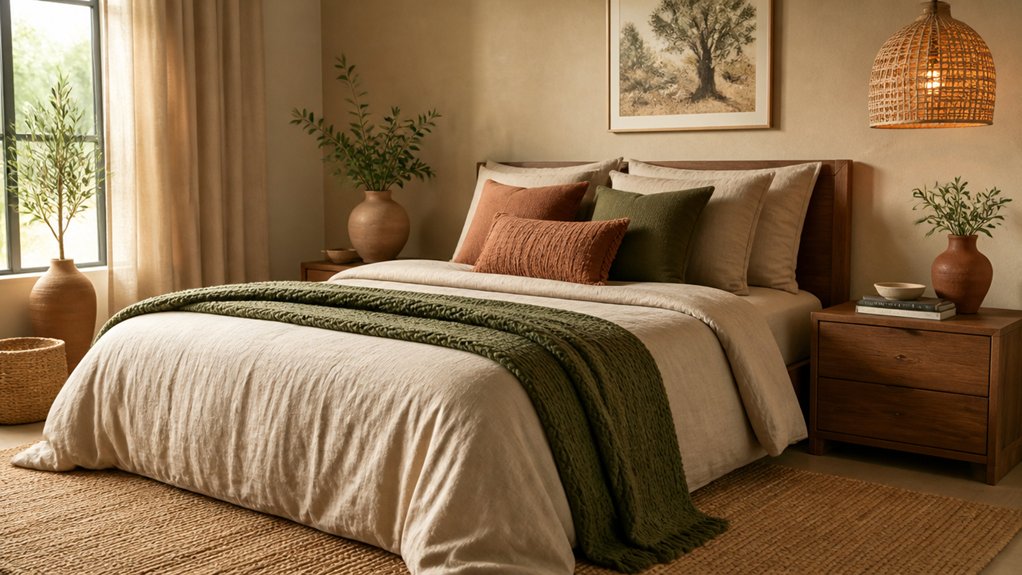
If you want your bedroom to feel grounded but still current, start by choosing a tight 3–5 color earthy palette that layers warmth without looking flat. Anchor it with one deep neutral like clay, cocoa, or charcoal, then add two mid-tones—sand and olive work effortlessly—for balanced color blending.
Reserve one lighter shade for lift, like flax or soft bone, and finish with a single accent drawn from nature: rust, moss, or inky teal. Keep undertones consistent so textiles, wood, and metals read intentional instead of chaotic.
For mood setting, distribute each hue in repeats: bedding, a throw, curtains, and small decor. You’ll get depth, cohesion, and that curated, boutique-hotel calm without overdecorating.
Choose Warm Paint Colors for Your Bedroom Walls
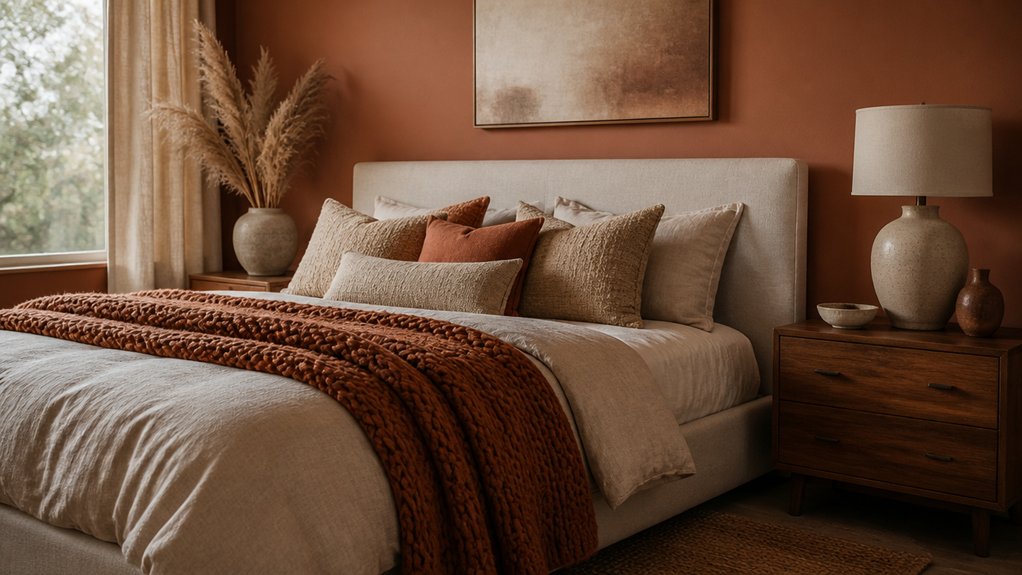
Once you’ve locked in a tight earthy palette, let your walls do the heavy lifting by choosing a warm paint color that supports every layer—textiles, wood tones, and textured decor.
Start with clay, cinnamon, terracotta, or sand-based beige for a modern “sunbaked” look that still feels calm. Use color psychology: reddish browns read cozy and grounding, while warm taupes feel restorative and hotel-like.
Test swatches in morning and lamplight; undertones can swing pink, yellow, or green against flooring. Keep trim creamy instead of stark white to avoid harsh contrast.
Consider paint finish options: matte hides wall texture and looks velvety, eggshell wipes clean, and satin brings a soft glow for low-light rooms.
For small spaces, pick one shade deeper on the headboard wall to add depth.
Layer Earthy Bedroom Bedding Textures (Linen, Knits)

Because bedding sits closest to your skin and fills most of your visual field, it’s the fastest way to deepen an earthy bedroom with texture.
Start with washed linen sheets in clay, oat, or muted olive; they look relaxed and breathe well.
For smart bed linen pairing, contrast a warm terracotta duvet cover with sand or mushroom pillowcases, then add a second set of shams in a deeper spice tone for depth.
Next, build knit blanket layering: drape a chunky cotton or merino knit across the lower third of the bed, then top it with a lighter waffle weave throw you can grab at night.
Finish with mixed-size pillows—one euro, one lumbar—covered in nubby, matte fabrics that echo the room’s grounded palette.
Add Wood, Woven, and Ceramic Bedroom Accents
You can ground your warm, textured bedding with layered wood touches—think a pale oak nightstand, a walnut bench, or a softly grained headboard that adds instant warmth.
Then you’ll soften the look with woven accents like a cane lamp, seagrass baskets, or a chunky jute rug that brings in quiet, artisanal texture.
Finish with ceramic pieces—a matte clay vase, a speckled tray, or a sculptural lamp base—to add that earthy, trend-right contrast and tactile depth.
Layered Wood Furniture Touches
While warm earthy tones set the mood, layered wood furniture gives your bedroom the grounded, collected look that’s trending right now. Mix finishes instead of matching sets: pair a light oak bed with a walnut nightstand, then echo that depth in a slim dresser. You’ll get Rustic charm without feeling cabin-heavy, especially when you keep silhouettes clean for Modern minimalism.
Choose pieces with visible grain, rounded corners, and simple hardware to soften the palette. Add a low bench in reclaimed wood at the foot of the bed for instant structure and a place to stage throws.
If your room runs small, float a narrow console as a vanity and keep legs exposed to maintain airy sightlines. Let wood tones repeat twice, not everywhere.
Woven And Ceramic Accents
To keep warm earthy tones from falling flat, layer in woven and ceramic accents that add texture, shine, and a handmade feel. Hang Woven art above the headboard—think raffia, seagrass, or cane in graphic shapes—to soften hard lines and echo natural fibers in your rug.
Add a woven lidded basket beside the nightstand to hide chargers and extra throws while keeping the palette calm.
Balance that matte weave with Ceramics: place Ceramic vases in varied silhouettes on a dresser, mixing glazed, speckled, and raw clay finishes for subtle contrast.
Choose warm whites, terracotta, and muted olive to stay on-trend and grounded. Finish with a small ceramic dish for jewelry and a wood tray to corral essentials, so every texture feels intentional.
Use Light, Contrast, and Undertones to Avoid Dullness
To keep warm earthy tones from reading flat, you’ll balance light and shadow with layered lighting—think a soft overhead glow, a focused bedside sconce, and a dimmable lamp that warms the corners.
You’ll build contrast with texture by pairing matte clay walls with nubby linen, boucle, or woven pieces that catch highlights and create depth.
Then you’ll match warm undertones across paint, woods, and textiles so terracotta, camel, and honey oak look intentional instead of muddy.
Balance Light And Shadow
Because warm earthy tones naturally absorb light, you’ll want to build in clear highs and lows so the room reads rich—not flat. Start with layered lighting: a warm 2700K ceiling fixture for overall glow, a dimmable bedside sconce for focus, and a low lamp that pools light at ankle height. This mix creates a moonlit ambiance at night without turning everything amber.
During the day, control glare with sheers and a heavier drape so you can tune brightness and maintain depth. Use contrast intentionally: pick one lighter paint undertone (creamy, clay, or wheat) against deeper accents (cocoa, rust, or olive) to sharpen edges.
Aim for shadow play behind the headboard and in corners, so shapes read crisp and calming.
Build Contrast With Texture
Once your lighting plan creates those highs and lows, texture steps in to keep warm earthy tones from blending into one soft blur. Layer a nubby wool throw over crisp cotton sheets, then add a channel-stitched quilt to catch side light and shadow.
Aim for textural variety: matte clay ceramics, a lightly grained oak nightstand, a hammered-brass tray, and a woven rattan lamp shade.
You’ll build tactile contrast by mixing rough and smooth, plush and structured, without changing your palette. Swap flat artwork for a linen-wrapped frame or a subtle plaster finish so it reads dimensional at dusk.
Ground the bed with a low-pile rug and top it with a tufted bench, so every surface feels intentional, not muddy.
Match Warm Undertones
Why do some “warm neutrals” still read flat in a bedroom? Because their undertones clash, and your lighting exaggerates the mismatch. Start by sampling paint beside your flooring and textiles in morning and evening light.
If your beige leans pink, echo it with clay, terracotta, or blush threads; if it leans golden, pull in caramel, ochre, or honeyed wood. Then add contrast so the palette doesn’t blur: pair a warm wall with crisp ivory bedding or deep espresso accents.
Vintage patterns help, too—think muted florals or geometrics that repeat your undertone without shouting. Finish with Metallic finishes in brushed brass or aged bronze; they bounce warm light and keep the room luminous, not muddy.
Style an Earthy Bedroom Without Clutter (Simple Rules)
If you want that warm, earthy bedroom look to feel calm instead of crowded, you’ve got to treat every object like part of the palette. Start with minimalist decor: keep surfaces mostly open, then repeat two or three grounded hues—clay, oat, walnut—across textiles and accents so nothing feels random.
Choose one piece of statement artwork and let it anchor the room; skip galleries unless you can match frames and tones. Limit décor to “one per plane”: one tray on the dresser, one vase on the nightstand, one texture on the bed. Hide small stuff in lidded baskets or a low, closed-front cabinet.
Finally, vary texture, not quantity—bouclé, linen, raw wood, and matte ceramics deliver depth without visual noise.
Frequently Asked Questions
What Lighting Temperature Best Complements Earthy Tones at Night?
You’ll get the best nighttime match with warm white light around 2200K–2700K. This color temperature keeps earthy hues rich and grounded, not gray or overly yellow, and it softens shadows for a cozy lighting ambiance.
Choose dimmable LEDs labeled “warm” or “soft white,” and layer a shaded table lamp with a wall sconce for depth.
Avoid 4000K+ lighting; it can make browns look flat.
How Do I Make Earthy Decor Work in a Rental Bedroom?
You make earthy decor work in a rental by layering, not renovating—start with what you can remove. First, a whisper of clay-toned bedding… then a jute rug that grounds everything.
Add peel-and-stick linen-look wallpaper behind the bed, and swap in warm bulbs.
Choose Eco friendly materials like reclaimed wood trays and organic cotton throws.
Finish with Botanical accents: trailing pothos, dried pampas, and herb-scented candles for depth.
Are Earthy Bedrooms Suitable for Small Rooms With Low Ceilings?
Yes, you can make an earthy bedroom work in a small, low-ceiling room if you keep it airy and intentional. Use Color psychology: choose light clay, sand, or warm off-white to lift the ceiling visually. Then add deeper accents low on walls.
Rely on Texture layering—linen bedding, a nubby throw, matte ceramics—so it feels rich without clutter. Swap bulky furniture for low-profile pieces and slim lighting.
How Can I Incorporate Earthy Tones Without Changing Existing Furniture?
You can weave earthy tones in without swapping furniture—think of your room as a traveler adding charms, not changing its map. Start with Color palettes: clay, sand, olive, and warm taupe in throws, pillow covers, and art.
Add Texture layering with a boucle blanket, linen curtains, jute rug, and matte ceramics. Swap bulbs to soft amber, then anchor it all with a few dried stems or terracotta accents.
What Are Budget-Friendly Places to Find Textured Earthy Decor?
Check thrift stores, Facebook Marketplace, and local estate sales first—you’ll score woven baskets, ceramic vases, and chunky knit throws for less.
Hit discount home stores and outlet sections for on-trend neutrals, plus natural fiber rugs in jute or sisal.
Browse Etsy for small makers and seconds.
You can’t beat DIY wall art: frame textured paper, sand-toned fabric, or pressed botanicals for a layered, elevated look.
Shop seasonal clearance too.
Conclusion
You turn your bedroom into a small landscape—sun-baked clay on the walls, sand-and-olive tones in the palette, and linen bedding that breathes like wind over dunes. You layer knits for warmth, then ground the space with wood, woven baskets, and matte ceramics that feel like river stones. You keep light and contrast crisp so undertones stay rich, not muddy. You edit ruthlessly: every piece earns its place, like a well-set table.
About the Author