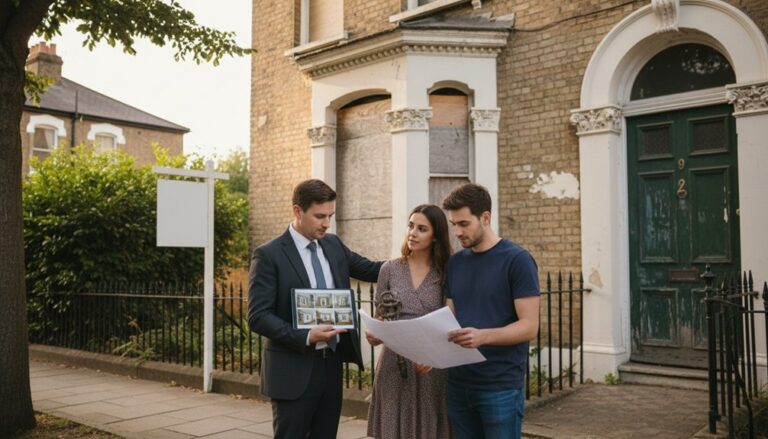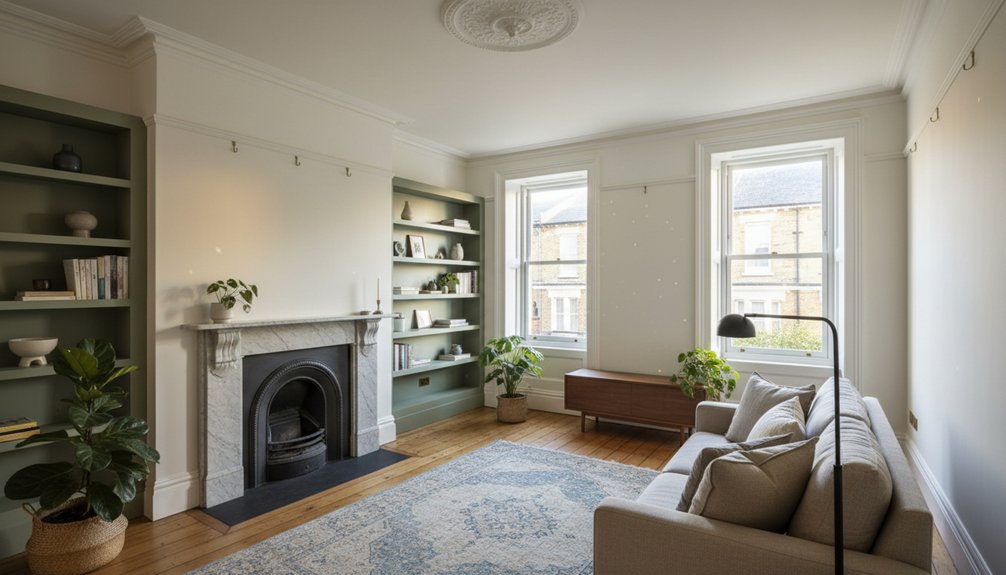
Start by surveying your period home in detail: measured drawings, photo logs, moisture readings, and dated crack notes, then confirm protected elements and permits early. You’ll keep the most charm by repairing original fabric first, using lime-based plaster patches, gentle cleaning tests, and minimal lifting of floors. Upgrade comfort with room-by-room heat-loss checks, zoning, and vapour-open insulation plus draught-proofing and secondary glazing. Plan kitchens, baths, and any extension to stay breathable, reversible, and visually subordinate—next you’ll see how.
Key Takeaways
- Survey and document original features, defects, and moisture movement, then confirm protected elements and permissions before starting any work.
- Repair and retain original fabric first—patch lime plaster, consolidate cracks, and fix floors and joinery rather than replacing them.
- Upgrade comfort safely with room-by-room heat-loss checks, zoning, draught-proofing, loft insulation, and vapour-open materials that won’t trap moisture.
- Modernize kitchens and bathrooms with reversible, breathable detailing, accessible services, and strong extract ventilation to protect historic fabric.
- Design extensions as subordinate additions, set back from the main façade, using compatible materials, respectful proportions, and robust rainwater detailing.
Survey Your Period Home (and Check Permissions)
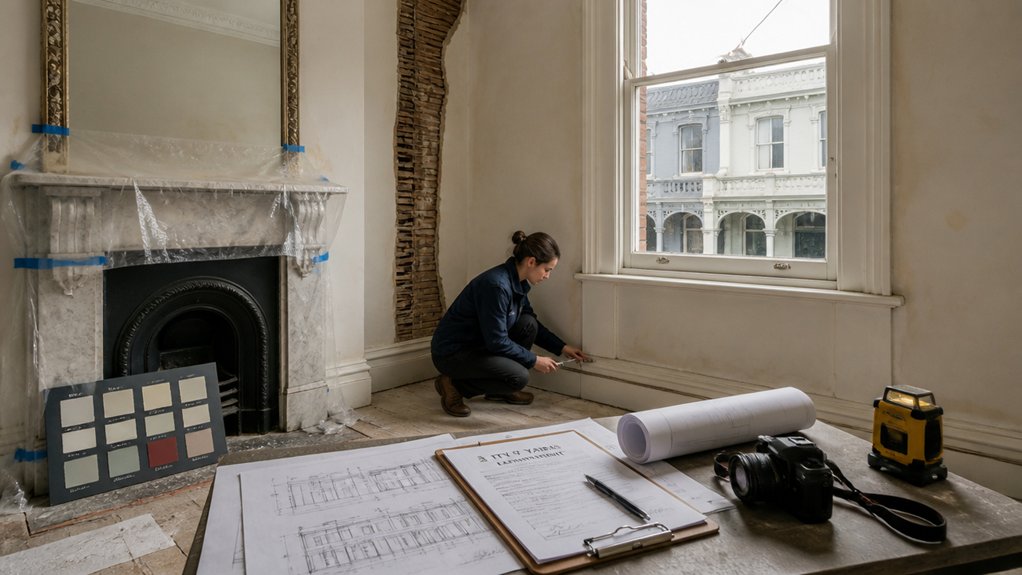
Before you pick up a pry bar or call a contractor, you’ll want a thorough survey that documents what’s original, what’s been altered, and what’s failing. Start with measured drawings and a photo log keyed to each room; note joinery, masonry bonds, plaster profiles, window glass type, and tool marks that support Historical authenticity.
Record moisture readings at sills and chimneys, check roof lines for deflection, and map cracks with dates so you can track movement. Pull any prior plans, deeds, and designation reports to confirm the building’s period and protected elements.
Then verify Permitting processes early: review local conservation area rules, listed-building status, and required heritage statements, and schedule pre-application meetings to avoid scope changes later.
Repair Original Features in a Period Home First

Once you’ve documented what you have, prioritize repairing original fabric over replacing it, because conservation practice—and most heritage guidance—treats retention as the lowest-risk way to preserve significance and performance.
Start with gentle testing: clean a small area, then choose the least aggressive method that works.
Patch Decorative plaster with compatible lime-based mixes, keep sound edges, and avoid hard gypsum where movement or salts exist.
Consolidate hairline cracks before they widen, and reattach loose laths rather than overboarding.
For Original flooring, lift only where you must, label boards, and fix squeaks by tightening joist connections, not flooding with adhesive.
Splice in matching reclaimed timber, align grain, and pre-drill to prevent splits.
Finish with breathable coatings that don’t trap moisture or obscure patina.
Upgrade Heating + Insulation in a Period Home Safely
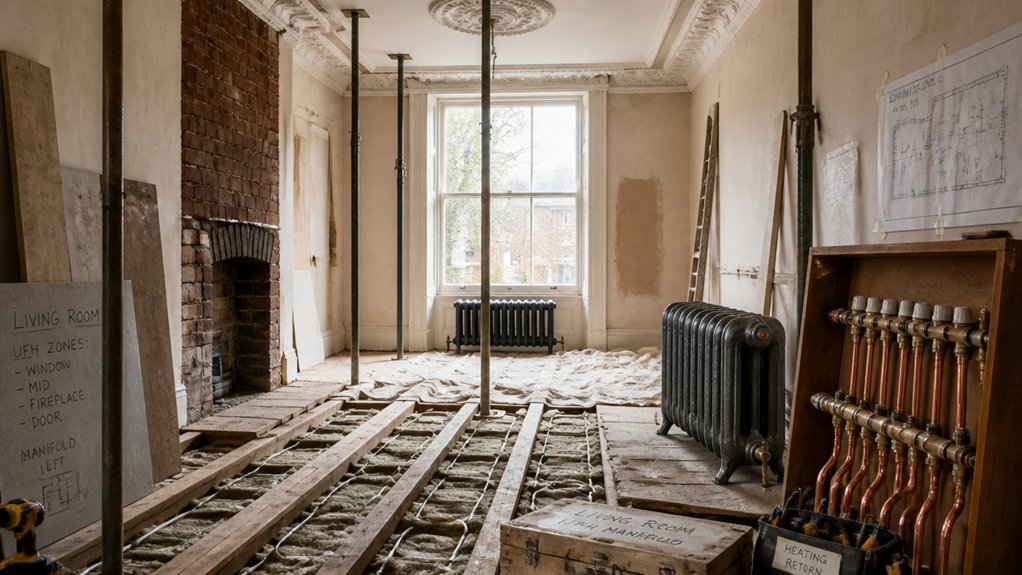
Because most period buildings manage moisture through breathable materials and incidental ventilation, you’ll get better results by upgrading heating and insulation as a whole system rather than “packing” fabric with modern layers.
Start with a room-by-room heat-loss assessment, then improve controllability using thermostatic radiator valves and zoning so you don’t overheat damp-prone corners.
Choose insulation materials that stay vapour-open where traditional walls need to dry: wood fibre boards, hemp-lime, sheep’s wool, or breathable aerogel blankets for tight reveals.
Avoid impermeable foams that can trap moisture against timbers.
Prioritise loft insulation, draught-proofing to windows and doors, and secondary glazing before internal wall linings.
Refine radiator placement by keeping emitters on external walls or under windows, maintaining convective wash to reduce cold-surface condensation, and leave clear gaps behind skirtings and floor voids for airflow.
Update Period-Home Kitchens and Bathrooms (Without Clash)
Although kitchens and bathrooms demand more services than any other rooms, you can modernise them in a period home without visual clash by treating the original fabric as the “fixed point” and designing everything else to be reversible and breathable.
Keep joinery lines simple, echo existing skirtings, and set new units off walls so cornices and plaster details stay legible.
Specify lime-compatible plasters, vapour-open paints, and well-detailed extract ventilation to manage moisture without trapping it in historic masonry.
Run pipework and cabling in accessible voids, not chased into original brick, and use isolation valves for maintenance.
Choose Modern appliances behind panelled fronts, and select taps and hardware with restrained profiles.
Add Smart technology via wireless sensors and discreet controls, avoiding invasive rewiring.
Add an Extension That Fits the Period Style
When you add an extension to a period home, you’ll get the best conservation outcome by starting with a fabric-first appraisal—age and condition of masonry, roof structure, and moisture behaviour.
Then designing the new work to respect the original building’s hierarchy. Keep the primary façade dominant, set additions back, and match eaves lines and window rhythms for Architectural harmony.
Choose a form that reads as subordinate: lower ridge, simpler massing, and clear junctions that avoid trapping damp.
Prioritise Material compatibility over imitation. Use lime-based mortars where the original needs vapour permeability, and specify brick, stone, or timber with similar porosity and thermal movement.
Detail flashings, cavity trays, and ventilation to manage rainwater. If you introduce modern glazing, keep reveals deep and proportions consistent.
Frequently Asked Questions
How Do I Choose Historically Appropriate Paint Colors for My Period Home?
Choose historically appropriate paint colors by dating your house’s construction and region, then matching it to documented Historical color palettes from paint archaeology, period catalogs, and local preservation guidelines.
You should take microscopic paint scrapings or hire a conservator to identify original layers, then test large swatches in changing daylight.
You can narrow options using Authentic paint brands that reproduce era pigments and sheen levels, and you’ll document decisions for future stewardship.
Where Can I Source Authentic Reclaimed Materials and Period-Style Hardware?
You’ll find authentic reclaimed materials where history still leaves footprints: architectural salvage yards, demolition resellers, and regional reuse centers.
Shop specialist dealers for Vintage lighting, and comb reclaimed-wood suppliers for Antique flooring with documented provenance.
Use preservation nonprofits’ vendor lists, local heritage trades directories, and period-focused auctions for hardware.
Ask for species ID, moisture readings, and lead-safe documentation.
Verify patina versus artificial distressing, and match fasteners to era.
What Are Common Insurance Issues When Renovating a Listed or Older Home?
You’ll commonly face coverage gaps for pre-existing defects, underinsurance from rising rebuild costs, and exclusions tied to “wear and tear” or gradual damage. Insurers may demand specialist surveys, stricter fire/theft controls, and limits on nonstandard materials.
During works, you must clarify Insurance claims pathways: who notifies, documents, and funds emergency stabilisation. Lock down contractor liability in writing, confirm public liability, and make sure your policy covers vacant periods. Also check listed-consent delays.
How Can I Improve Natural Light Without Altering Original Window Openings?
You can boost natural light by improving internal reflectance, clearing obstructions, and using reversible glazing upgrades—without resizing openings.
For example, in a Victorian terrace, you’d restore pale limewash, add high-reflectance shutters, and fit slimline secondary glazing to cut haze while preserving frames.
Where permitted, replace heavy Stained glass with repaired, lighter panels.
Consider discreet Skylight installation on rear slopes, using conservation flashing and minimal structural intervention.
Should I Hire a Conservation Architect, and When Is It Necessary?
You should hire a conservation architect when your project affects protected fabric, listed status, or requires consent, because you’ll reduce risk and rework.
Bring one in early—before design freeze—so you can test options for Modern fixtures and Energy efficiency against heritage constraints.
You’ll benefit most if you’re changing windows, roofs, structural walls, or services, or if moisture, decay, or thermal upgrades need evidence-led detailing.
Conclusion
You’ve now given your period home a thoughtful “freshen-up” without sending its character packing. By surveying early, confirming permissions, and fixing original fabric first, you’ve protected what heritage research says holds value: authentic joinery, plaster, and fenestration. You’ve also slipped in insulation and efficient heating in a low-risk, breathable way, then modernized kitchens and baths with sympathetic finishes. If you’ve added space, you’ve done it quietly—scaled, detailed, and reversible.
About the Author