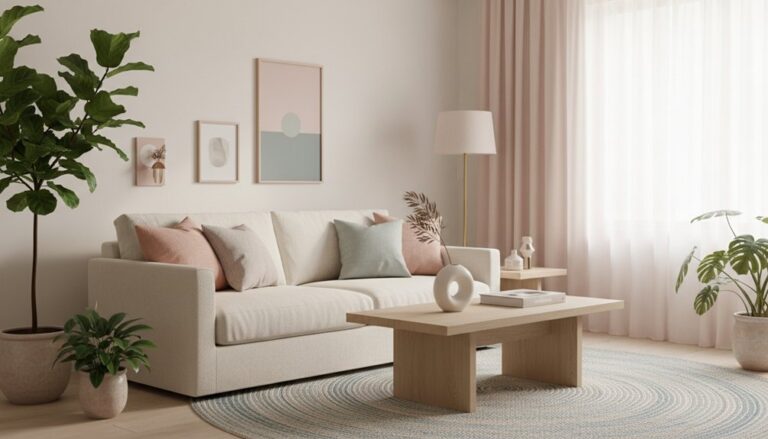
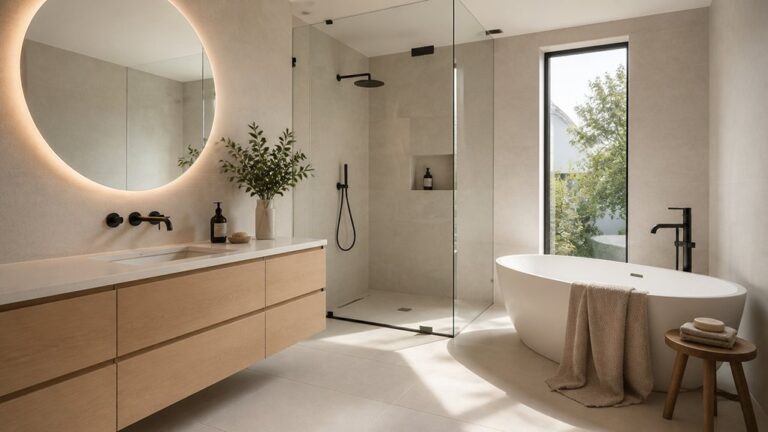
Transform your bedroom with soft interior styling by starting with a low-contrast palette—misty whites, gentle greige, muted sage, and pale blue-gray—then anchoring with a small hit of smoky navy or clay. Layer crisp cotton or relaxed linen sheets, a properly lofted duvet, and a light blanket, finishing with a throw and stepped pillows. Add a plush rug, full-length sheers plus lined panels, warm dimmable lighting, and rounded matte pieces. Keep decor edited, and explore next steps below.
Key Takeaways
- Start with a low-contrast, calming palette (misty whites, gentle greige, muted sage) and add deeper accents sparingly for grounding.
- Layer soft textures—linen, cotton, boucle, velvet—through bedding, rugs, and throws to create a plush, inviting feel.
- Choose rounded, matte-finish furniture (curved headboard, radius nightstands) to soften lines and visually calm the space.
- Install layered window treatments with high, wide rods, sheers, and lined panels for softness, privacy, and a taller, airier look.
- Use warm, dimmable layered lighting and a few curated artworks and weighted objects to add mood, cohesion, and intentionality without clutter.
Choose a Calming Soft Bedroom Color Palette

How do you want the room to feel the moment you walk in—cool and airy, warm and cocooning, or quietly balanced? Choose a soft palette that supports that intent: misty whites and pale blue-grays for freshness, sand and oatmeal for warmth, or gentle greige with muted sage for equilibrium.
Keep contrast low; let one deeper tone—smoky navy, clay, or olive—anchor the scheme in small doses.
Use calming wall treatments to control glare and visual noise: matte paint, limewash, or a subtle textured wallpaper reads velvety under lamplight.
Then add mood-enhancing accents through a single metal finish, a tinted glass vase, or a quiet artwork that repeats your undertone.
You’ll create cohesion without sacrificing softness.
Start With Bedding: Sheets, Duvet, and Layers

Where do you feel softness first when you enter a bedroom—before the art, before the lighting—if not in the bed itself? Start by choosing sheets that fit your mattress depth, then add a duvet insert with the right loft for your sleep temperature. Anchor everything with a duvet cover that closes cleanly, so the bed always looks tailored.
Build layers: a light blanket under the duvet for adjustable comfort, then a throw folded at the foot to signal ease. Use Decorative pillow arrangements to guide the eye: two sleepers, two shams, one accent, keeping heights stepped and centered.
Finish with Bedding maintenance tips: rotate the duvet, wash on schedule, and store off-season layers in breathable bags.
Pick Soft Fabrics (Linen, Cotton, Boucle)

Once your bed’s layers look inviting, the next cue for softness comes from the fabrics you touch throughout the room—on the headboard, curtains, bench, and even a simple lumbar pillow.
Choose linen when you want relaxed texture and breathable comfort; it reads effortless and tailored at once. Bring in cotton for crispness that still feels gentle, especially in pillow shams and slipcovers you’ll launder often.
Add boucle strategically—on an accent chair or bench cushion—so you get that cloudlike hand without visual clutter.
If you’re craving polish, consider Silk upholstery on a headboard panel or a small ottoman; keep the tone matte and muted.
Finish with Velvet accessories like a bolster or cushions to deepen warmth and enhance touch.
Add a Plush Rug and Full-Length Curtains
Anchor the room with a plush rug that’s sized to frame the bed and feels soft underfoot, so your first step sets the tone.
Then layer full-length curtains—sheers for filtered light with a heavier panel for privacy and warmth—to control mood and acoustics.
Keep color and texture in harmony by echoing tones from your bedding and mixing finishes (matte, nubby, silky) for a cohesive, tailored softness.
Choosing The Right Rug
How do you make a bedroom feel instantly softer underfoot and more finished overall? You start with an intentional rug that supports your layout, palette, and daily routine. Prioritize area rug placement first: in most bedrooms, you’ll want the rug to extend beyond the sides and foot of the bed so your first steps land on softness, not cold flooring. Aim for consistent margins and align it square to the bed for a tailored look.
Next, refine rug material choices based on how you live. Choose wool for resilient plushness and easy maintenance, or a wool-blend for budget flexibility. If allergies are a concern, select low-shed, tightly woven options. Keep the pile height proportionate to door swings and furniture legs.
Layering Full-Length Curtains
Because windows take up so much visual real estate, layering full-length curtains instantly softens the room and makes it feel properly finished. Start with a functional base layer—sheers or a light-filtering panel—to manage glare and daytime privacy without blocking the view.
Add a second, fuller drapery layer to create depth and a tailored outline around the window.
Mount your rod wider and higher than the frame so the fabric stacks off the glass and the ceiling line feels taller. Choose a generous return and overlap so gaps don’t leak light at night.
Specify quality window treatments with proper lining and weighted hems for a clean fall. Finish with curtain accessories—rings, holdbacks, or tiebacks—that match your hardware and make daily use effortless.
Color And Texture Harmony
Where does a bedroom start to feel truly calm and cohesive? It happens when your color story and surface finishes agree. Begin with muted pastels—dusty blush, misty blue, or warm oat—as the connecting thread across bedding, art, and accents.
Then let texture do the quiet work: pair matte paint with textured wall coverings so the room reads soft, not flat.
Anchor everything with a plush rug that extends beyond the bed’s sides and foot, so your first step lands on comfort and the palette feels grounded. Reinforce vertical balance with full-length curtains in a tone one shade deeper or lighter than the walls; they’ll frame the window, soften acoustics, and lengthen the room. You’ll get harmony without overmatching.
Style Pillows and Throws With Restraint
Even if you love a layered, inviting bed, you’ll get the most polished result when you edit your pillows and throws like you’d accessories on an outfit. Start with two sleeping pillows in crisp cases, then add two shams that echo your headboard or wall color for visual calm.
When you’re mixing patterns, keep the scale intentional: one larger motif, one tighter print, and one solid to anchor the set. You’ll create balancing textures by pairing a matte linen or cotton with a single plush accent—bouclé, velvet, or a lightly ribbed knit—rather than stacking every tactile option.
Limit the palette to two neutrals plus one muted accent so the bed reads tailored, not busy. Finish with one throw, folded at the foot or draped once, and stop there.
Use Warm, Layered Lighting in the Bedroom
If you want the bedroom to feel calm the moment you walk in, build your lighting the way you’d build a styling plan: in warm, layered levels.
Start with a dimmable ceiling source on a warm temperature so you get an Ambient glow without glare. Then add task lighting where you actually use it—bedside reading lights aimed down, not out, to keep shadows soft and controlled.
Finish with accent light that supports the mood: a small table lamp across the room, LED strip tucked behind a headboard, or a shaded floor lamp that grazes the wall.
Put everything on separate switches or smart scenes so you can shift from morning clarity to evening ease.
For candle ambiance, use flameless votives in clusters for safe, steady warmth.
Choose Rounded Furniture and Matte Finishes
Once you’ve softened the lighting, echo that calm with furniture that curves and surfaces that don’t shout. Choose rounded furniture to reduce visual tension: a pill-shaped upholstered headboard, a nightstand with radius corners, a bench with a soft waterfall edge. These shapes guide your eye gently around the room, so the layout feels easier to live in and navigate.
Balance those curves with matte finishes that absorb light instead of reflecting it. Specify a low-sheen lacquer on casegoods, honed stone on a side table, or powder-coated metal on lamps and hardware. Keep textures tactile but controlled: brushed oak, boucle, or micro-suede read quiet without looking flat.
If you’re mixing materials, repeat one matte tone twice to unify the set.
Finish Soft Bedroom Styling With Personal Touches
Two or three personal touches will finish a soft bedroom more convincingly than a shelf full of décor. Choose pieces that reinforce your palette and mood: one framed photo in a warm-toned mat, a ceramic dish for jewelry, or a linen-bound journal on the nightstand.
Keep proportions calm—small, weighted objects read intentional against plush textiles and rounded forms.
Anchor the room with decorative artwork that echoes your fabric tones and lighting temperature. Hang it at eye level from the bed, or lean a larger piece on a dresser to soften hard lines.
Add personal mementos sparingly, then edit: if an item doesn’t support rest, relocate it. You’ll get a room that feels curated, not staged, and still unmistakably yours.
Frequently Asked Questions
How Can I Soundproof My Bedroom Without Major Renovations?
You can soundproof your bedroom by sealing gaps around doors and windows with weatherstripping and a door sweep. Then layer absorption by hanging heavy curtains, adding a thick rug with underlay, and placing bookcases against noisy walls.
Install Decorative wall panels with acoustic backing to target reflections. Choose soft bedding materials and an upholstered headboard to dampen high-frequency noise.
For a client-ready finish, test changes room-by-room and adjust.
What’s the Best Way to Reduce Dust and Allergens in Soft Textiles?
Dust-defying, dander-dodging diligence works best: you’ll wash and dry bedding weekly on hot, vacuum textiles with a HEPA attachment twice weekly, and steam-clean upholstery monthly.
For Dust mite prevention, you’ll zip allergen-proof encasements on pillows and mattresses and keep humidity under 50%.
You’ll choose Allergen resistant fabrics like tightly woven cotton, microfiber, or leather over shag and heavy knits.
You’ll rotate, shake, and sun-cure throws regularly.
How Do I Choose an Air Purifier That Won’T Disturb Sleep?
Choose an air purifier with a low dB rating (under 30 dB on sleep mode) and a true HEPA filter to improve air quality without adding noise.
You’ll want a dimmable or fully off display, no beeps, and an auto mode that ramps gently.
Size it to your room’s CADR so it won’t run at high speed.
Place it away from your head to protect sleep hygiene.
Which Indoor Plants Are Safest for Pets in a Bedroom?
Better safe than sorry: you’ll want pet safe plants like spider plant, Boston fern, parlor palm, areca palm, and calathea for your bedroom.
You’ll keep cats and dogs safer by skipping lilies, pothos, philodendron, and sago palm.
For client-ready bedroom greenery options, you’ll place plants on stable stands, use non-tipping pots, and top soil with pebbles to deter digging.
You’ll still verify toxicity with ASPCA.
How Can I Keep a Soft-Styled Bedroom Cool in Summer?
Keep your soft-styled bedroom cool by prioritizing airflow and light control. Swap to Breathable fabrics like linen or percale for sheets and a lightweight cotton quilt. Then layer a thin throw only at night.
Choose Cool color schemes—soft whites, misty blues, pale sage—to visually lower the temperature and reduce heat-absorbing dark accents.
Add blackout-lined sheers, run a quiet fan, and keep lamps LED to cut heat.
Conclusion
You’ve transformed your bedroom by choosing a calming palette, layering breathable bedding, and leaning into soft linen, cotton, and bouclé. You grounded the space with a plush rug and full-length curtains, then edited pillows and throws so every piece earns its place. Warm, layered lighting flatters evenings, while rounded furniture and matte finishes keep the mood gentle. Like a vinyl record in a Bluetooth speaker, your personal touches make it unmistakably yours.
About the Author