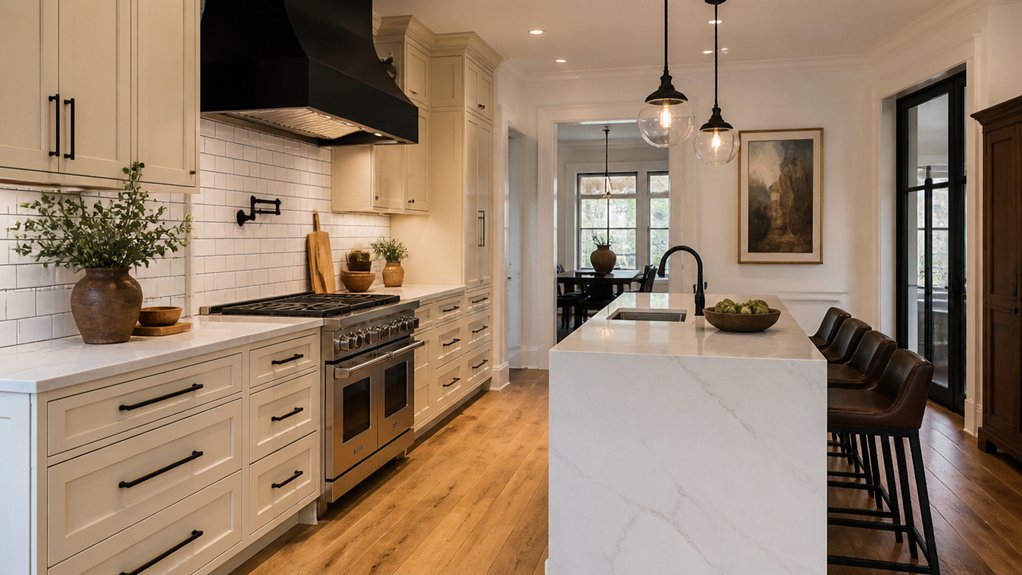
Can you bring a modern edge to a traditional kitchen or not? You don’t need to gut your traditional kitchen to make it feel current—you just need sharper contrasts and cleaner lines. Start by deciding what stays classic (cabinet fronts, trim) and what goes modern (mixed-metal hardware, a slab-look countertop, sculptural pendants). Keep your palette tight—warm white, matte black, and one muted accent—then edit the decor down to a few vintage pieces that earn their spot. Next, the fastest upgrades might surprise you…
Key Takeaways
- Keep solid traditional cabinets, but refresh with modern paint colors and slim pulls for cleaner lines.
- Choose one hero update—statement pendant, bold backsplash, or sculptural island—then keep other finishes restrained.
- Use a tight palette of warm whites, soft blacks, and one muted accent to unify old and new.
- Upgrade fixtures with intentional mixed metals (brass, matte black, nickel) and repeat each finish at least three times.
- Modernize surfaces and lighting with slab-look quartz, minimal-grout tile, under-cabinet LEDs, and dimmers for a crisp, layered look.
Define Your Modern-Traditional Mix (Budget + Priority List)
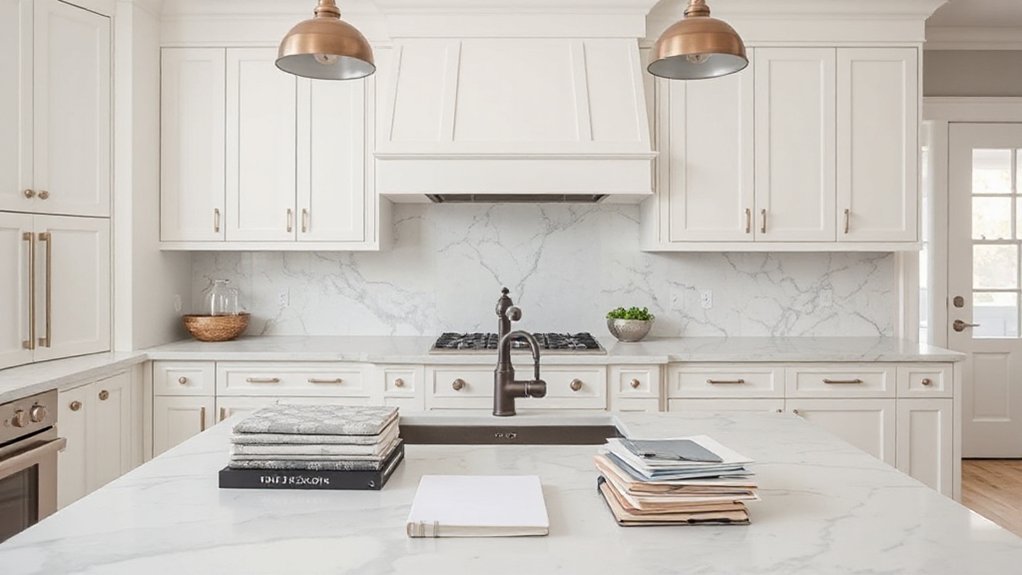
Start with two quick decisions: how modern you want the kitchen to feel and where you’ll spend for impact. Pick a lane—classic base with contemporary accents, or modern shell with heritage details—then lock it in with Budget planning.
List every change you’re considering and tag each as “must,” “nice,” or “later” for clear priority setting.
Invest first in high-visibility surfaces: lighting, countertops, backsplash, and paint, because they steer the room’s mood fastest.
Keep existing cabinetry if it’s solid; refine it with color, cleaner lines, and updated styling.
Choose one hero moment (a statement light, bold slab backsplash, or sculptural island) and keep everything else quiet.
You’ll get a curated mix, not a mashup.
Modernize Traditional Kitchen Hardware and Faucet Finishes
You can modernize a traditional kitchen fast by treating hardware and faucet finishes like jewelry—layered, intentional, and current. Try mixed-metal hardware pairings (think brushed brass with matte black or polished nickel) and swap in a sleek faucet finish to sharpen the whole vignette.
Then update dated knobs and pulls with modern profiles—slim bar pulls, squared knobs, or softly arched handles—to bring clean lines to classic cabinetry.
Mixed-Metal Hardware Pairings
Why settle for a single finish when mixed-metal hardware instantly sharpens a traditional kitchen’s look? Start with one “anchor” metal—polished nickel or aged brass—and layer a second tone for contrast, like matte black or burnished bronze.
Keep it intentional: repeat each finish at least three times across knobs, pulls, hinges, and lighting so the mix reads curated, not chaotic.
Lean into Vintage accents by pairing warm brass bin pulls with dark, modern edge pulls on adjacent cabinetry. Add Colorful accents through enamel-tipped knobs or leather-wrapped pulls, then echo that hue in a runner or barstool piping.
Stick to one silhouette family—arched pulls or stepped knobs—to unify the look while the metals provide the modern punch.
Sleek Faucet Finish Updates
Mixed metals set the tone on cabinets, but a sleek faucet finish often delivers the most noticeable modern lift because it sits front and center at the sink. Swap dated chrome for brushed nickel if you want a soft, tailored sheen that still feels classic.
Choose matte black to sharpen a traditional backdrop and make marble or butcher block read instantly current, especially in farmhouse style kitchens. Prefer a warmer update? Brushed brass adds polish without losing Vintage charm, particularly against creamy paint and aged oak.
Keep the silhouette streamlined: a high-arc pull-down with a minimal base looks fresh, not fussy. Match your finish to sink accessories and lighting accents so the update looks intentional, not random.
You’ll get a modern hit with zero layout changes.
Modern Knob And Pull Styles
Even if your cabinets stay traditional, modern knobs and pulls can shift the whole kitchen into a cleaner, more current lane. Start by swapping curved, fussy pieces for slim bar pulls, crisp edge pulls, or minimal round knobs that read intentional, not dated.
Choose a consistent geometry—straight, squared, or softly pill-shaped—and repeat it across doors and drawers for a tailored look.
To keep Vintage charm without leaning into ornate detailing, pick updated classics: a modernized cup pull with sharper lines, a knurled knob in a restrained profile, or a mixed-material pull with subtle leather or wood.
Go larger than you think; longer pulls feel custom and contemporary.
Finish-wise, pair warm brass with walnut tones, or use matte black to sharpen creamy cabinetry.
Update Lighting for a Modern Traditional Kitchen Look
To give your traditional kitchen a modern edge, layer statement lighting with crisp task lighting—think sculptural pendants over the island plus under-cabinet LEDs for clean, shadow-free prep.
You’ll get that curated, high-end look when each fixture has a purpose and a distinct silhouette.
Finish it off with modern metals like matte black, brushed brass, or polished nickel to sharpen the whole palette without fighting your classic details.
Mix Statement And Task Lighting
The fastest way to give a traditional kitchen a modern edge is to layer lighting with intention: a sculptural statement fixture for style, plus precise task lights where you actually work. Hang a bold pendant or chandelier over the island to anchor the room, then add low-profile under-cabinet strips to erase shadows on counters.
Dial in an ambient glow with dimmers so evening prep feels curated, not clinical. For task illumination, aim for even, high-CRI light at sinks, ranges, and chopping zones—your eyes will thank you.
Keep spacing consistent, hide drivers, and choose warm-neutral color temps to flatter wood and stone. When you combine drama overhead with quiet, hardworking layers below, your traditional details read intentional, and the whole kitchen feels sharper, fresher, and more current.
Choose Modern Fixture Finishes
Once you’ve nailed the lighting layers, modernize the look fast by swapping dated finishes for cleaner, current ones. Trade shiny brass and busy bronze for matte black, brushed nickel, or soft satin brass that reads intentional, not retro.
If your kitchen leans traditional, choose simple silhouettes—cylinders, cones, or streamlined lanterns—so the finish does the styling.
Keep cohesion: match pendants, sconces, and hardware within one undertone (warm or cool) and limit yourself to two metals max.
Want vintage charm without the heaviness? Pair satin brass with crisp opal glass.
Prefer rustic accents? Keep your wood beams and stone, then ground them with blackened steel or aged iron that feels edited.
You’ll get contrast, not clutter.
Pick Modern Paint Colors and High-Contrast Pairs
While traditional kitchens lean on warm woods and familiar neutrals, modernizing the look often starts with paint that feels crisp, intentional, and slightly unexpected. Tighten your Color palettes to two or three tones: a clean warm white, a grounded charcoal, and a muted accent like olive or clay.
Use Contrast pairing to sharpen classic details. Paint uppers a soft white and lowers a deep ink, or flip it with a dark hood moment against lighter cabinetry. For trim, skip creamy yellows and choose a neutral white with a balanced undertone so metals and stone feel current.
Add a modern twist with a tonal ceiling—one shade deeper than the walls—to lower visual noise. Sample in morning and evening light, and commit to a satin or matte finish for architecture-first polish.
Upgrade Backsplash and Countertops With Classic-Clean Lines
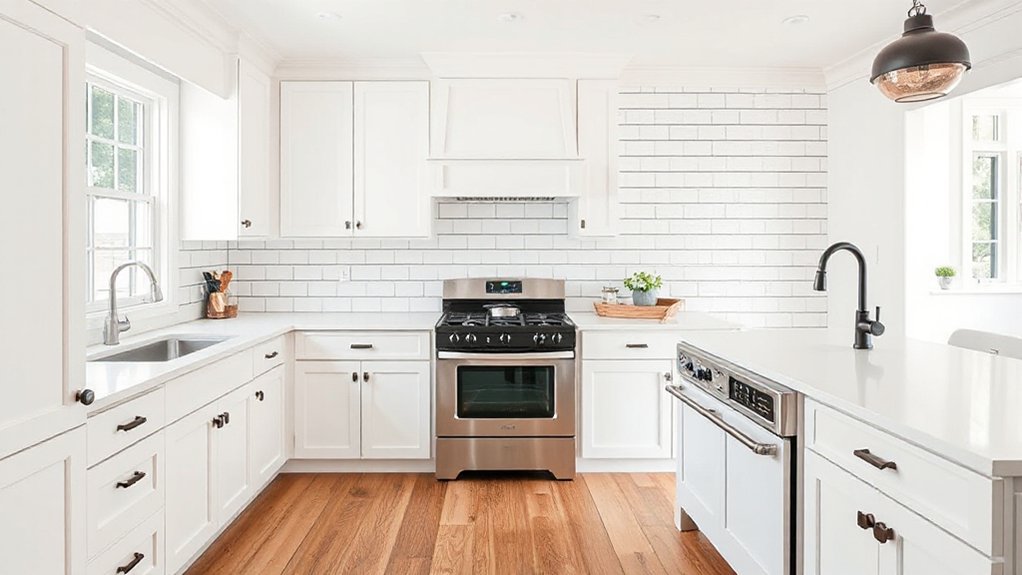
If your cabinets already read classic, you can modernize the whole room fast by tightening up the backsplash-and-counter story with clean edges and low-variation surfaces. Choose a slab-look quartz or honed stone with subtle movement, then commit to a crisp, square edge instead of ornate profiles.
Extend the countertop up the wall as a short backsplash for a seamless line, or run full-height tile in one continuous field. Favor tile patterns that feel graphic but restrained: stacked subway, oversized squares, or thin vertical kit-kat mosaics with minimal grout contrast.
Keep color schemes edited—warm whites with charcoal veining, taupe with brushed nickel, or black counters with off-white tile. Finish with a low-sheen grout and clean caulk lines.
Style a Traditional Kitchen the Modern, Uncluttered Way
Even though your kitchen leans traditional, you can make it feel instantly modern by styling it with a sharp edit and a “nothing extra” mindset. Clear counters first: stash small appliances, corral daily tools in one tray, and keep only one statement piece out.
Choose a tight palette—warm whites, soft black, and one muted accent—so ornate details read intentional, not busy. Swap cluttered collections for curated Vintage decor: a single antique croc, a framed recipe, or one patinated vase.
Let Classic furniture shine by giving it breathing room; pull stools back, simplify place settings, and avoid fussy textiles.
Add a modern hit with a linear bowl of fruit, a slim rail for utensils, or matching canisters. Finish by hiding cords and tightening sightlines.
Frequently Asked Questions
What Modern Appliances Best Suit a Traditional Kitchen Layout?
You’ll get the best fit with panel-ready French-door refrigeration, an induction range with classic knobs, and a quiet, integrated dishwasher that disappears into cabinetry.
Choose a speed oven or steam oven in a built-in wall stack to keep sightlines clean.
Add a slim under-counter wine fridge if you entertain.
Pair these with Vintage lighting and Classic color schemes so the tech feels tailored, not flashy, in your layout.
How Do I Add Smart-Home Features Without Disrupting Classic Aesthetics?
You add smart-home features discreetly by hiding hardware and choosing finishes that match your millwork.
Use Smart lighting with warm-dim LEDs in vintage-style fixtures, then control scenes through invisible in-wall modules.
Opt for Voice control via a tucked-away hub and a low-profile mic/speaker in a pantry or under-cabinet recess.
Swap visible switches for classic toggle faces that trigger smart relays.
Keep everything color-matched, minimal, and consistent.
Should I Refinish or Replace Existing Traditional Cabinets for a Modern Look?
Refinish if your cabinets are solid and layouts work; you’ll get a modern look fast with Cabinet painting and hardware updates.
You can shift to a soft matte greige, inky blue, or warm white, then add slim pulls in brushed nickel or matte black for a cleaner line.
Replace only if doors feel dated, boxes are failing, or you want new storage, height, or panel style.
What Flooring Options Balance Traditional Warmth With Modern Durability?
Choose flooring that feels classic yet performs like a workhorse: wide-plank engineered oak gives you real grain, stable cores, and that coveted hardwood contrast against painted cabinets.
If you want pattern, set Vintage tiles in an inset “rug” by the range or entry, then border with wood for a tailored look.
For ultra-durable ease, pick matte LVP in warm, natural tones with minimal bevels and a low-sheen finish.
Do I Need Permits for Electrical or Plumbing Upgrades in a Kitchen Remodel?
Yes—you usually need permits for kitchen electrical or plumbing upgrades, especially if you’re adding circuits, moving outlets, relocating fixtures, or altering supply/drain lines.
Your city’s building codes dictate what triggers a permit, and skipping the permit process can stall resale or void insurance.
Pull permits early, align plans with your designer and licensed trades, and schedule inspections so your lighting layout, GFCIs, venting, and shutoffs all pass cleanly.
Conclusion
Now you’ve got a clear roadmap: define your mix, spend where it shows, and let clean-lined upgrades sharpen the traditional bones. Swap in mixed-metal hardware, a streamlined faucet, and sculptural pendants to instantly feel current. Choose warm whites with inky contrast, then keep countertops and backsplashes crisp and slab-like for a tailored finish. Edit decor to a few vintage hits, add slim rails, and keep surfaces calm—why not make timeless look new?
About the Author