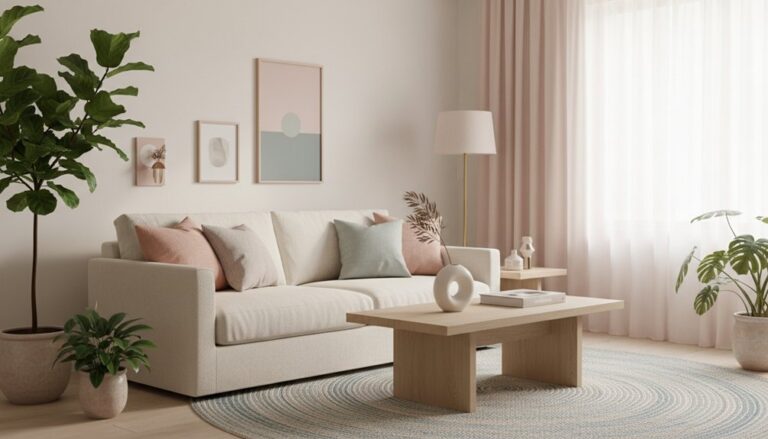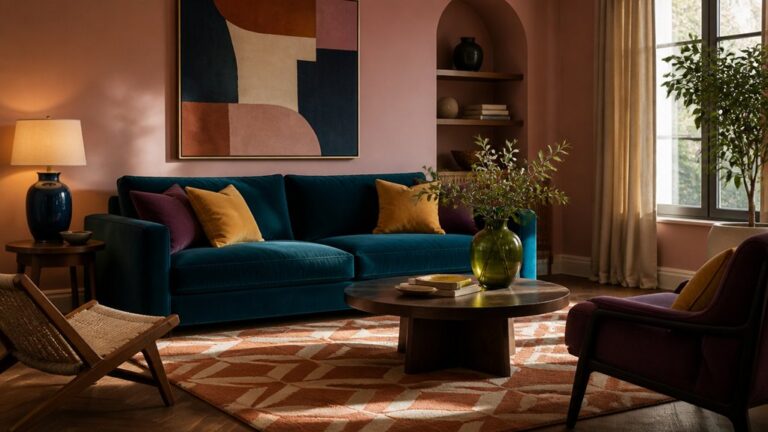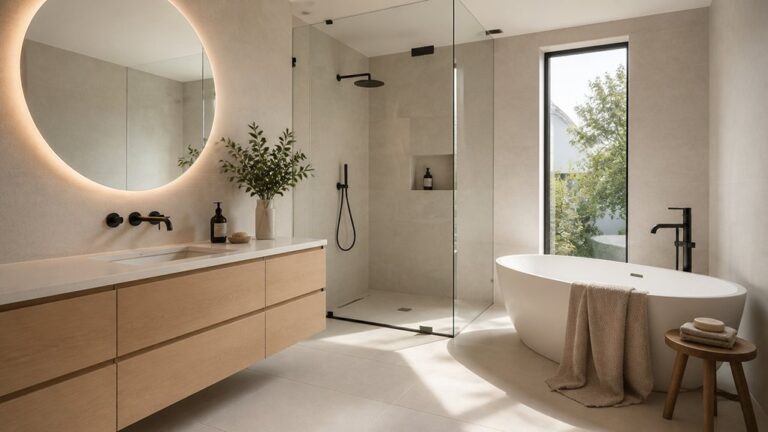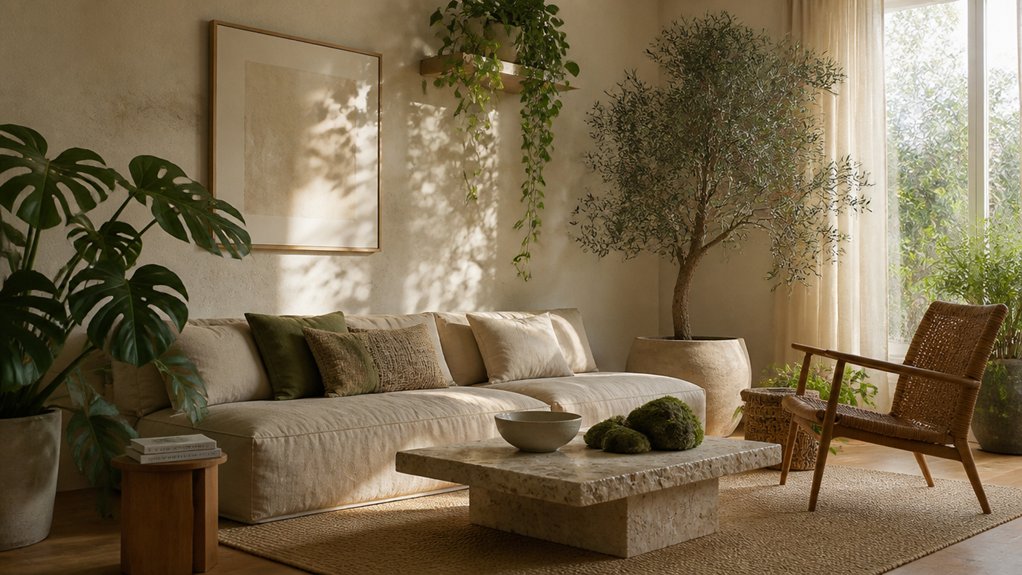
Here are some Biophilic design ideas to consider. You can turn your home into a quiet refuge by working with nature instead of decorating over it. Start by noticing how light moves across the room, how air circulates, and where greenery can thrive without fuss. Bring in honest materials—wood grain, cool stone, woven fiber—and let muted earth tones settle the space. Once you map those basics, the right plant choices and textures fall into place…
Key Takeaways
- Maximize natural light and airflow with clear windows, linen sheers, mirrors, and cross-breezes to mimic outdoor freshness.
- Add purposeful greenery by matching plants to light levels, grouping for humidity, and placing foliage to soften corners and edges.
- Choose honest natural materials—wood, stone, linen, jute, and low-VOC finishes—to create an earthy, healthy, tactile foundation.
- Layer nature-inspired patterns and textures with woven fibers, botanical prints, and organic lines that echo leaves, waves, and bark.
- Calm the senses using a muted earth-and-mineral palette, subtle natural scents, and gentle sounds to create a serene sanctuary.
Start With Biophilic Design: 5 Core Elements
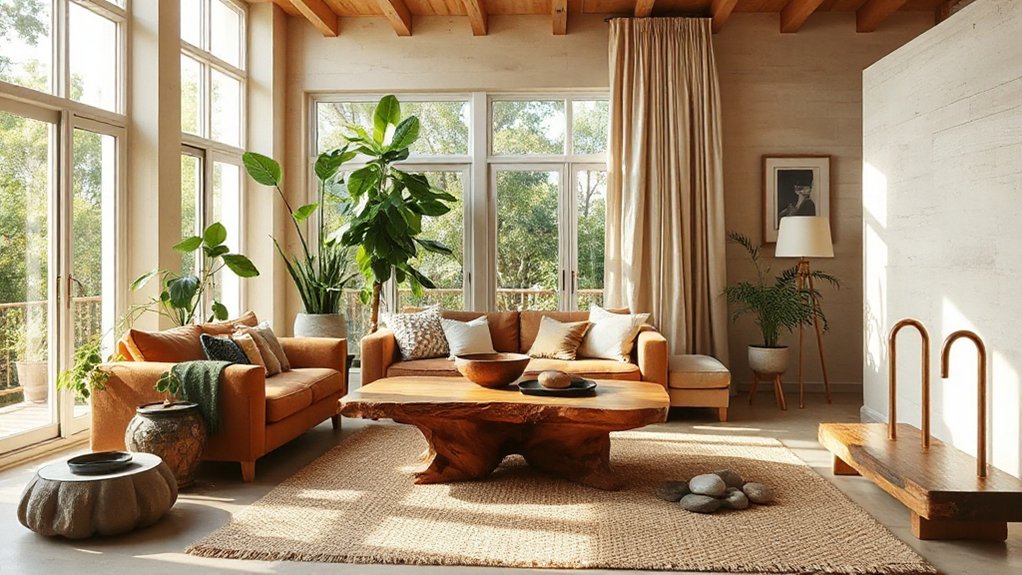
Before you choose plants or paint, ground your space in the five core elements of biophilic design: natural light and airflow, living greenery, honest materials like wood and stone, patterns that echo nature’s rhythms, and sensory variety through texture, sound, and scent.
You’ll create calm by treating each element as a cue from nature inspired architecture, not a trend. Bring in living greenery with purposeful placement, then anchor it with tactile surfaces—oiled oak, cork, clay tile, river rock.
Commit to sustainable material choices: reclaimed timber, low-VOC finishes, responsibly quarried stone, natural fibers.
Layer patterns like leaf veining or wave lines through textiles and screens.
Finally, tune your senses: linen’s hand, a small fountain’s hush, cedar’s clean aroma.
Boost Daylight and Airflow (Even in Apartments)
Natural light and fresh air set the baseline for every other biophilic choice you’ll make, and you can amplify both without knocking down walls. Start with natural light optimization: clear the window line, swap heavy drapes for linen sheers, and place mirrors or pale clay-toned surfaces to bounce daylight deeper into the room. Choose low-sheen finishes so light feels soft, like morning fog.
For airflow, create a simple cross-breeze: open windows on opposite sides when possible, or pair one open window with a doorway to move air. Use a quiet fan to pull air outward, not just stir it.
Prioritize Indoor air quality by vacuuming with a HEPA filter, airing out textiles, and avoiding synthetic fragrances that linger indoors.
Pick Biophilic Houseplants for Your Light Level
Even if your home only gets a slant of sun, you can still choose plants that thrive in that exact light and return the favor with calmer air and softer edges.
Start by mapping your rooms: bright, indirect zones suit pothos, rubber plant, and philodendron; low-light corners welcome snake plant, ZZ plant, and cast-iron plant; sunny sills can handle succulents and herbs if you rotate them weekly.
Use plant placement strategies to match each leaf’s needs: pull sensitive foliage back from hot glass, lift trailing vines onto shelves, and group plants to steady humidity.
Keep indoor plant care simple—water only when the top inch dries, rinse dust off leaves, and watch for pale growth that signals you need more light.
Add Biophilic Texture With Wood, Stone, and Fiber
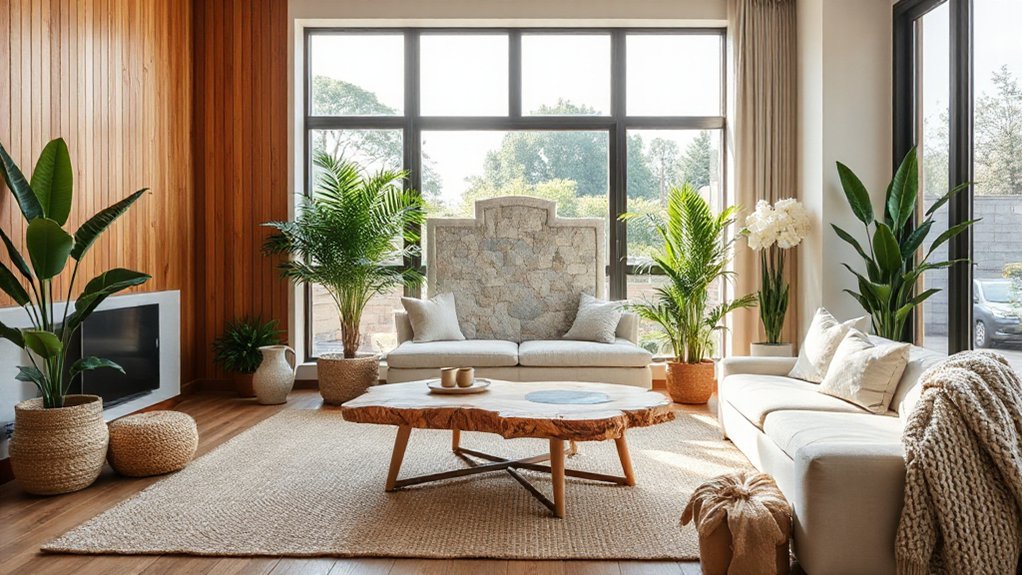
When you layer wood, stone, and fiber into a room, you give your senses something grounded to land on—warm grain under your hand, cool mineral weight at your feet, and soft weave that hushes echo.
Choose Natural material combinations that feel honest: a solid oak side table, a slate tray, a linen sofa cover, and a jute runner.
Use Textural layering techniques to create comfort without clutter. Mix smooth and rough—polished river-stone bowls beside sawn wood shelves—so your eye slows down.
Add wool throws, rattan baskets, or hemp curtains to soften hard edges and improve acoustics.
Keep finishes low-tox and sealed with plant-based oils so the air stays clean.
Let knots, veining, and fray lines remain; they remind you to breathe slower.
Build a Biophilic Color Palette That Feels Calm
Texture gives your hands and ears a sense of shelter; color can give your nervous system the same steadying cue. Start with hues you see outside: clay, sand, lichen, fog, bark, deep water. Keep saturation low so light can breathe across walls, textiles, and grain.
Aim for Natural color harmony by choosing one warm earth tone, one cool mineral tone, and a muted green as your living “bridge.” Then build calming paint palettes with soft, matte finishes that absorb glare and quiet visual noise.
Let ceilings drift lighter than walls to lift your breath; ground the room with darker floors or wood stains. Repeat a single accent—terracotta, indigo, or moss—so your eye moves like a slow walk through a grove.
Frequently Asked Questions
What’s the Average Cost to Implement Biophilic Design in One Room?
You’ll typically spend $500–$5,000 to implement biophilic design in one room, depending on scope and finishes. Keep it closer to $500–$1,500 with plants, daylight-friendly sheers, and a few Natural materials like wood accents.
Expect $2,000–$5,000 if you add living walls, custom millwork, or stone. Choose Sustainable sourcing to support cleaner air, calmer nerves, and long-lasting, earth-honest textures.
Are There Biophilic Design Options That Are Safe for Pets and Kids?
Yes—you’ve got plenty of biophilic options that stay safe for pets and kids. Choose Pet safe plants like spider plant, areca palm, and calathea, and place them in sturdy, tip-resistant planters.
Use Child friendly materials such as low-VOC paints, sealed cork, wool rugs, and smooth, splinter-free wood.
Favor washable textiles, rounded edges, and natural light to support calm breathing and everyday wellness.
How Do I Prevent Mold When Adding Lots of Indoor Plants?
You prevent mold by dialing in Plant watering and boosting Air circulation.
Water only when the top inch of soil dries, empty saucers, and choose breathable terracotta or clay pots.
Add a pebble tray without letting roots sit in water.
Space plants so leaves don’t touch, run a quiet fan, and crack windows daily.
Use well-draining mixes, wipe damp surfaces, and remove dead foliage to keep air clean.
Can Biophilic Design Help Reduce Stress and Improve Sleep Quality?
Yes—biophilic design can reduce stress and help you sleep better by cueing your nervous system to downshift. You’ll benefit from natural lighting that supports circadian rhythm; keep mornings bright and evenings warm, dim, and low.
Build sensory engagement with wood grain, stone, linen, and soft greenery to calm touch and sight. Add gentle airflow, quiet water tones, and earthy scents so your bedroom feels restorative.
What Low-Maintenance Biophilic Upgrades Work Best for Renters?
Choose peel-and-stick nature wallpapers, removable linen curtains, and a few hardy plants like snake plant or pothos, so you won’t babysit them.
Maximize natural lighting by swapping heavy drapes for sheer cotton and adding a mirror to bounce sun across wood and clay textures.
Try small indoor water features like a tabletop fountain; you’ll get gentle sound without renovation.
Add cork mats, rattan baskets, and stone diffusers for calm.
Conclusion
As you layer daylight, airflow, plants, honest wood, cool stone, and woven fiber, something coincides: your breath slows as your space comes alive. You open a window and a leaf lifts; you run your hand over grain and your shoulders drop. It’s not accidental—nature rewards attention. Keep your palette muted and earthy, and you’ll notice the same calm returning, morning after morning, as if your home’s rhythms match your own.
About the Author