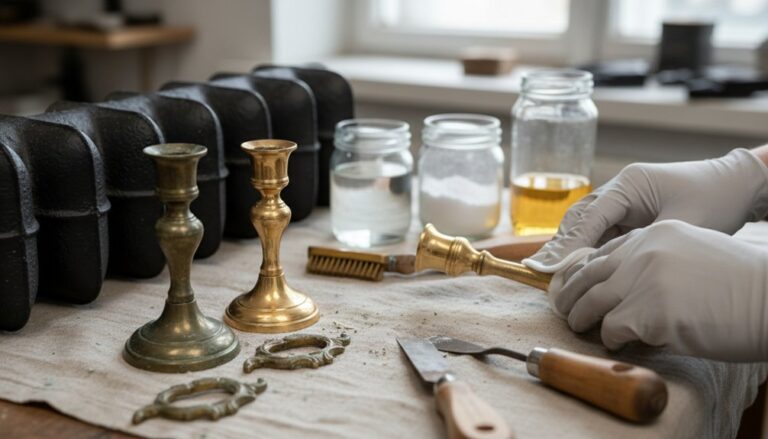
Start by identifying your cast-iron fireplace’s parts (insert, surround, mantel, tiles, hood) and look for foundry marks, assembly lugs, and original profiles. Assume old coatings contain lead, so you’ll test layers, control dust, and use a P100 respirator with HEPA cleanup. Document everything, then decide whether to restore in place or remove and label components. Strip paint with gentle gel strippers, treat rust lightly, repair cracks without welding, and repaint with high-heat coatings—keep going for finer details.
Key Takeaways
- Identify the fireplace parts, assembly method, and maker’s marks, then measure the opening to confirm coal, wood, or register-grate use.
- Assume pre-1978 paint may contain lead; test layers and control dust with misting, HEPA vacuuming, and a P100 respirator.
- Document condition with photos and notes, then decide in-place restoration versus removal based on stability, corrosion, distortion, and access.
- Strip paint gently using plastic/brass scrapers and gel strippers, avoiding dry-sanding or wire wheels; neutralize and remove light rust carefully.
- Repair cracks with stitching or specialist methods, replace period-correct hardware, then prime and paint with high-heat coatings and cure gradually.
Figure Out What Cast-Iron Fireplace You Have
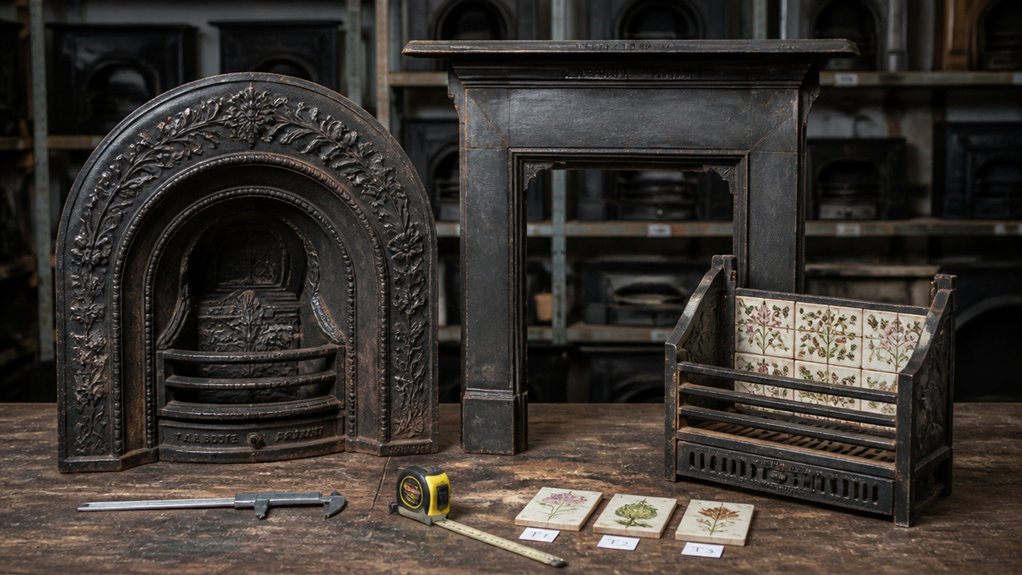
Before you pick up a wire brush or stripper, identify exactly what kind of cast-iron fireplace you’re dealing with, because the design and construction tell you how it was meant to be finished and installed.
Start by separating parts: insert, surround, mantel, and any tile set or hood. Check the back for foundry marks, pattern numbers, and patent dates; you’ll date it more reliably than by ornament alone.
Note how it’s assembled—bolted lugs, tongue-and-groove seams, or cast tabs—since later reproductions often use simplified joins.
Measure the opening and profile to confirm whether it was built for coal, wood, or a register grate.
Perform Material analysis: look for crisp casting, filler, or weld repairs.
You’ll preserve Historical authenticity by matching finish and missing details to the original type.
One thing to note, specialist suppliers of reclaimed & antique fireplaces are becoming increasingly popular among homeowners looking for character and authenticity in their interiors. This means finding a replacement has become much easier.
Check for Lead Paint and Other Safety Hazards

Once you’ve identified the insert, surround, mantel, and any tile work, treat the finish as a potential hazard, not just a cosmetic layer. Assume pre-1978 coatings may contain lead paint, and remember earlier cast-iron was often repainted many times.
Start with a certified lead test kit on several colors and layers, including edges and crevices where older paint survives.
Control dust immediately. You shouldn’t dry-sand, wire-wheel, or scrape aggressively. Mist surfaces, use a HEPA vacuum, and lay disposable poly sheeting to catch chips.
Wear a P100 respirator, nitrile gloves, and eye protection, and keep children out of the room.
Check other safety hazards: loose tiles, cracked firebrick, sharp rusted edges, and soot deposits that can irritate lungs.
Document findings before any work begins.
Decide: Restore in Place or Remove It

Although it can feel faster to pull everything out and “start fresh,” you’ll get a better conservation outcome if you decide early whether the fireplace can be stabilized and treated in place or truly needs removal.
Start by documenting it: photograph joints, fasteners, tiles, hearth edges, and any maker’s marks. Note cracks, movement, missing sections, or prior repairs, and confirm the surround isn’t supporting masonry above.
Choose in-place work if the casting is sound, alignments are true, and you can access fixings without stressing the iron.
Opt for removal when the unit is loose, corroded through, distorted, or trapped by later finishes.
Weigh Historical significance against aesthetic considerations: original context often matters more than a perfect refit.
If you remove it, label every piece and protect edges for reassembly later.
Strip Paint and Rust From the Cast-Iron Fireplace
If you strip paint and rust from cast iron with the same care you’d use to clean a historic tool, you’ll preserve crisp ornament and avoid driving corrosion deeper. Start by dry-scraping loose layers with plastic or brass tools, working with the casting lines, then vacuum dust with a HEPA unit.
Test a small area to identify paint build; if it’s pre-1978, assume lead and contain debris.
Use Modern restoration techniques selectively: a citrus or solvent gel stripper lifts paint without harsh gouging, while fine steel wool and oil can reduce flash rust on sound metal.
For thicker rust, use a hand wire brush or a nylon abrasive pad, not aggressive grinding. Stop at stable, intact metal to maintain Historical authenticity.
Repair and Repaint the Cast-Iron Fireplace (High-Heat)
Before you reach for high-heat paint, repair the cast iron so the finish seals sound metal rather than hiding movement and loss. Check seams, lugs, and screw holes; tighten fasteners and replace missing bolts with period-appropriate slotted hardware.
For hairline cracks, stop-drill the ends, then stitch with cast-iron pins or consult a specialist for cold-metal locking; avoid welding, which can distort historic plates. Rebuild losses with high-temperature metal filler only where it won’t carry structural load, and file it flush to preserve crisp mouldings and Decorative accents.
Degrease with solvent, then apply a thin rust-inhibiting, heat-rated primer if specified by your system. Brush on Heat resistant paint in two light coats, then cure it gradually with low fires.
Frequently Asked Questions
How Much Does Professional Cast-Iron Fireplace Restoration Typically Cost?
You’ll typically pay $800–$3,500 for professional cast-iron fireplace restoration, with complex, historically significant pieces reaching $5,000+.
Restoration costs depend on rust depth, missing parts, paint removal (lead-safe methods), crack repair, and period-accurate finishing (stove blacking or heat-resistant coatings).
If you need pickup, casting replacements, or on-site fitting, you’ll pay more.
Get itemized quotes from professional services and insist on reversible, minimally invasive work.
Do Restored Cast-Iron Fireplaces Increase a Home’s Resale Value?
Yes, a properly restored cast-iron fireplace can increase your home’s resale value, especially in period properties. You’ll boost historical authenticity and aesthetic appeal, which buyers often pay for.
You should document provenance, keep original components, and use reversible finishes to reassure inspectors and preservation-minded purchasers.
You can also highlight safety updates, code compliance, and gentle cleaning over aggressive grinding, since careful conservation preserves detail and signals quality workmanship.
Where Can I Find Replacement Tiles, Grates, or Missing Mantel Parts?
You can find replacement tiles, grates, and missing mantel parts through architectural salvage yards, reclaimed building-material dealers, and specialist restorers.
Start by matching period, dimensions, and glaze; photograph and measure everything.
Use reputable replacement tile sources for Victorian/Edwardian inserts, then check foundries and stove shops for compatible grates.
For wood or cast details, contact mantel part suppliers who document provenance and offer reversible, conservation-grade repairs.
Avoid generic reproductions.
Can I Convert a Restored Fireplace to Gas or Electric Inserts?
Yes, you can convert a restored fireplace to gas or electric inserts, but you’ll need to protect historic fabric.
For Gas conversion, you should hire a licensed installer, verify flue condition, add a liner if required, and route piping discreetly without cutting original cast iron.
For Electric inserts, you can often use a reversible, freestanding unit, keep ventilation clear, and avoid permanent fasteners.
Always follow local codes.
What Ongoing Maintenance Prevents Rust and Keeps the Finish Looking New?
An ounce of prevention saves you headaches: you’ll stop rust and keep the finish looking new by controlling moisture, cleaning gently, and renewing protective coatings.
For rust prevention, keep humidity low, fix leaks fast, and avoid wet wiping; use a barely damp cloth, then dry immediately.
For finish preservation, dust often, avoid abrasives and ammonia, and apply a microcrystalline wax or appropriate stove polish thinly, then buff.
Inspect seams seasonally.
Conclusion
Now you’re standing before iron that’s finally breathing again—edges crisp, scrollwork sharp, and a soft sheen catching the light like coal embers. You’ve identified the piece, tested for lead, chosen the least disruptive approach, stripped back paint and rust with care, and repaired only what time demanded. With high-heat paint sealing the surface, you’ve protected history without erasing it. Let it cure fully, then enjoy the quiet warmth of a revived hearth.
About the Author