
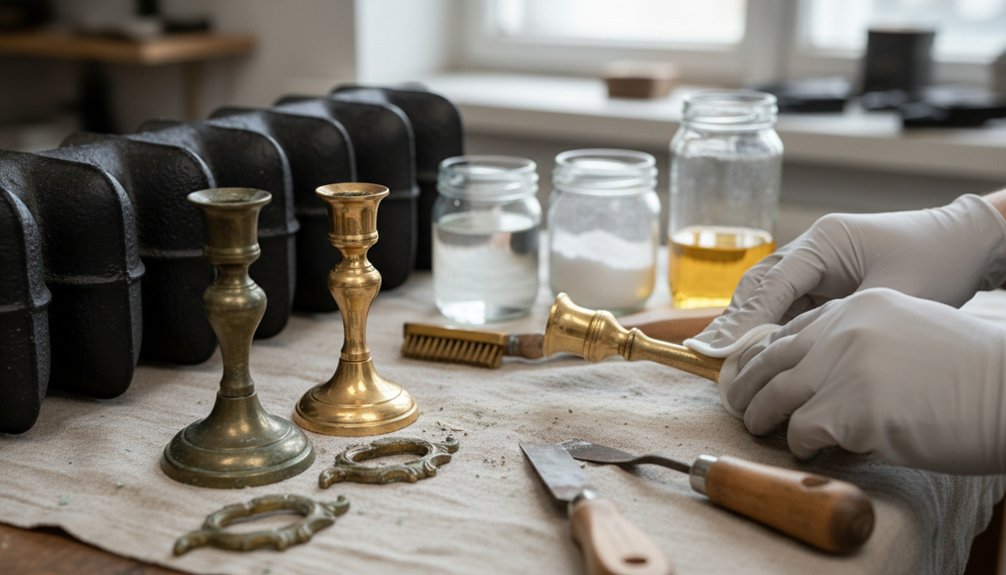
Start by checking if your brass is solid or plated: look for worn edges, dull crevices, and use a magnet for hidden steel. Assume radiator paint may contain lead until a test confirms otherwise, then isolate the area and wear gloves, goggles, and a P100 respirator. Clean brass with warm soapy water, then a non-abrasive polish and wax. On radiators, HEPA-vacuum, brush loose rust, convert remaining rust, then prime and apply two light enamel coats. Keep going for deeper tips.
Key Takeaways
- Confirm solid brass versus plated using worn-edge inspection, crevice color checks, and a magnet test before choosing tools or methods.
- Assume old radiator paint contains lead until tested; isolate the area, wear a P100 respirator, and avoid dry sanding or scraping.
- Clean brass gently with warm soapy water, then use non-abrasive polish or lemon-baking soda paste; buff lightly and wax-seal.
- Strip radiator paint safely using chemical stripper or low-heat gun; bag waste immediately, then HEPA-vacuum and wet-wipe surfaces.
- Remove radiator rust by brushing and feather-sanding, apply phosphoric converter, then prime and paint with thin coats of high-heat radiator enamel.
Is It Solid Brass or Plated?
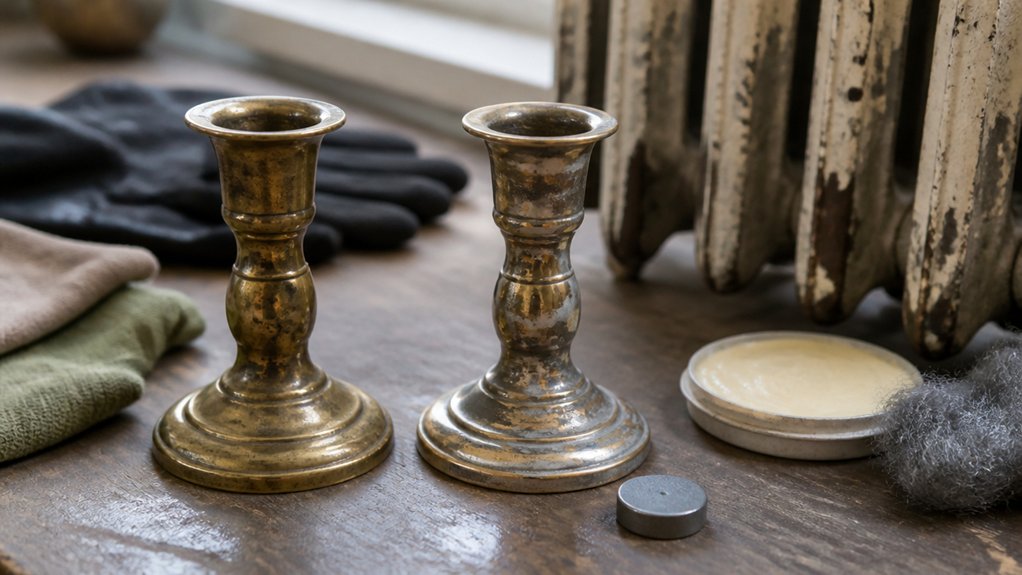
Before you reach for polish or a wire brush, how can you tell whether you’re dealing with solid brass or a thin brass plating? Start with inspection under bright light: look for worn edges, sharp corners, and high spots where a different base metal shows through. Check color consistency in crevices; plating often looks brassy on faces but dull on recessed areas.
Use a magnet carefully: solid brass won’t attract, but steel beneath plating will. If it’s a radiator cover or valve, consider Radiator material—many parts are brass over iron or steel.
For Brass authenticity, test an inconspicuous spot with a cotton swab and mild cleaner; if you expose silvery metal quickly, stop. Wear gloves, protect eyes, and avoid abrasive scraping until you’re sure.
Tools for Restoring Brass and Radiators

Once you’ve confirmed whether the brass is solid or plated, pick tools that clean without cutting through finishes or damaging radiator parts. Start with nitrile gloves, safety glasses, and a respirator for dust and polish fumes.
For brassware, use microfiber cloths, cotton swabs, a soft toothbrush, and non-scratch nylon pads. Reserve a brass-bristle brush for solid brass only, and keep it off Decorative finishes.
For radiators, choose a HEPA vacuum with a brush attachment, radiator brush, stiff nylon scrub brush, and plastic scrapers for buildup.
For Surface preparation, keep a spray bottle of water, mild detergent, and clean rags to control dust and lift grime.
Add painter’s tape, zip bags, and labels so you don’t lose fasteners.
Strip Paint Safely (Including Lead-Paint Checks)
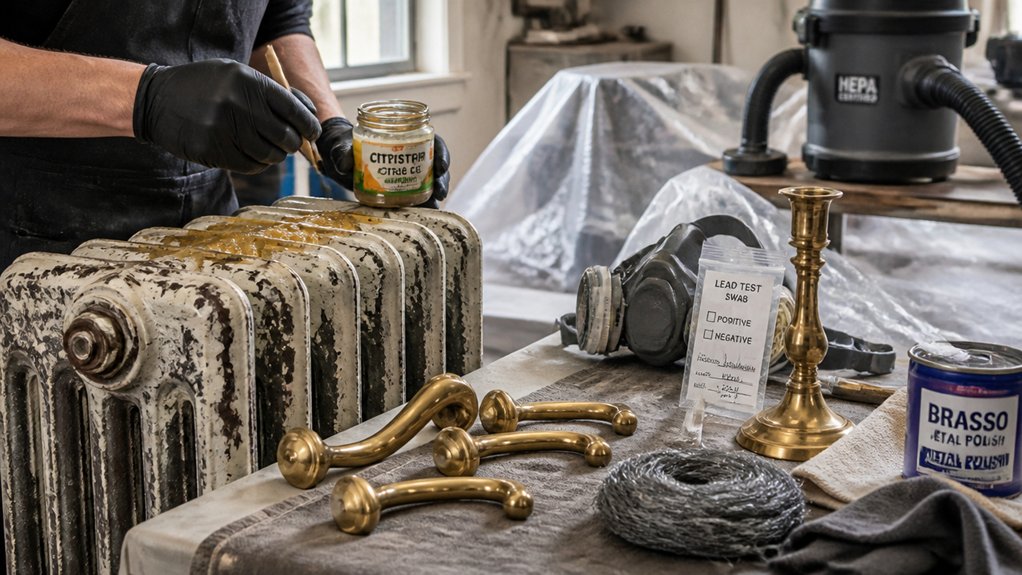
If you’re dealing with old paint on brassware or a cast-iron radiator, treat it as lead-based until you prove otherwise with an EPA-recognized lead test kit (or a lab test) and plan your stripping method around that result.
Isolate the area with plastic sheeting, shut off HVAC, and wear gloves, goggles, and a P100 respirator.
For Lead paint, avoid dry scraping, sanding, or power tools that create dust. Mist surfaces lightly, then use a chemical stripper labeled for lead-safe use, or a low-temp heat gun kept below 700°F to prevent fumes.
Collect softened paint with disposable rags and a putty knife, and bag waste immediately. Finish with HEPA vacuuming and wet-wiping for safe removal.
Clean and Polish Brass Without Scratches
Although tarnish looks stubborn, you can clean and polish brass without scratching it by working from the gentlest methods upward and controlling grit at every step. First, rinse the piece and your microfiber cloth to remove dust; trapped grit causes swirls. Wash with warm water, a drop of dish soap, and light fingertip pressure, then rinse and dry completely.
Test a small spot to decide whether to preserve the Brass patina. If you’re polishing, apply a non-abrasive brass polish or a paste of lemon juice and baking soda with a soft cotton pad, moving in straight lines with the grain. Don’t use steel wool or scouring pads.
Keep chemicals off nearby surfaces—Radiator peeling paint can stain. Buff lightly, then seal with wax to slow re-tarnish.
Fix Rust and Repaint Cast-Iron Radiators
Before you reach for paint, stop the rust and make the radiator safe to work on. Turn off heat, let it cool, and lay drop cloths. Wear gloves, goggles, and a P100 mask.
Wire-brush loose scale, then use 80–120 grit to feather edges. Vacuum dust and wipe with mineral spirits.
Treat remaining rust with a phosphoric converter, following cure times. Mask valves and any nearby brasswork so you don’t dull Brass patina.
Prime with a high-heat, rust-inhibiting metal primer, coating fins evenly without flooding seams. After it flashes, apply two light coats of radiator enamel, keeping good ventilation.
Once dry, reinstall Radiator insulation sleeves on exposed pipes, and check for leaks before firing it up.
Frequently Asked Questions
How Often Should Brassware Be Re-Polished to Maintain Its Shine?
You should re-polish brassware every 4–8 weeks in high-touch areas, or every 2–3 months for low-use pieces. Adjust the frequency sooner if you see dulling or fingerprints.
For Brass cleaning, start with dusting, then use a mild polish sparingly, and buff with a clean microfiber cloth. Wear gloves and ventilate to limit chemical exposure.
During Radiator maintenance, keep brass fittings dry and wipe condensation promptly.
Can Restored Radiators Improve Heating Efficiency and Lower Energy Bills?
Yes—restored radiators can boost heating efficiency and trim energy bills, like clearing soot from a chimney so heat flows freely. You’ll remove insulating paint, flush sludge, bleed trapped air, and balance valves so water circulates evenly.
You should isolate the system, cool it fully, and wear gloves and eye protection. Add Decorative finishes only after performance work. Better output lets you lower the thermostat, cutting your Environmental impact over the season.
What’s the Best Way to Protect Polished Brass From Future Tarnish?
Protect polished brass best by sealing it: you’ll degrease after Brass cleaning, dry completely, then apply a thin microcrystalline wax or clear lacquer and buff lightly.
You’ll wear nitrile gloves to avoid skin oils, and you’ll ventilate if you use lacquer.
You’ll dust routinely with a soft cloth, skip abrasive cleaners, and keep humidity low.
During Radiator maintenance, avoid splashing chemicals or hot water onto brass.
Is It Safe to Restore Brass and Radiators Indoors Without Ventilation?
No, you shouldn’t restore brass and radiators indoors without ventilation. Many cleaners, solvents, paints, and rust treatments release chemical fumes that can irritate lungs, eyes, and skin.
Guarantee indoor ventilation by opening windows, using exhaust fans, and keeping airflow directed outside.
Wear nitrile gloves and eye protection, and use a respirator rated for organic vapors when needed.
Prefer low-odor, water-based products, and avoid open flames.
When Should I Hire a Professional Instead of Restoring Them Myself?
Hire a professional when DIY restoration risks damage, health, or code issues. Want a clear line in the sand? If you see deep pitting, cracks, seized valves, lead paint, asbestos insulation, or heavy corrosion, you’ll need professional assistance.
Call in help when parts require brazing, replating, pressure testing, or disassembly affecting plumbing/steam systems.
Also hire out if you can’t ventilate, control dust, or dispose chemicals safely.
Conclusion
You’ve checked whether it’s solid brass or plated, and you’ve gathered the right tools—then, almost on cue, the job gets simpler. You test for lead paint before you strip, and the flakes fall where your drop cloth waits. You polish with a soft cloth, and the shine returns without a single scratch. You wire-brush rust, wipe clean, and paint in thin coats. Coincidentally, the radiator warms as the finish cures.
About the Author


