Renovate in modern rustic style by sticking to warm neutrals, real wood and stone, and a few repeat metals like matte black. Balance rough textures with clean lines, and build each room around one clear focal point so placement feels intentional. Choose two neutrals and one muted accent, then echo them in paint, trim, and textiles. Use honed stone, grain-forward wood, and substantial hardware, and layer warm, functional lighting. Up next: a room-by-room plan.
Key Takeaways
- Use warm neutral paint with one muted accent, repeating colors in trim and textiles for cohesive modern rustic flow.
- Limit statement materials to wood, honed stone, and matte black metal, repeating them to keep the design intentional.
- Balance rugged textures with clean-lined furniture and built-ins, avoiding faux distressing and prioritizing honest finishes.
- Plan each room around one focal point, then add functional elements like entry hooks, layered kitchen lighting, and smart storage.
- Finish with simple industrial lighting, substantial hardware, and a few curated vintage pieces to add warmth without clutter.
Make Modern Rustic Work: 5 Core Rules
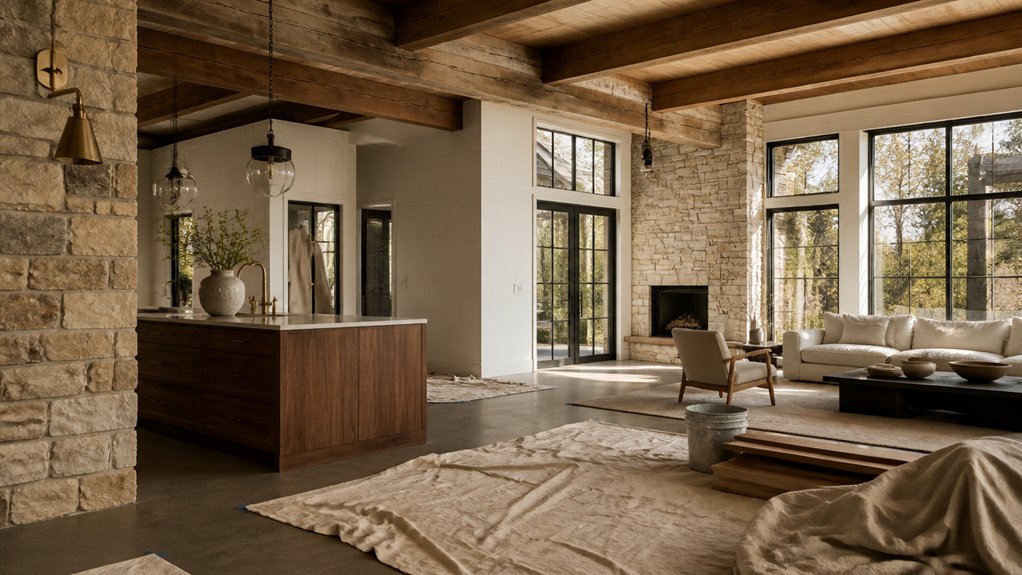
Five simple rules can help you nail modern rustic without slipping into “cabin kit” or sterile minimalism: keep the palette grounded in warm neutrals, balance rough textures with clean lines, limit statement materials to a few repeat players (like wood, stone, and matte black metal), prioritize honest finishes over faux distressing, and build the room around one clear focal point so every piece feels intentional.
Start by choosing two neutrals and one accent, then repeat them in textiles and trim so the space feels calm. Pair reclaimed oak with flat-front cabinetry, or a chunky beam with slim lighting to hit Rustic elegance.
Edit your “wow” moments: one bold stone surface beats three competing slabs. Let knots, patina, and tool marks stay visible, but keep shapes simple for Modern simplicity.
Finally, anchor the look with a single hero element, then support it with quieter, well-scaled pieces.
Plan Your Modern Rustic Renovation by Room

Once you’ve set your palette and material “repeat players,” you can plan a modern rustic renovation room by room so each space gets what it needs without drifting off-theme.
Start with the entry: add a hardworking bench, hooks, and warm lighting so clutter doesn’t spread.
In the kitchen, prioritize an efficient layout and layered task lighting; weave in Vintage accents through stools or a salvaged-style pendant.
For the living room, map seating around conversation and a focal point, then balance cozy textiles with clean-lined storage.
In bedrooms, keep the mood calm with simple window treatments and soft lighting; add one heirloom piece for character.
In bathrooms, plan ventilation, smart storage, and easy-clean details.
Throughout, schedule Eco friendly materials early so lead times don’t derail your timeline.
Pick Modern Rustic Surfaces: Wood, Stone, Metal
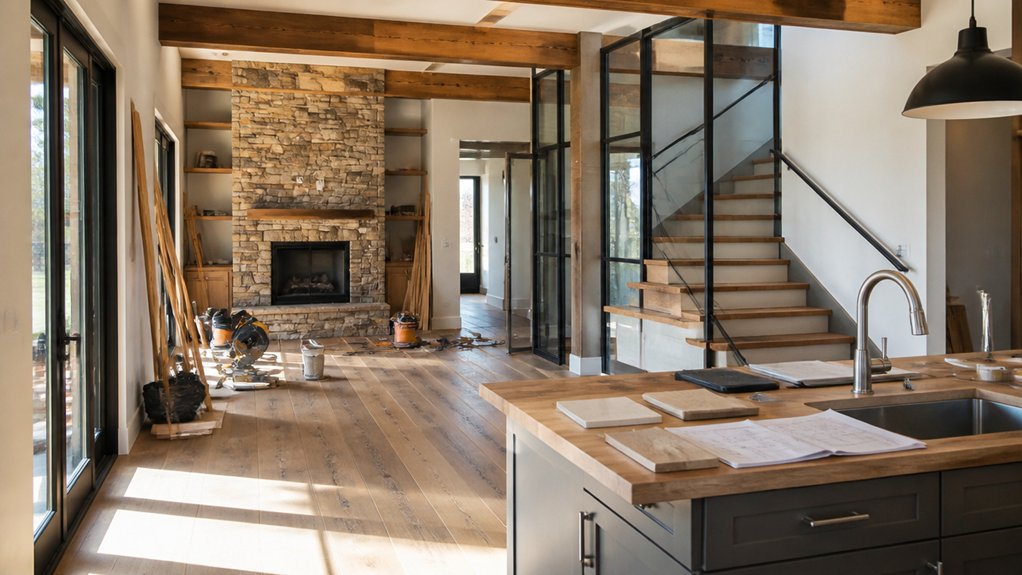
When you pick surfaces for a modern rustic home, you’re really choosing the textures you’ll touch every day—so focus on a tight mix of wood, stone, and metal that can handle real life and still look intentional.
Start with wood that shows grain: white oak, walnut, or reclaimed boards for floors, shelves, or a simple island top. Choose a durable finish so water rings and dents don’t steal the charm.
Bring in stone where you need toughness—honed granite, soapstone, or slate for counters, hearths, and entry thresholds. Skip high-gloss polish for a calmer, worn-in feel.
Add metal as a crisp edge: blackened steel brackets, aged brass pulls, or Industrial accents on railings and lights. Let these surfaces complement vintage furniture, not compete with it.
Build a Modern Rustic Palette (Paint + Textiles)
Although your modern rustic materials do a lot of the heavy lifting, paint and textiles are what make the house feel settled instead of stark. Start with a grounded base: warm whites, soft greiges, and clay-tinted neutrals that flatter wood grain and stone veining.
Then add one muted accent (forest, indigo, or iron) and repeat it across rooms for easy color coordination.
Choose finishes that match use: washable eggshell in hallways, matte on ceilings, and satin where hands hit walls.
For textiles, layer simple solids with small-scale checks or stripes so the architecture stays primary. Mix textile textures—linen drapery, wool rugs, cotton canvas, and a chunky knit throw—to soften metal and add quiet depth.
Keep patterns low-contrast and let natural fibers lead.
Finish With Modern Rustic Lighting, Hardware, Decor
After you’ve set the palette, lock in the modern rustic feel with lighting, hardware, and decor that echo your core materials instead of competing with them. Choose Industrial fixtures in matte black or aged brass to bridge clean lines with barn-warm texture. Hang a simple lantern pendant over the island, then add task-focused sconces by the sink or reading chair to keep the room functional.
Swap builder knobs for substantial pulls: think squared-edge bar hardware on modern cabinets, or cup pulls on a shaker pantry. Repeat finishes two or three times per room so everything feels intentional.
Layer Vintage accents sparingly—an antique mirror, weathered trays, or a timeworn vase—so they read curated, not cluttered. Finish with natural elements like linen shades, leather handles, and a few ceramic pieces to soften the metal.
Frequently Asked Questions
How Much Does a Modern Rustic Renovation Typically Cost per Square Foot?
You’ll typically pay about $150–$300 per square foot for a modern rustic renovation, with higher-end work reaching $350+. Your final number depends on structural changes, plumbing/electrical upgrades, and material choices like reclaimed wood or stone.
You can control costs by locking your color palette early and planning furniture placement before construction, so you don’t redo lighting, outlets, or built-ins later.
Get itemized bids and add 10–20% contingency.
Do I Need Building Permits for Modern Rustic Structural Changes?
Yes—you’ll likely need permits for structural changes. Like a lighthouse in fog, permits guide you through Building codes and keep your project safe.
If you’re moving load-bearing walls, altering beams, changing foundations, or modifying plumbing/electrical tied to structure, you can’t skip the Permit process.
Call your local building department, share drawings, and ask about inspections.
Your contractor can often pull permits, but you stay responsible.
How Do I Maintain Reclaimed Wood to Prevent Pests and Rot?
You maintain reclaimed wood by drying it to stable indoor moisture, then cleaning and sealing every face and end grain.
For Pest prevention, you’ll inspect for holes, frass, and soft spots, then isolate pieces and use borate Wood treatment before installation.
Keep wood off damp concrete, fix leaks fast, and control humidity with ventilation or a dehumidifier.
Recoat oil or polyurethane as wear appears, especially near kitchens and entries.
Can Modern Rustic Design Increase Resale Value in My Area?
Yes, modern rustic design can boost resale value in your area, if you balance trend with timeless appeal—raw textures against clean lines. You’ll win buyers when interior decoration feels cohesive, not themed: warm woods, matte metals, neutral walls, and updated lighting.
With furniture selection, you should mix a few statement reclaimed pieces with contemporary, right-sized seating. You’ll also want consistent finishes, durable floors, and curb appeal to match inside.
How Long Does a Modern Rustic Whole-Home Renovation Usually Take?
You can expect a modern rustic whole-home renovation to take about 3–9 months, depending on scope, permits, and contractor availability.
You’ll move faster if you keep structural changes minimal and finalize plans early.
Lock in finishes, Decorative accents, and furniture choices before demo so you don’t stall on backorders.
If you add custom cabinetry, new plumbing, or electrical upgrades, you’ll likely land closer to 6–12 months overall.
Conclusion
You’re ready to pull modern rustic together by following a few consistent rules: mix clean lines with weathered texture, repeat your palette, and keep finishes intentional. A helpful stat to remember: the National Association of Realtors reports hardwood floors are one of the top features buyers want, making real wood and wood-look surfaces a smart upgrade. Now, finalize lighting, hardware, and textiles so every room feels cohesive, comfortable, and built to last.
About the Author