Start by picking a clear modern lane—Scandi, Mid-Century Modern, or Contemporary—so your finishes and furniture feel intentional. Edit clutter hard, then protect negative space by styling surfaces with just one or two sculptural pieces. Shift to warm modern neutrals (cream, greige, taupe) and repeat two to three finishes like matte oak, honed stone, and brushed metal. Layer lighting with low-profile LEDs, pendants, and sconces, and swap dated hardware for clean bars. Keep going for room-by-room moves.
Key Takeaways
- Pick a modern style lane (Scandi, Mid-Century, or Contemporary) to guide layout, finishes, and furniture choices.
- Declutter and limit surfaces to 1–2 intentional objects to emphasize clean lines, light, and negative space.
- Use a warm neutral palette and repeat consistent undertones (oak, tan leather, brass) for cohesive flow between rooms.
- Update lighting with layered, low-profile fixtures—LEDs, linear pendants, and globe sconces—to balance ambient, task, and accent light.
- Choose low-profile, clean-lined furniture and flat-front storage with integrated pulls, plus hidden cable management for a streamlined look.
Choose Your Modern Style (Scandi, MCM, Contemporary)

Before you buy a single piece, pick a modern lane—Scandi, Mid-Century Modern, or Contemporary—because the style you choose will dictate your layout, finishes, and shopping list.
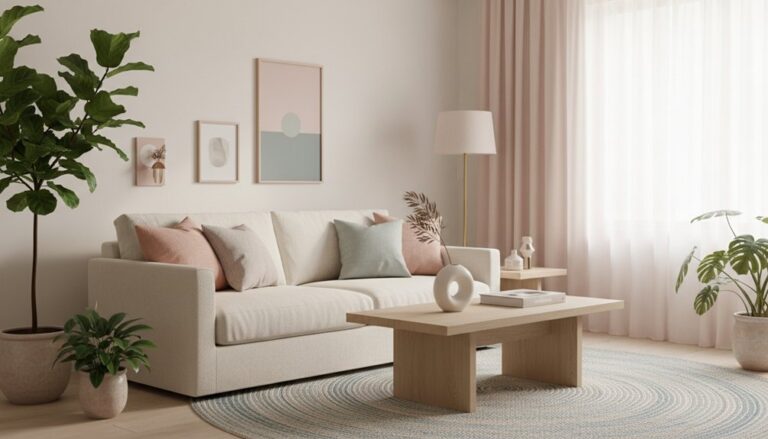
If you go Scandi, you’ll plan for airy circulation, pale oak or ash, matte whites, and soft wool textures that amplify daylight.
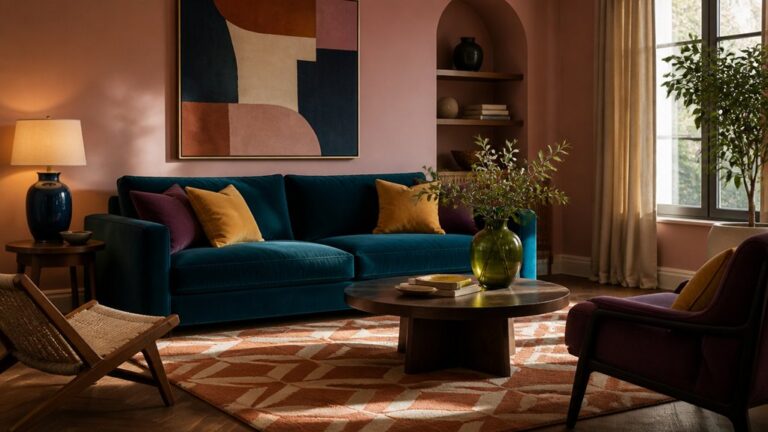
Choose Mid-Century Modern and you’ll anchor the room with low profiles, tapered legs, walnut veneers, and warm brass, then balance angles with graphic rugs.
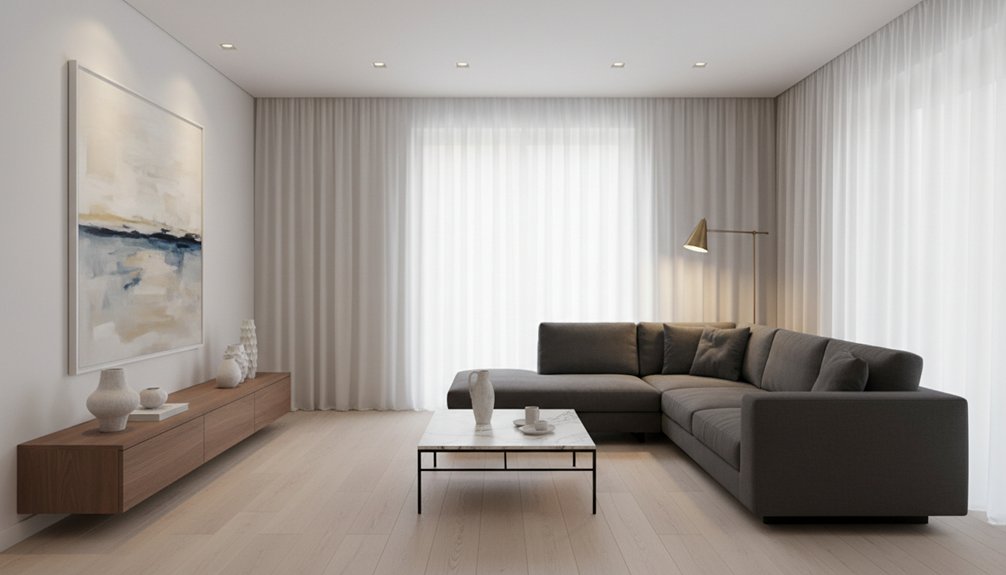
Opt for Contemporary and you’ll emphasize negative space, large-scale art, mixed metals, and performance fabrics in neutral palettes.
Let Artistic expression show through bold silhouettes and curated color blocks.
Keep Cultural influences intentional—Japanese minimalism, Danish craftsmanship, or California modern—so your materials and proportions feel cohesive throughout.
Declutter First for a Cleaner Modern Look
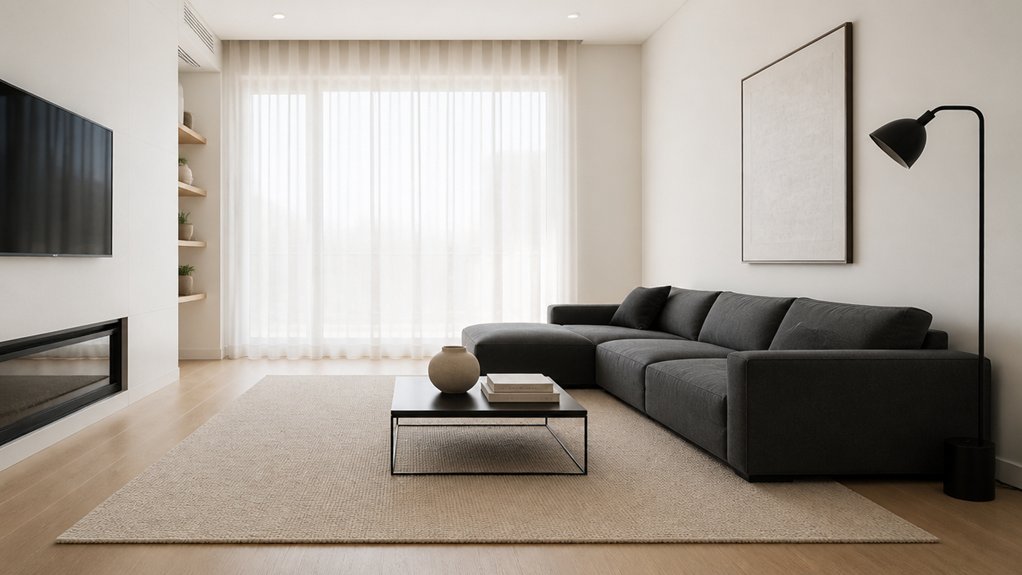
If you want modern design elements to read as intentional rather than busy, start by decluttering so the room’s lines, light, and negative space can actually do their job. Edit surfaces first: clear coffee tables, consoles, and counters to one or two sculptural pieces.
Then zone your room—circulation paths, seating, and work areas—and remove anything that doesn’t support how you live.
Next, upgrade storage solutions: closed cabinetry, low-profile media units, wall-mounted shelves, and lidded baskets that hide visual noise. Corral cables with adhesive channels and swap bulky bins for stackable, squared-off organizers.
Use color coordination to keep what remains visually quiet: group like items, align finishes, and limit mixed packaging in open shelving. You’ll instantly get a cleaner, more architectural modern look.
Update Your Palette With Warm Modern Neutrals

While crisp whites and cool grays can feel stark, warm modern neutrals make a space look current, layered, and livable without losing that clean-lined edge. Start with a creamy off-white on walls to soften glare, then ground the room with greige, camel, or putty on larger pieces like a sofa or rug.
Use Color psychology to steer the vibe: taupe and sand read calm, clay feels welcoming, and warm charcoal adds focus without heaviness. For mood enhancement, repeat two to three undertones throughout the sightlines so rooms flow—think oak, tan leather, and brass-toned hardware.
Keep contrast intentional: matte black in small hits, crisp trim, and one deeper espresso anchor for depth. Test swatches in daylight and evening.
Layer Modern Lighting (Ambient, Task, Accent)
You’ll modernize the room fastest when you balance clean, dimmable ambient lighting that evenly washes walls and ceilings without harsh hotspots.
Then you’ll add focused task lights—sleek pendants over islands, articulated sconces by beds, and under-cabinet LEDs—so work zones read crisp and intentional.
Finish with accent layers like picture lights, toe-kick glow, or shelf LEDs to punch up texture, highlight materials, and build depth after dark.
Balance Ambient Lighting
Because modern interiors rely on clean lines and intentional zones, balanced ambient lighting starts with layering three types of light—ambient for overall glow, task for function, and accent for depth.
Start by mapping light to your floor plan: even coverage in circulation paths, softer pools in lounging zones, and brighter wash in open-plan kitchens.
Choose slim LED fixtures with high CRI so paint, oak, and brushed metal read true, not muddy.
Use Smart lighting to tune color temperature—warm in the evening, neutral by day—so the space stays current and livable.
Prioritize energy efficiency with dimmable LEDs and occupancy schedules.
Then control glare with diffusers, matte finishes, and indirect placement that skims walls and ceilings for a quiet, gallery-like glow.
Add Focused Task Lights
Once you’ve set the ambient layer, add focused task lights that track how you actually use each zone—prep, read, work, groom. Under-cabinet LED bars keep counters shadow-free, while a slimline pendant centers over an island at 30–36 inches above the surface for clean sightlines.
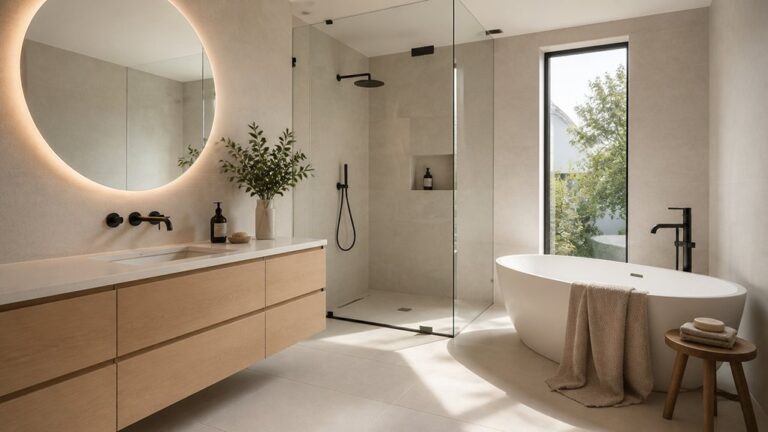
At your desk, choose an adjustable-arm lamp with a high-CRI source so finishes and screens read true, not muddy. In the bath, flank the mirror with vertical sconces to reduce glare and keep skin tones accurate.
Specify matte black, brushed nickel, or warm brass to sync with modern hardware. Tie it together with Smart lighting controls—dimmers, schedules, and scene buttons—so you hit comfort fast and boost Energy efficiency without overlighting.
Use Accent Light Layers
After ambient and task lighting handle the heavy lifting, accent layers add the architectural “pop” that makes a modern interior feel intentional. Use wall grazers to wash textured plaster, ribbed wood, or brick, and aim adjustable spots at art so colors read true.
Tuck LED strips under floating shelves, toe-kicks, and stair treads to create a clean, hovering line that expands circulation paths.
Anchor the room with statement fixtures—think sculptural pendants over a dining table or a linear chandelier that tracks a kitchen island’s geometry. Pair them with Smart lighting so you can shift scenes from gallery-bright to lounge-dim without changing bulbs.
Keep color temperature consistent (2700–3000K) and dim everything for a layered, modern glow.
Replace Dated Hardware and Light Fixtures
While your layout sets the stage, swapping out dated hardware and light fixtures delivers the quickest modern upgrade with the least disruption. Start with touchpoints: pulls, knobs, and levers. Choose Decorative hardware with clean geometry—thin bar pulls, knurled cylinders, or mixed-metal sets—to sharpen cabinetry and doors without changing millwork. Keep finishes consistent per sightline: matte black, warm brass, or brushed nickel, then repeat them in hinges and bath accessories for cohesion.
Next, modernize lighting. Replace builder flush mounts with low-profile LEDs, linear pendants, or globe sconces sized to the room’s scale and ceiling height. If you love Vintage fixtures, update them with opal glass shades and dimmable, high-CRI bulbs so they read curated, not stuck in time.
Pick Furniture With Simple Lines and Low Profiles
You’ll modernize the room fastest when you prioritize furniture with clean, straight lines that reads crisp against your walls and flooring. Choose low-slung silhouettes—think streamlined sofas and platform beds—to open sightlines and make your layout feel wider and calmer.
Skip ornate detailing and fussy trim so the materials and proportions stay the focus.
Prioritize Clean, Straight Lines
Because modern interiors rely on strong geometry to feel calm and current, prioritize clean, straight lines when you choose furniture. Look for crisp edges, squared arms, and uninterrupted planes that let your layout read as intentional from every sightline.
These forms echo historical trends—from Bauhaus restraint to midcentury minimalism—while still adapting to today’s cultural influences like Japanese-informed simplicity and Scandinavian pragmatism.
Use linear pieces to organize the room: align a sofa with the longest wall, float a rectilinear console to define an entry zone, and keep chair profiles visually consistent.
Choose materials that emphasize precision—matte lacquer, rift-sawn oak, powder-coated steel, or honed stone—and repeat straight seams in upholstery for a tailored finish. Keep hardware slim and minimal.
Choose Low-Slung Silhouettes
If you want a room to read instantly modern, go low: choose sofas, lounge chairs, and beds with simple lines and low profiles that keep sightlines open and ceilings feeling taller.
Anchor seating on a large rug and float pieces a few inches off the wall to improve circulation and create a gallery-like layout. Pick slim platforms in oak, ash, or matte black metal; add textured upholstery like bouclé or tight-weave linen for a current, tactile finish.
Balance the horizontal emphasis with vertical moves: hang statement wall art higher than eye level, or stack two oversized prints to draw the gaze up.
Finish the plan with Minimalist storage—low credenzas and modular media units—to keep surfaces clear.
Avoid Ornate Detailing
Low-slung pieces set the modern baseline, and clean-lined furniture keeps that look sharp by skipping ornate detailing. Choose sofas with tight arms, slab sides, and slim legs so sightlines stay open and your room reads larger.
Swap traditional casegoods with framed panels for flat-front storage and integrated pulls that don’t interrupt the silhouette. If your space has ornate moldings, let them act as the architecture and keep furnishings restrained to avoid visual competition.
Favor streamlined dining chairs, a simple pedestal table, and low-profile lounge seating to maintain an airy flow. In materials, go for matte woods, brushed metal, or bouclé; skip glossy finishes that amplify intricate carvings.
You’ll get a calmer, current backdrop for art and lighting.
Add Modern Texture and Art Without Overdoing It
While a clean modern base sets the tone, you’ll get the most impact by layering in texture and art with a light hand. Use Textural contrasts to keep rooms crisp yet lived-in: pair matte walls with a honed stone table, boucle seating with slim metal legs, or a flatweave rug under a lacquered console.
Repeat two to three finishes across the space so it reads intentional, not busy.
For artistic accents, think scale and placement. Hang one oversized print at eye level instead of a crowded gallery, or lean a framed piece on a shelf for a relaxed look.
Add one sculptural object per vignette, leaving negative space around it. If color feels risky, choose tonal art with varied materials and let lighting do the drama.
Frequently Asked Questions
How Much Does a Modern Interior Update Typically Cost?
You’ll typically spend $10,000–$50,000 for a modern interior update, while whole-home projects often run $75,000–$200,000+, depending on scope and finishes.
Your budget considerations hinge on how much you rework the layout, upgrade lighting, and replace flooring or millwork.
Follow design trends selectively: invest in durable surfaces (engineered wood, quartz, porcelain) and use paint, hardware, and fixtures for fast-impact refreshes.
Costs vary by region.
Do I Need Permits for Lighting or Electrical Changes?
You often do need electrical permits for lighting or electrical changes, especially when you add new circuits, move switches, or open walls.
If you’re just swapping fixtures like-for-like, you usually don’t.
Check local lighting regulations, because rules vary by city and condo board.
Use a licensed electrician when you rewire or upgrade panels.
You’ll protect your layout, keep clean ceiling lines, and avoid costly redo work later.
How Can I Modernize a Rental Without Permanent Alterations?
You can modernize a rental fast with temporary decor and non-permanent upgrades—no holes, no drama.
Funny coincidence: you’ll rearrange one chair, and suddenly the whole place feels intentional.
Swap in plug-in sconces, smart bulbs, and slim LED strips.
Use peel-and-stick vinyl for a stone-look backsplash, removable wallpaper, and modular rugs to zone space.
Add lightweight linen curtains, acrylic side tables, and matte-black hardware wraps.
Keep everything reversible.
Where Should I Shop for Affordable Modern Furniture and Decor?
Shop IKEA, Target, and Wayfair for clean-lined basics, then hit Facebook Marketplace, thrift stores, and local estate sales for Vintage accents that sharpen the look. You’ll stretch your budget by sourcing rugs and lighting at HomeGoods and online flash-sale sites like Joss & Main.
Prioritize Sustainable materials—FSC wood, recycled metal, and linen blends—at brands like Article, West Elm sale, or secondhand.
Measure zones first so pieces fit.
How Do I Blend Modern Updates With Existing Traditional Architecture?
You won’t ruin the Traditional charm—you’ll sharpen it if you keep original trim, arches, and proportions as the lead.
Then layer modern updates through clean-lined furniture, slim profiles, and a tight palette that echoes existing woods.
Create design harmony by repeating one metal finish, swapping heavy textiles for linen or boucle, and adding large-scale art.
Use lighting to bridge eras: sculptural pendants, warm LEDs.
Plan clear sightlines, not clutter.
Conclusion
You don’t need a full renovation to get a modern interior—just smart edits. Start with style clarity, then clear the visual noise; the National Association of Professional Organizers reports you can lose up to one year of your life searching for misplaced items, so decluttering pays back fast. Warm neutrals, layered lighting, and matte black or brushed brass hardware sharpen the architecture. Finish with low-profile seating, tactile textiles, and one bold artwork for balance.
About the Author