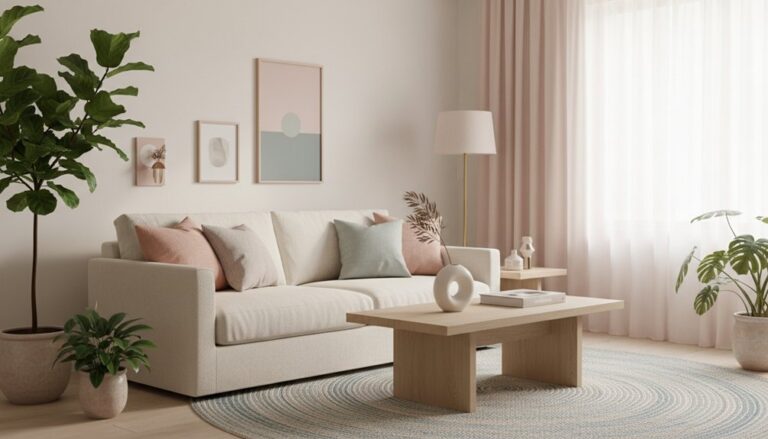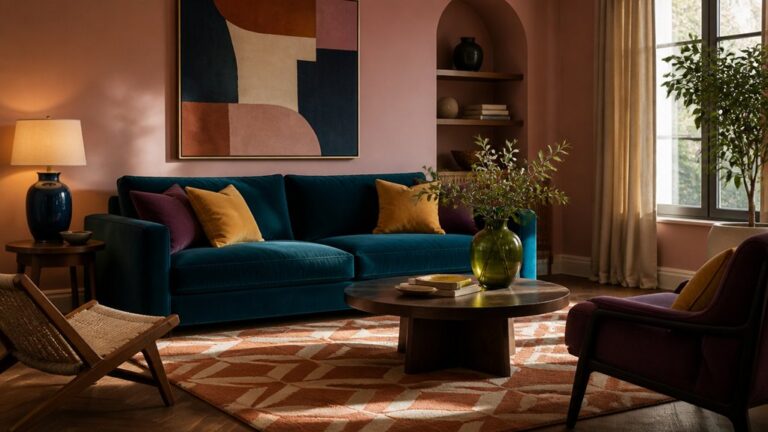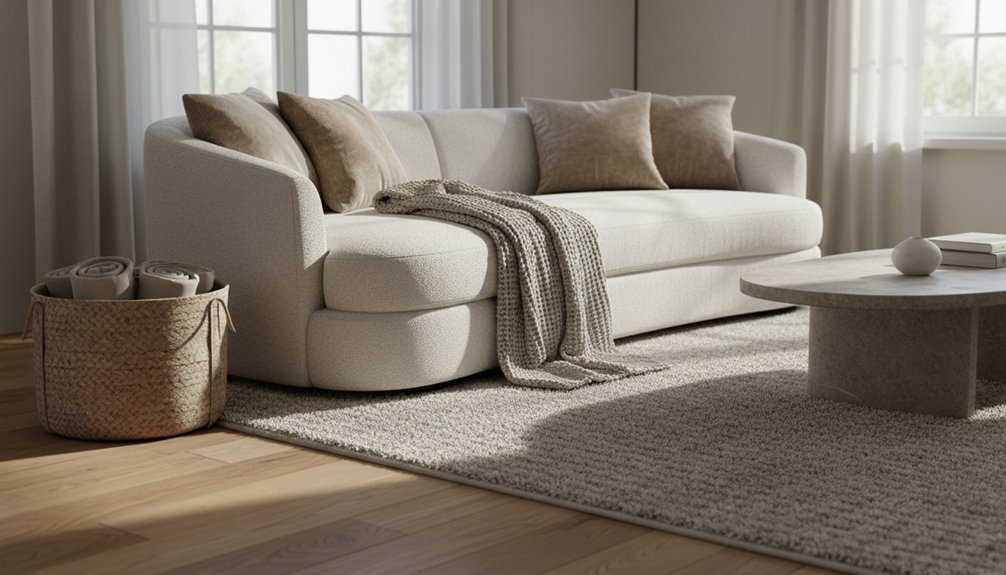
Transform your living space with soft interior textures by choosing a mix that fits your style—matte linen for airiness, plush velvet for drama, or boucle for warmth. Start with a generously sized wool or nubby rug to anchor the room, then layer crisp throws and springy cushions in two to three repeating tones. Hang curtains high and wide, pairing sheers with heavier panels to hush noise and soften light. Add jute baskets and folded knits, and you’ll find even more ways to refine the feel.
Key Takeaways
- Layer contrasting textiles—linen, velvet, boucle, knits—to add depth, warmth, and tactile interest without overwhelming the room.
- Use throws and cushions strategically: two solid anchors, one textured neutral, and one patterned accent for balanced, intentional styling.
- Anchor seating with a generously sized plush rug; choose wool or viscose blends to boost comfort, cohesion, and visual richness.
- Install textured curtains and layer sheers with heavier panels to soften light, reduce echoes, and create a calmer, cozier atmosphere.
- Keep a cohesive palette and limit to a few standout soft pieces, balancing hard surfaces and negative space to avoid clutter.
Choose a Soft Interior Texture Mix That Matches Your Style

If you want your room to feel pulled together instead of randomly “cozy,” start by choosing a soft-texture mix that mirrors your style. Think matte linen for an airy look, plush velvet for drama, or boucle for modern warmth. Layer touchable contrasts: a crisp cotton throw against a nubby knit pillow, smooth silk accents beside brushed wool.
Let Color coordination guide you—repeat two or three tones across textiles so the eye glides, not bounces. Then check furniture compatibility: tailored fabrics sharpen clean-lined sofas, while relaxed weaves soften chunky wood and overstuffed seats.
As you edit, notice sound and feel—quiet, padded surfaces, a gentle drape, a cushion that springs back. Your space will read intentional, not improvised.
Start With High-Impact Soft Interior Textures (Rugs + Runners)

Start underfoot: you’ll feel the biggest shift when you anchor the room with a plush area rug that softens every step and warms the light. Choose a pile and weave you can see and sense—velvety, nubby, or shaggy—so the floor reads rich, not flat.
Then layer textured runners to guide movement through halls and beside beds, adding a quiet rhythm of softness from space to space.
Choosing Plush Area Rugs
A single plush area rug can change the whole mood of a room, softening footsteps, warming bare ankles, and quieting sharp echoes. Choose a pile height that matches your pace: dense, low plush for busy paths; deeper tufted softness for lounge zones. Run your fingers across the surface—does it feel velvety, springy, or cloudlike? Let that tactile cue guide you.
Prioritize Luxury fibers like wool, alpaca blends, or high-grade viscose for a subtle sheen and a cushioned, resilient hand. Pick a hue that deepens your palette—oat, charcoal, or rust—then add Pattern mixing through quiet geometrics or tonal florals that read rich, not busy.
Size it generously so furniture sits comfortably on it, anchoring the room’s calm.
Layering Textured Runners
While plush rugs ground a room, textured runners sharpen its rhythm, drawing your eye down halls, along bed sides, or through kitchens with a soft, deliberate line. Choose a runner with raised loops, braided ribs, or a low nubby weave so it feels tactile underfoot yet stays sleek.
Layer it over a flatweave to add depth without bulk, then align edges to keep the path crisp. Let color echo nearby velvet upholstery—inky, clay, or oat—so the runner reads like a quiet extension of your seating.
If you’ve added Textured wall panels, pick a runner that mirrors their relief: subtle herringbone, carved stripes, or tone-on-tone speckle. Finish with a non-slip pad; the softness stays steady, and every step feels intentional.
Layer Soft Interior Textures With Throws and Cushions

When light hits a sofa, throws and cushions let you shape how the room feels—plush, crisp, or quietly layered. Drape a chunky knit over the arm for shadowy depth, then fold a linen throw at the seat edge to add a cool, matte contrast.
Build a cushion mix that looks intentional: start with two solid anchors, add one textured neutral, then finish with Decorative pillow patterns that echo art or rugs. Use Color coordination strategies like tonal stacking (cream, sand, camel) for calm, or one accent hue repeated twice to feel deliberate.
Vary fills and sizes—firm squares behind, soft feathers in front—so the arrangement holds its shape yet invites a slow sink. Keep seams, tassels, and piping crisp for definition.
Soften Light and Sound With Textured Curtains
You’ll feel the room shift when you choose curtain fabric weight that drapes with intention—airy linen for a light flutter, dense velvet for a hushed fall.
Textured weaves cushion echoes and street noise, turning sharp sounds into a softer hush.
Layer sheers behind heavier panels, and you’ll filter daylight into a warm, gauzy glow that flatters every surface.
Choosing Fabric Weight
Because fabric weight changes the way a room breathes, choosing the right curtain textile lets you soften harsh daylight and hush the sharp edges of sound at the same time.
Start with the sun: lightweight linen or voile turns glare into a pearly wash, letting shadows stay crisp but gentle.
Medium-weight cotton slub or brushed twill gives you a calmer glow and a fuller drape that looks tailored, not fussy.
Go heavier with velvet or chenille when you want deep folds, saturated color, and a cocooned feel that reads instantly luxe.
Balance beauty with fabric durability: tight weaves resist snags and sun fade better than loose loops.
Factor maintenance considerations too—washable blends suit busy rooms, while dry-clean-only piles demand commitment.
Enhancing Acoustic Comfort
Although curtains read as purely decorative, the right textured panel quietly tunes your room: it breaks up echo, softens footfall chatter, and turns hard daylight into a calmer glow.
Choose nubby linen, velvet, or bouclé weaves that trap airborne noise in their ridges, so conversation feels closer and less brittle. Hang them high and wide, letting fabric stack in generous folds; those pleats act like soft baffles, similar to acoustic panel design, but warmer to the eye.
If your street is loud, pair the curtain with discreet Soundproofing materials—dense liners or interlining—so the drape gains weight without looking stiff. You’ll hear less clink from dishes, less TV splash, and more of that hushed, hotel-like calm.
Layering For Soft Light
When harsh sun slices across bare glass, textured curtains let you dial the room down to a softer register. You start with a sheer voile that diffuses glare into Soft lighting, turning sharp edges into a calm glow on skin and wood.
Then you layer a heavier linen or velvet panel, so you can pull depth across the window like a hush.
That double layer does more than dim; it tempers sound, catching street chatter and hard echoes before they bounce. You’ll feel the air settle as folds stack and drape, adding plush weight and quiet rhythm.
Aim for Texture contrast: crisp sheers against nubby weaves, matte linen beside a subtle sheen. With tiebacks, you sculpt light into gradients, not beams, and the room finally exhales.
Add Natural Soft Interior Textures With Baskets and Knits
As light skims across a room, baskets and knits add a grounded softness you can see and feel.
You bring in Natural fibers that quiet hard edges: a jute basket beside the sofa, a seagrass tray on the coffee table, a chunky cotton throw draped where your hand naturally lands.
Woven baskets catch shadows in their braids, turning storage into texture, their matte weave warming glossy floors.
You stack folded knits on an open shelf so the ribs and loops read like tiny landscapes.
A hand-knit pillow adds spring under your palm; a wool pouf absorbs sound and invites bare feet.
Keep tones sun-washed—oat, sand, clay—so the room breathes.
Keep Soft Interior Textures Cozy, Not Cluttered
Because softness multiplies fast, you’ll keep it cozy by editing with a light hand—choose a few touchable layers that earn their place, then let the rest of the room breathe.
Anchor the scheme with one plush throw, one velvet cushion, and a single high-pile rug; everything else goes sleek and quiet so your fingertips notice contrast, not Minimalist clutter.
Keep textures in a tight palette, then sharpen the scene with bold color accents: a saffron pillow, an ink-blue ottoman, a lacquered tray.
Give each soft item a “home” so it looks intentional—fold the blanket, stack two pillows, corral extras in a lidded basket.
Leave negative space on the sofa arms and coffee table, and the room stays warm, not busy.
Frequently Asked Questions
How Do I Choose Hypoallergenic Soft Textures for Sensitive Households?
Choose hypoallergenic soft textures by prioritizing tight-weave, washable fabrics like organic cotton, linen, or bamboo. Avoid heavy dyes, down, and high-pile synthetics that trap dust.
Look for eco-friendly materials with certified low-VOC finishes, and wash everything before use for a fresh, clean handfeel.
Add smooth wool-free throws and microfiber alternatives with sealed seams.
Use color coordination in pale, calm tones to keep the room airy, serene.
What Soft Textures Work Best in Homes With Pets and Shedding?
Choose tightly woven, low-pile textures: performance velvet, microfiber suede, and canvas—Pet safe fabrics that don’t snag and Shedding friendly materials that let hair brush off like dust from stone. Let your sofa feel like a calm harbor, not a fur-trap.
Add flatweave wool-blend rugs and washable quilted throws for a soft, breathable layer. Stick to medium tones and subtle heathering to hide stray hairs.
How Can I Soften a Space on a Tight Budget Without Buying New?
You can soften a space fast by layering what you already own. Drape spare throws over chair backs, swap pillow covers between rooms, and fold towels into plush floor mats.
Create budget-friendly decor by turning old sheets into airy curtains and tying them with ribbon.
Try DIY texture projects: braid fabric scraps into a rug, wrap glass jars with twine, and cluster candles for a warm, velvety glow.
Which Soft Textures Are Safest for Homes With Fireplaces or Heaters?
Choose fire resistant fabrics and flame retardant textiles, like wool throws, leather accents, tightly woven cotton, and aramid blends rated for upholstery. You’ll get softness without that scary melt-or-spark risk.
Keep plush synthetics—acrylic, polyester faux fur—farther from flames; they can ignite or drip.
Opt for low-pile rugs, felted wool cushions, and lined curtains with certified treatments. You’ll also place textiles away from vents and use sturdy hearth screens.
How Do I Clean and Maintain Delicate Fabrics Like Velvet or Boucle?
You’ll keep velvet or bouclé pristine by vacuuming gently with a soft brush weekly, always following the nap’s direction.
Blot spills fast—don’t rub—using a clean, damp cloth and mild soap, then air-dry away from heat.
For Upholstery cleaning, spot-test first and use a low-moisture foam for velvet.
Rotate cushions to prevent flattening.
Add Fabric protection with a breathable, stain-guard spray, and avoid harsh solvents.
Conclusion
You don’t need a full makeover to transform your room—just the right soft interior texture mix. Start underfoot with a plush rug, then stack comfort with nubby throws and cloud-soft cushions. Let textured curtains hush glare and soften echo, and weave in natural baskets and chunky knits for warmth you can see. Worried it’ll feel cluttered? Keep a tight palette and repeat textures with intention, so every layer feels calm, cohesive, and inviting.
About the Author