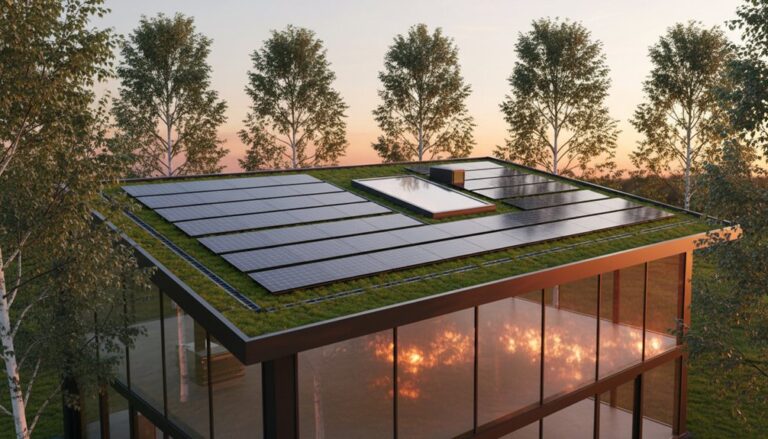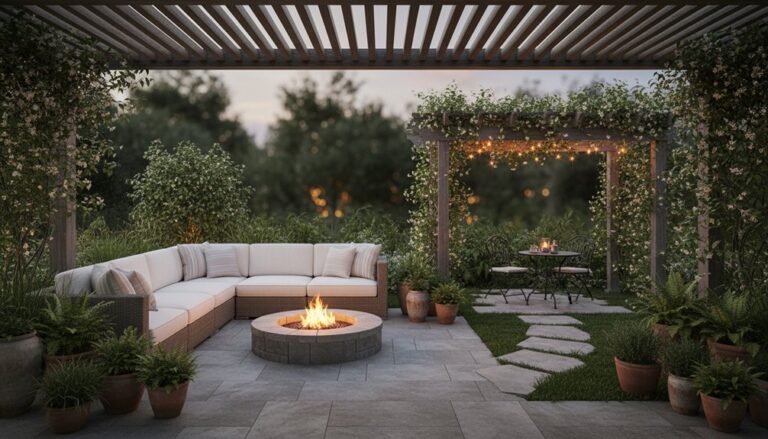
Start by mapping your sun, soil texture, and storm flow lines so you place paths on firm, dry routes and match plants to microclimates. Replace turf in hot or runoff-prone zones by stripping sod, loosening compaction, top-dressing 2–3 inches of compost, and planting ground covers 12–18 inches apart under 3–4 inches of arborist chips. Add permeable hardscape with clean edging to cut trimming, then run pressure-compensating drip by hydrozone with smart controls. Keep going to see proven layouts and plant palettes.
Key Takeaways
- Map sun, shade, soil, and drainage to place plants and features where they thrive with minimal intervention.
- Replace high-water turf with drought-tolerant groundcovers and 3–4 inches of mulch to cut mowing and weeding.
- Choose hardy, slow-growing, pest-resistant plants matched to each microclimate, prioritizing deep-rooted natives and Mediterranean shrubs.
- Simplify edges and circulation with permeable paths or patios, using proper grading and weed-suppressing bases under gravel only.
- Install hydrozoned, pressure-regulated drip irrigation with smart scheduling, soak pauses, and moisture sensors to reduce water waste.
Plan Your Low-Maintenance Layout (Sun, Soil, Drainage)

Before you buy plants or shift a single paver, map your site’s sun exposure, soil conditions, and drainage patterns so the layout works with your microclimates instead of fighting them. Log summer and winter sun paths, note reflected heat from walls, and mark shade from trees or structures to refine your garden layout.
Run a percolation test and identify compaction zones; amend only where infiltration is limiting, not everywhere. During a storm, trace flow lines, downspout outlets, and low spots, then grade hard edges to shed water away from foundations and toward planted basins.
Place high-access, high-care elements closest to the hose bib and compost area, and push lower-input zones to the margins. Define paths on the driest, firmest routes to prevent rutting.
Swap Thirsty Lawn for Ground Covers and Mulch

Once you’ve mapped where sun bakes the soil and where runoff concentrates, replace water-hungry turf in those zones with durable ground covers and a thick mulch layer that protects structure, suppresses weeds, and cuts irrigation demand.
Strip sod in sheets, roughen compacted subgrade, then top-dress with 2–3 inches of compost to stabilize infiltration and reduce crusting. Install ground covers on 12–18 inch centers, then cap with 3–4 inches of arborist chips, keeping mulch 3 inches off stems and hardscape to prevent rot and bridging.
At downspout outlets, use coarser mulch to resist washout and slow flow. You’ll improve Water conservation by shrinking mowed area and shading soil, while leaf litter and chip layers also build Wildlife habitat for beneficial insects.
Choose Drought-Tolerant, Low-Maintenance Plants

Because your site’s hottest exposures and driest pockets will stress anything shallow‑rooted, select drought-tolerant plants that match each microclimate rather than relying on blanket “xeric” mixes. Map sun hours, wind, slope, and soil texture; then group plants by identical irrigation needs to prevent overwatering.
For south-facing gravelly zones, prioritize deep-rooted natives, Mediterranean shrubs, and warm-season bunchgrasses. For shaded north beds, use drought-adapted understory species that tolerate periodic dry-down.
Favor slow-growing, pest-resistant cultivars and avoid high-litter plants near drains and paths. Your plant selection should target functional traits—waxy leaves, small stomata, summer dormancy—to cut inputs.
Build water conservation into establishment: drip lines, hydrozoning, and two-year tapering schedules.
Add Hardscaping That Cuts Weeding and Edging
Drought-tolerant planting reduces irrigation demand, but you’ll still spend time pulling weeds and trimming ragged lawn edges unless the layout physically blocks those problem zones. Replace narrow turf strips with permeable paths and patios sized to your circulation lines, so mowers and string trimmers aren’t required.
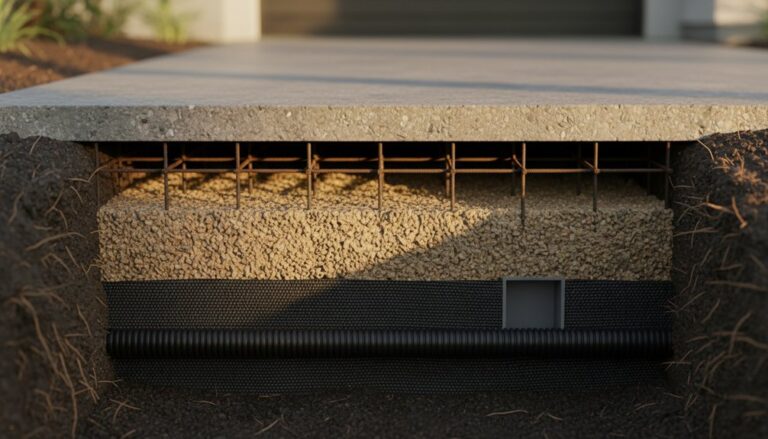
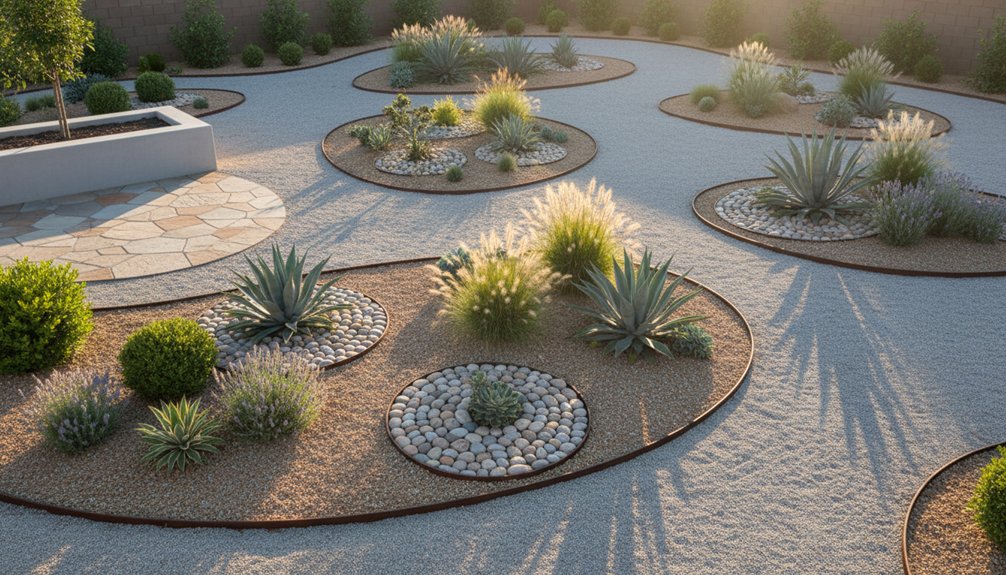
Choose Hardscaping materials that suppress germination and stabilize soil: decomposed granite over compacted base with steel edging, permeable pavers on open-graded aggregate, or locally sourced stone set with tight joints.
Install geotextile only under gravel to prevent fines migration, not under planted beds. Use Edging techniques that create a clean, maintainable boundary: 4–6 in. deep metal edging, masonry curbs, or a mown strip paired with a mulch trench.
Keep grades sloped away from foundations and toward infiltration areas.
Automate Watering With Drip Lines and Timers
Even if you’ve replaced thirsty turf with climate-adapted beds, you’ll still waste water and time unless irrigation matches each planting zone’s root depth and sun exposure.
Lay pressure-compensating dripline on contour, 12–18 inches apart for groundcovers, wider for shrubs, and bury it 2–3 inches to cut evaporation and UV damage. Add a 150-mesh filter and 25-psi regulator at the valve to prevent clogging and overspray.
Program timers by hydrozone: shorter, frequent cycles for sandy slopes; longer, deeper soaks for clay flats, with soak pauses to stop runoff.
Upgrade to smart irrigation that reads local ET and rain, then confirm soil conditions with moisture sensors near root depth. You’ll reduce disease, leaching, and hand-watering visits year-round.
Frequently Asked Questions
How Much Does a Low-Maintenance Garden Redesign Typically Cost?
You’ll typically spend $5,000–$25,000 for a low-maintenance garden redesign, depending on site size, access, grading, and materials.
You’ll cut long-term inputs by optimizing Plant selection for your local soil and microclimate, reducing replacements.
You’ll also pay $1,500–$6,000 for efficient watering systems like drip irrigation with smart controllers, which lowers runoff and potable-water use.
Hardscape, mulch depth, and native sourcing shift costs.
In dense urban lots, expect higher labor.
Do I Need Permits for Adding Patios, Paths, or Retaining Walls?
You might need permits, depending on your site and scope. Check local Permitting requirements and construction regulations for patios (impervious surface limits, stormwater controls), paths (grading, accessibility), and retaining walls (height thresholds, surcharge loads, drainage).
If you’re near wetlands, steep slopes, or property lines, approvals often increase. You’ll reduce permitting risk by using permeable pavers, minimizing cut/fill, and managing runoff with on-site infiltration.
How Can I Keep Pets From Damaging Newly Landscaped Areas?
A stitch in time saves nine: you’ll stop pets from damaging new beds by controlling access fast. Install temporary fencing solutions along desire lines, anchor mesh with landscape staples, and create a mulched buffer zone.
Choose pet proof plants (tough grasses, aromatic herbs) at edges, and protect roots with biodegradable tree guards.
Use drip irrigation to reduce muddy paw traffic, and add designated gravel runs to redirect movement.
Rotate barriers as plants establish.
What Are the Best Low-Maintenance Options for Shaded Balconies or Courtyards?
Choose shade tolerant plants and durable finishes to keep upkeep low on shaded balconies or courtyards.
Use container gardening with self-watering pots, high-porosity mixes, and saucers to protect slabs.
Plant cast-iron plant, ferns, heuchera, ivy, or dwarf fatsia; pair with mossy hardscape or shade sedges.
Add drip irrigation on a timer, mulch with composted bark, and select recycled planters to cut inputs.
How Often Should I Refresh Mulch, Gravel, or Edging Materials?
You’ll refresh mulch yearly in wet, shaded sites and every 18–24 months in dry, breezy courtyards. Your mulch lifespan drops where splashback and fungi accelerate breakdown.
You’ll top up gravel every 2–5 years, but Gravel replacement only becomes necessary when fines clog drainage or geotextile shows.
You’ll reset edging every 3–7 years, or sooner if freeze–thaw heave or root pressure lifts it. Reuse removed material onsite.
Conclusion
When you redesign with sun maps, soil tests, and drainage in mind, you stop fighting the site and start managing it. Replace turf with mulch and ground covers, then layer drought-tolerant natives matched to exposure and root depth. Use hardscape edging and permeable paths to cut weed pressure and runoff. Finally, set drip irrigation on timers so water hits the rhizosphere, not the air. Like Odysseus, you choose strategy over struggle—and the garden holds.
About the Author