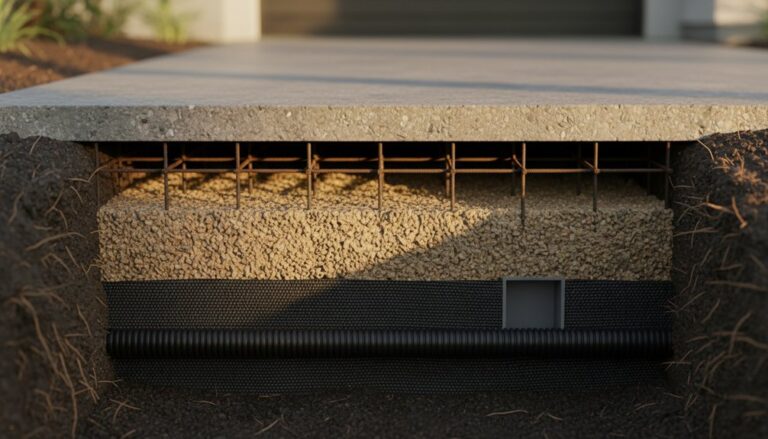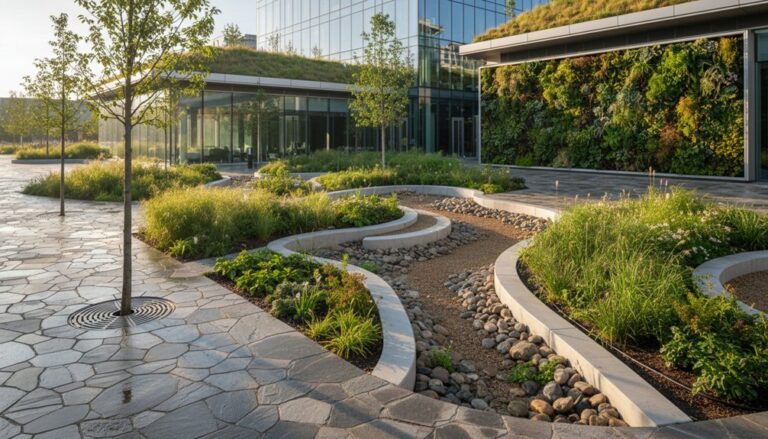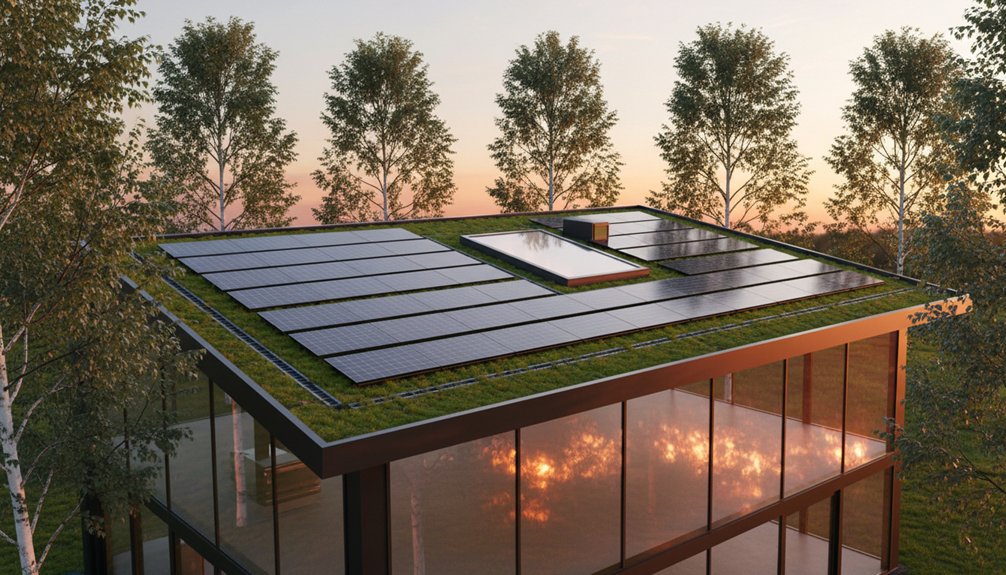
Yes—you can get close to the Zenith of energy‑efficient living when you treat your roof as a managed energy and moisture system, not just a surface. You’ll cut heat gain and loss fastest by air‑sealing penetrations, adding climate‑right continuous high‑R insulation, and using high‑SRI reflective membranes or coatings with balanced ventilation. You’ll protect performance with proper slope, drainage, and flashed penetrations, then add solar where sun access and roof life pencil out. Next, you’ll see how to choose upgrades that pay back.
Key Takeaways
- An eco‑smart roof measurably manages heat, moisture, and drainage, boosting comfort while reducing energy use and premature roof aging.
- Continuous, climate‑sized insulation and rigorous air‑sealing cut heat loss and thermal bridging at fasteners, curbs, penetrations, and joints.
- High‑SRI reflective membranes or coatings plus balanced ventilation lower roof temperatures, easing HVAC loads and improving durability in hot, humid, or cold conditions.
- Solar works best on unshaded, well‑oriented roofs, and pairing PV with insulation and reflective surfaces improves performance and right‑sizes the system.
- Itemized bids, stacked incentives, and performance monitoring (bills, temps, humidity, PV output) confirm ROI and ensure installations meet high‑quality standards.
What Is an Eco-Smart Roof?
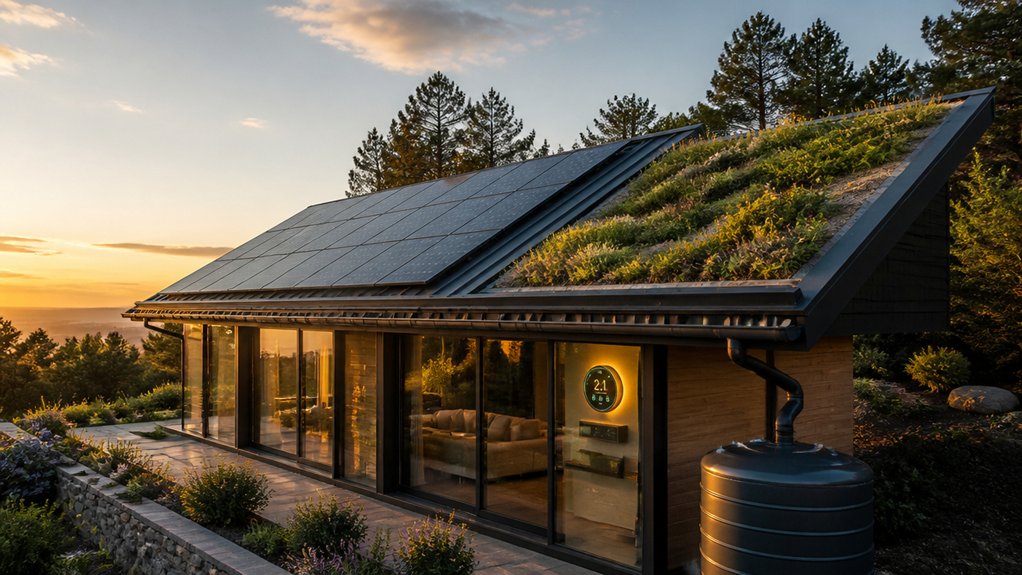
Why does your roof matter so much for energy use and climate impact? Because it’s your home’s largest exposure surface, driving heat gain, heat loss, and HVAC runtime. An eco-smart roof is a roof system you design to manage energy flows and moisture with measurable performance targets, not just aesthetics.
You combine high-albedo or emissive surfaces, durable membranes, and detailing that limits thermal bridging and air leakage. Roof insulation sets the thermal resistance and stabilizes indoor temperatures; you size it for your climate and verify continuity at edges and penetrations.
Ventilation optimization balances intake and exhaust to purge heat and humidity without short-circuiting, reducing condensation risk and material decay. You monitor outcomes through energy bills, attic temps, and humidity trends.
Which Eco-Smart Roof Upgrades Save Energy Fastest?
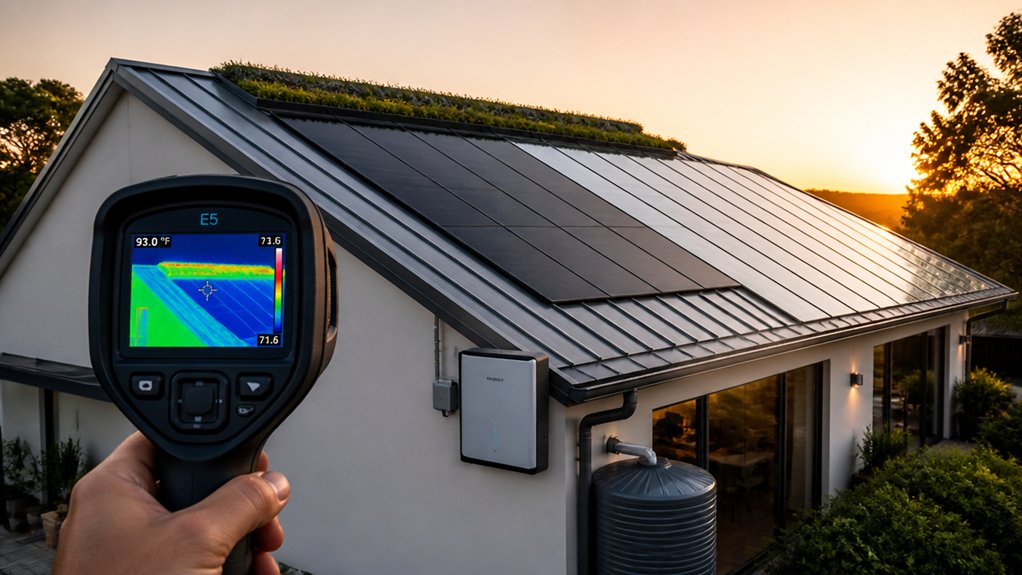
Even if you can’t replace the whole roof yet, a few targeted upgrades can cut heat gain and HVAC runtime quickly. Start with air-sealing at penetrations, ridge lines, and attic hatches. Then add high-R insulation above the ceiling plane to stop conductive losses.
Install a radiant barrier or reflective roof coating to lower roof-deck temperatures and reduce peak cooling demand. Add smart ventilation—humidity and temperature-controlled ridge/soffit fans or gable units—to purge trapped hot air without over-venting in mild conditions.
Upgrade flashing and underlayment to minimize wind-driven infiltration that forces your system to recondition outdoor air. If you’re worried about roofing aesthetics, choose coatings and vents in color-matched profiles so performance gains don’t look “retrofit.”
How to Pick Eco-Smart Roof Materials by Climate
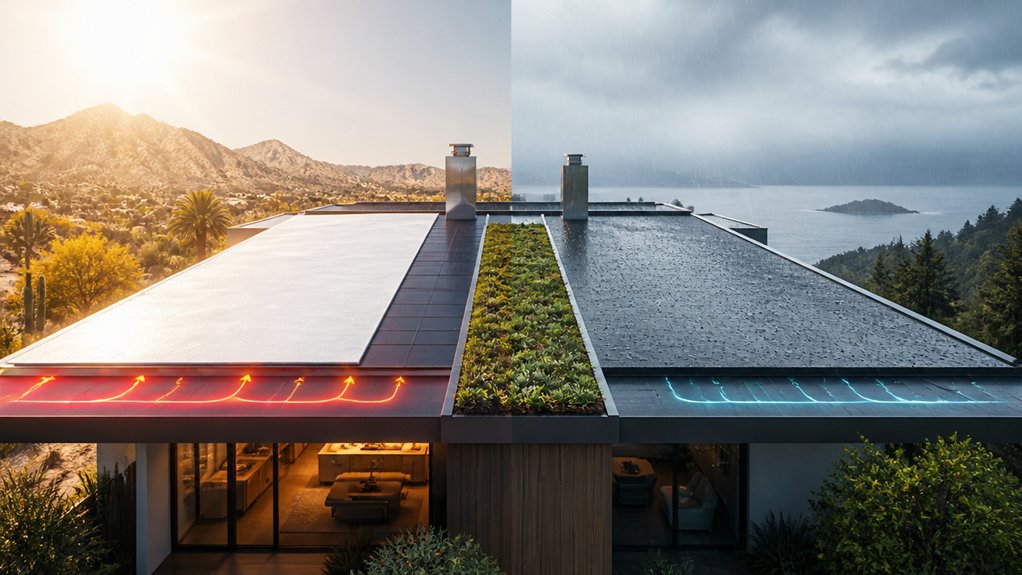
Because your roof acts as a climate interface, you’ll get the biggest energy and durability gains by matching material properties—solar reflectance, thermal emittance, vapor permeability, impact rating, and corrosion resistance—to your region’s heat load, humidity, snow, wind, and wildfire risk.
In hot, sunny zones, choose high-SRI membranes or light metal plus Green coatings to cut cooling load and UV degradation.
In humid or coastal climates, prioritize vapor-open assemblies, algae-resistant surfaces, and stainless/galvanic-safe fasteners to prevent rot and salt corrosion.
In cold regions, use high-R insulation above deck, ice-dam underlayment, and snow-shed surfaces; guarantee ventilation manages winter moisture.
In hail/wind corridors, pick Class 4 shingles or standing-seam metal with high uplift ratings.
In wildfire zones, use Class A, ember-resistant details; limit Roof planting near eaves.
When Does Solar Make Sense for Your Roof?
Solar makes sense for your roof when you’ve got strong sun exposure—minimal shading, good azimuth, and a pitch that supports high annual kWh yield.
You’ll also need to map installed costs against available incentives (tax credits, rebates, net metering) to shrink your upfront footprint and emissions per watt.
Run a payback and lifetime ROI using your utility rate, system degradation, and expected roof life so you can time solar with reroofing and lock in the cleanest economics.
Roof Sun Exposure Factors
How much sun your roof actually captures each day determines whether rooftop panels will pay off or disappoint.
Start by mapping annual solar access: azimuth, tilt, and local horizon all shape irradiance. South-facing slopes (north-facing in the Southern Hemisphere) usually outperform; low-slope roofs can still work with racking, but wind loads and attachment points must stay watertight.
Track seasonal shade from trees, chimneys, and neighboring buildings; even partial string shading can drag down output, so use shading strategies like selective pruning, setback-aware placement, and module-level power electronics when needed.
Also manage heat: good roof ventilation under the array lowers cell temperature, boosts efficiency, and protects your deck.
Finally, confirm your structure can handle added dead load and service walkways safely.
Costs, Incentives, And Payback
Whether rooftop PV pencils out for you comes down to three numbers: installed cost per watt, usable incentives, and your site’s annual kWh yield against the retail rate you offset.
Get quotes that separate module, inverter, racking, and interconnection costs, then apply federal credits, local rebates, and net‑metering rules to compute your post‑incentive $/W.
Next, model production with shade and tilt, and compare value under time‑of‑use pricing; higher peak rates shorten payback.
If you’re re‑roofing, bundle upgrades: better roof insulation cuts HVAC loads, letting you downsize PV for the same net energy target.
Choose mounting that preserves membrane integrity and supports stormwater management features like blue‑roof detention or green‑roof zones.
Payback often lands at 6–12 years, longer if rates stay low.
Eco-Smart Roof Cost, Rebates, and Payback
You’ll want to map your eco-smart roof’s upfront costs into materials, labor, electrical upgrades, permitting, and interconnection so you can size the system for maximum efficiency per dollar.
Next, you can stack available incentives—federal tax credits, state rebates, utility programs, and net-metering value—to cut your net cost and shrink your carbon footprint faster.
With those numbers, you’ll estimate a payback timeline from projected kWh production, avoided utility rates, and maintenance assumptions, then lock in the most cost-effective path to cleaner energy.
Upfront Costs Breakdown
Three numbers set the tone for an eco‑smart roof investment: installed cost, available rebates, and payback time. Your upfront price typically bundles materials, labor, disposal, and site protection.
Cool-roof membranes and reflective coatings sit on the low-to-mid end, while green roofs, integrated PV shingles, and advanced insulation assemblies cost more because they add structural layers, waterproofing detail work, and electrical tie-ins.
Expect line items for deck repairs, air-sealing, ventilation upgrades, and flashing replacements—each reduces leaks and boosts thermal performance.
You’ll also budget for design review, permitting, and engineering if loads increase.
Plan roof maintenance costs for drains, coatings, and vegetation management, and weigh aesthetic considerations like color, profile, and neighborhood guidelines.
Request an itemized bid to compare apples-to-apples across installers.
Rebates And Payback Timeline
After you’ve priced materials, labor, and any structural or ventilation upgrades, run the numbers that change the real cost: rebates, tax credits, and your energy-bill savings over time.
Start by checking federal credits for solar panel integration, then stack state, utility, and municipal rebates for high-albedo coatings, insulation, and green roofing materials. Ask your installer for documentation: product spec sheets, ENERGY STAR or Cool Roof ratings, and itemized invoices that match rebate forms.
Next, estimate payback with a simple cash-flow model: (net installed cost) ÷ (annual kWh savings + avoided HVAC maintenance + solar production value). In many climates, you’ll see 6–12 years, faster if rates rise.
Track performance with monitoring so you can verify savings and recalibrate assumptions.
Eco-Smart Roof Mistakes That Kill Performance
Even if you invest in high‑R insulation, solar, or a “cool roof” coating, a few common design and install mistakes can erase the energy gains and drive up peak cooling loads.
If you skip air‑sealing at penetrations and parapets, you’ll drive convective losses and moisture accumulation that degrades R‑value.
If you ignore thermal bridging at fasteners and curb details, you’ll create hot spots that worsen urban heat and shorten roof durability.
Poor slope and drainage trap water, raising membrane temperature and accelerating aging.
Undersized ventilation can bake the deck; oversized ventilation can pull conditioned air out.
Misplaced PV standoffs can puncture membranes and shade reflective surfaces.
Specify continuous insulation, sealed progression, tapered crickets, verified reflectance, and third‑party QA/QC on install.
Frequently Asked Questions
Will an Eco-Smart Roof Increase My Home’s Resale Value?
Yes, an eco-smart roof can increase your home’s resale value, especially in markets that price efficiency. You’ll document energy savings through lower utility bills and verified performance data, which buyers and appraisers can monetize.
You also boost aesthetic appeal with modern profiles, integrated solar, or green roofing that signals low maintenance. If you pair it with warranties, permits, and energy audits, you’ll reduce buyer risk and strengthen offers.
How Often Should Eco-Smart Roof Components Be Inspected or Maintained?
You should inspect eco-smart roof components twice a year (spring/fall) and after major storms; that’s the best Maintenance frequency for performance and warranty compliance.
Schedule annual pro servicing for PV wiring, inverter logs, and membrane seams.
For Inspection tips, you should clear debris from drains, check fasteners and flashing, verify green-roof irrigation and media depth, and confirm sensor calibration.
You’ll cut leaks, boost output, and extend lifecycle using low-impact cleaners.
Can I Install Eco-Smart Upgrades Without Replacing the Entire Roof?
Yes, you can add eco-smart upgrades without replacing the entire roof if your deck and underlayment stay sound. You’ll retrofit with solar integration using standoff mounts, add cool-roof coatings, and improve ventilation and insulation from below.
You should verify material durability by checking shingle wear, fastener integrity, and flashing condition first. You’ll also need load calculations, wiring pathways, and permits to protect performance and warranties.
Do Eco-Smart Roofs Reduce Noise From Rain, Hail, or Traffic?
Yes—you’ll usually cut noise from rain, hail, and nearby traffic with an eco-smart roof.
You improve Sound insulation by adding dense recycled insulation, resilient underlayment, and properly sealed decking, which dampens impact and airborne sound.
You also boost Weather resilience: thicker membranes and vegetated or solar-ready assemblies absorb vibration and reduce drumming during storms.
If you retrofit, you can add acoustic mats and insulation without a full tear-off.
Are Eco-Smart Roof Materials Safe for Pets and Indoor Air Quality?
Worried about toxins overhead? Yes—eco-smart roof materials can be safe for Pet safety and Indoor air quality if you choose low-VOC membranes, formaldehyde-free sheathing, and GREENGUARD/Cradle-to-Cradle certified products.
You’ll avoid asphalt odors by specifying cool-roof coatings with verified emissions and using sealed, vented assemblies that prevent moisture-driven mold.
You should also confirm lead-free flashing and non-toxic runoff-safe finishes, especially if pets access balconies or drains.
Conclusion
You don’t need a perfect house to hit peak efficiency—you just need a roof that works like a system. By pairing high‑R insulation, airtight detailing, cool or vegetated surfaces, and right‑sized solar, you cut heat gain, stop leaks, and turn sunlight into usable power. Worried about upfront cost? Incentives, lower HVAC loads, and longer shingle life shrink payback fast. You’ll feel steadier indoor temps and cleaner impact every season, too.
About the Author