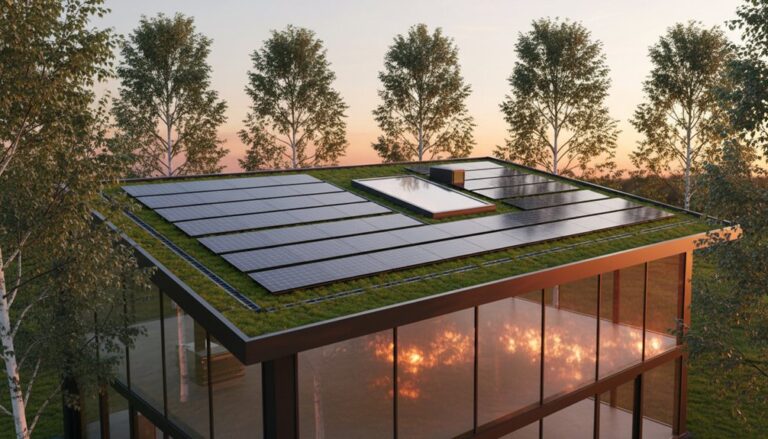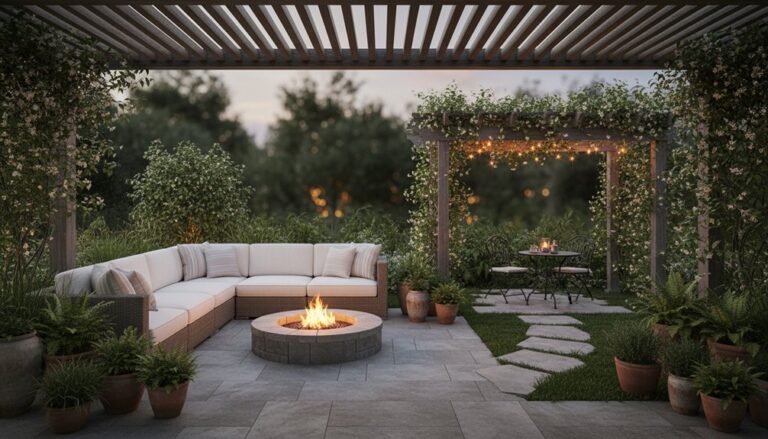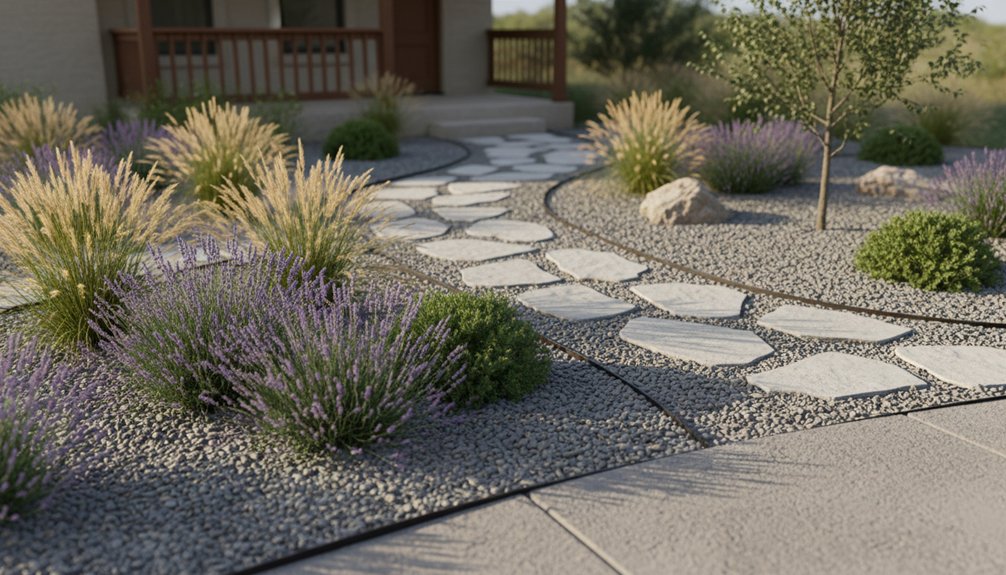
Start by mapping your yard’s sun, shade, and drainage after storms, then zone plants by water needs so you don’t overwater or stress them. Shrink turf to only used areas and swap the rest for fine fescue, native sedges, or microclover. Install 36–48 inch permeable paths and crisp edging to protect beds and handle traffic. Repeat 3–5 tough, compact natives, suppress weeds with 2–3 inches of mulch, and run drip on smart timers—next you’ll see how to put it all together.
Key Takeaways
- Assess sun, shade, and drainage patterns first, then group plants by exposure and water needs to avoid stress and overwatering.
- Reduce lawn to functional areas; use fine fescue, sedges, or microclover matched to traffic, shade, and irrigation reach.
- Build durable, permeable paths and patios with proper base and edging to handle foot traffic, prevent washouts, and cut weeds.
- Plant a simple repeating matrix of 3–5 native, compact, deep-rooted species suited to your soil and climate for lower pruning and pests.
- Use mulch and drip irrigation: 2–3 inches mulch, keep off crowns, and run zoned drip on smart timers with cycle-and-soak.
Plan Low-Maintenance Landscaping by Sun and Water
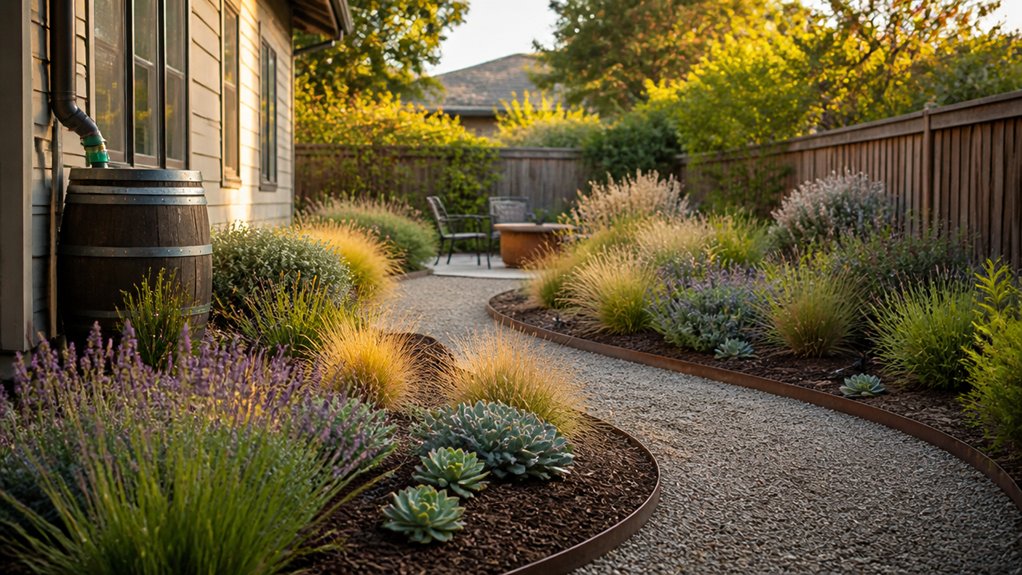
Because sun exposure and moisture drive both plant performance and maintenance load, you’ll get a more durable yard by mapping your site’s light (full sun, part shade, deep shade) and water patterns (dry zones, runoff paths, soggy pockets) before you plant. Walk the site morning and afternoon, then confirm drainage after a storm.
Group plants by irrigation demand and exposure so you don’t overwater shade beds or stress sun borders. In hot, reflective zones, specify drought-tolerant perennials and deeper-rooted shrubs; in deep shade, choose species that tolerate low evapotranspiration and reduce disease pressure with airflow.
Fix soggy pockets with grading, swales, or rain-garden soils, then match them with moisture-tolerant natives. This zoning tightens Water conservation and cuts pruning, replanting, and pest cycles year-round.
Shrink the Lawn With Easy Turf Alternatives
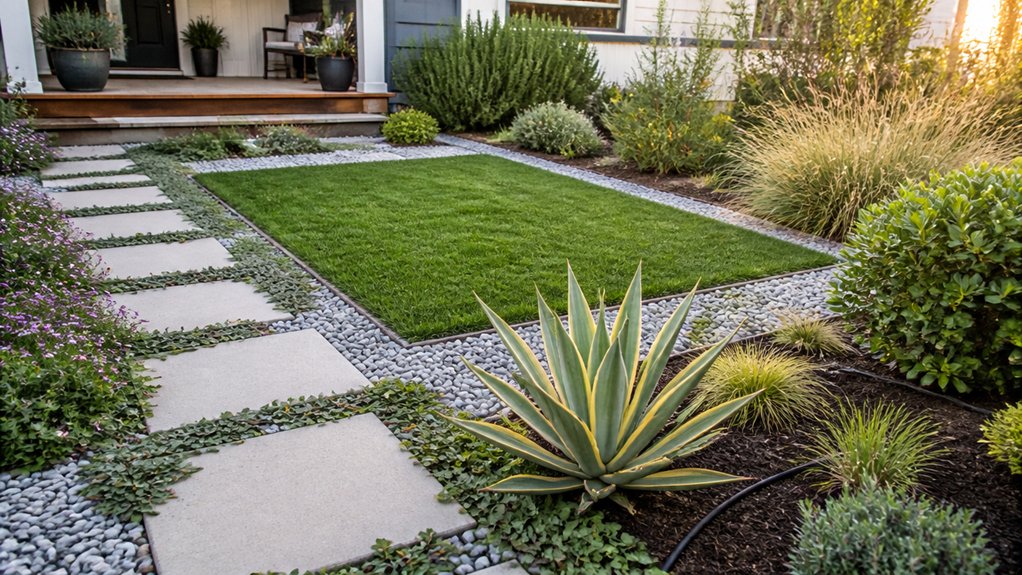
If your goal is a tougher yard with fewer inputs, start by shrinking the lawn to only the areas you’ll actually walk, play, or view as a clean “green plane.” Replace the rest with site-fit turf alternatives—no-mow fine fescue in cool, low-traffic zones; native sedges (Carex spp.) in part shade; microclover blends where you want nitrogen fixation and faster fill; or creeping groundcovers on slopes and narrow side yards where mowing scalps and compacts soil.
Match species to irrigation reach, soil texture, and compaction risk. In hot, exposed strips, specify drought resistant turf mixes (buffalograss, bermuda) and mow higher to shade crowns.
Where foot traffic is constant and irrigation is limited, consider Artificial grass, but install over permeable base and manage heat gain.
Keep progressions crisp with planting beds.
Add Hardscapes: Paths, Patios, and Edging
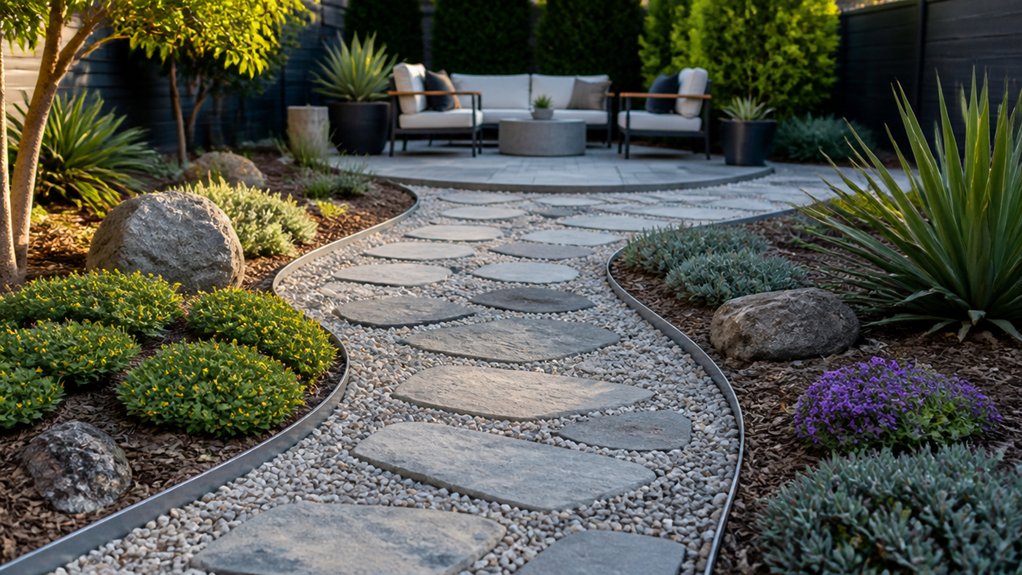
Once you’ve right-sized the lawn, lock in durability by adding hardscapes that carry traffic and define maintenance zones.
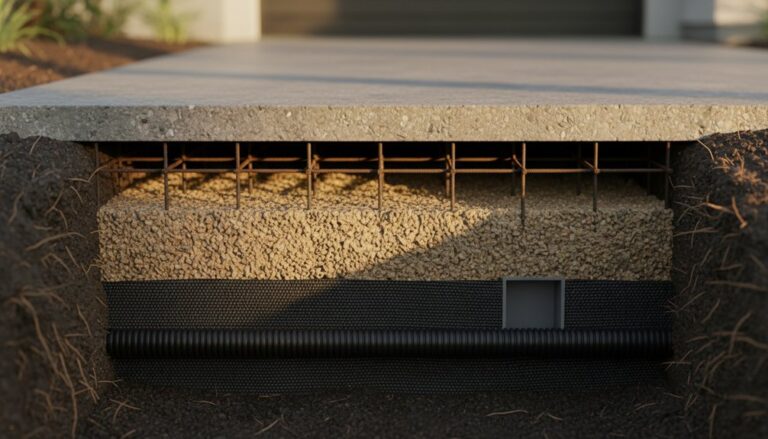
Lay a 36–48 inch main path from driveway to entry using compacted base (4–6 inches) and permeable pavers to shed water without mud.
On slopes, terrace with short runs and add a landing every 10–12 feet to prevent washouts.
Build a patio on the leeward side of the house for wind control and use polymeric sand to reduce weeds.
Install steel or concrete edging flush to grade to keep gravel in and mowers out.
Anchor focal points—garden sculptures—on stable pads, and run low-voltage conduit for decorative lighting along path edges.
Choose Low-Maintenance Plants (Native, Perennial, Shrubs)
After you’ve set your traffic zones with paths and patios, reduce upkeep by planting a tough, climate-matched palette—native perennials for seasonal fill, shrubs for structure, and groundcovers to knit edges together.
Start with site mapping: sun hours, soil texture, drainage, and winter lows. Then align Plant selection to each microzone—drought-tolerant natives on hot south-facing beds, moisture-tolerant perennials near downspouts, and salt-tolerant shrubs by walks and driveways.
In Garden design, repeat a limited plant matrix for visual calm and simpler care: 3–5 core species, massed, with staggered bloom and evergreen backbone. Choose compact cultivars to reduce pruning, and favor deep-rooted types that hold form through heat and wind. Match mature size to bed width.
Stop Weeds With Mulch and Groundcovers
A tough plant palette cuts maintenance, but you’ll still lose time if bare soil stays exposed—so lock your beds down with mulch and living groundcovers that block light, buffer soil temperature, and slow evaporation.
For weed prevention, install 2–3 inches of coarse, arborist wood chips on slopes, and 1–2 inches of shredded bark in windy sites so it knits together.
Use gravel mulch in hot, sunny strips where splash and rot are issues, but edge it with steel to prevent migration.
Keep mulch 3 inches off shrub crowns and don’t bury stems.
In shade, knit beds with sedge, wild ginger, or lamium; in sun, use creeping thyme or low fescue.
Plant tight, then top-dress annually.
Set Up Drip Irrigation and Smart Timers
Because overhead watering wastes water to wind and evaporation and promotes foliar disease, you’ll get a tougher, lower-maintenance yard by zoning beds with drip lines and running them on a smart timer tuned to your soil and exposure.
Start drip system installation with a pressure regulator, filter, and backflow preventer at the hose bib, then run 1/2-inch poly as a perimeter “spine” and branch 1/4-inch lines to each plant.
Match emitters to root zones: 0.5–1 gph for shrubs, inline drip for groundcovers, and bubbler stakes for trees.
Keep tubing under mulch and pin it tight to avoid UV and mower damage.
For smart timer setup, create separate programs for sun vs shade and slope vs flat, then enable cycle-and-soak to prevent runoff.
Follow a Simple Seasonal Maintenance Checklist
When you treat maintenance like a seasonal punch list, you’ll keep the yard’s structure intact and prevent small failures—compacted soil, clogged emitters, thinning turf—from turning into redesign work.
In spring, edge beds to preserve crisp lines, top-dress planting zones with 1/2 inch compost, and flush drip zones to clear sediment.
In summer, check mulch depth on south-facing slopes, raise mower height, and adjust smart timers after heat waves.
In fall, aerate high-traffic paths, cut back perennials to crown height, and sweep leaves off hardscape to prevent staining.
In winter, test outdoor lighting connections, re-level pavers after freeze-thaw, and secure garden art so wind can’t shift focal points or scrape finishes.
Frequently Asked Questions
How Can I Deter Deer and Rabbits Without Constant Monitoring?
You can deter deer and rabbits by combining exclusion and targeted planting so you won’t need to watch the yard.
Install Rabbit proof barriers: 1/2-inch hardware cloth, 24 inches tall, bury 6–8 inches, and seal gates.
Add Deer resistant plants in perimeter bands, clustered by sun and soil zones, and avoid tender edge beds.
Use motion-activated sprinklers aimed at entry corridors, and rotate scent repellents monthly.
What Low-Maintenance Landscaping Options Work Best for Steep Slopes?
On steep slopes, you’ll get the best low-maintenance performance from a rock garden skeleton paired with deep-rooted native plants. Think of stone ribs holding a hillside’s skin in place.
You’ll terrace with boulders or dry-stacked retaining edges, then pin soil using jute netting and a coarse gravel mulch.
You’ll place plants in staggered, contour-following bands, prioritize groundcovers, and route runoff with shallow swales to prevent rills.
How Do I Reduce Mosquito Breeding in a Low-Maintenance Yard?
Reduce mosquito breeding by eliminating Standing water: regrade low spots, clean gutters, refresh birdbaths weekly, and store pots inverted. Specify well-drained aggregates under pavers and ensure downspouts discharge to daylight or a dry well.
Thin Dense shrubbery to increase airflow and sun penetration; keep canopies lifted and prune interiors.
Use drip irrigation, not spray, and schedule deep, infrequent cycles to prevent soggy zones around foundations.
Which Budget-Friendly Upgrades Give the Biggest Low-Maintenance Impact?
Get the biggest low-maintenance impact by installing weed-suppressing fabric plus durable mulch, then simplifying planting beds with cost effective plants.
Home irrigation can waste about 30% of water through leaks/overspray—tightening hose bibs and swapping to drip lines cuts upkeep fast.
Edge beds with steel or paver restraints to stop turf creep.
Replace fussy lawn corners with gravel paths and a few tough shrubs matched to sun, slope, drainage.
Do Low-Maintenance Yards Increase Home Value or Curb Appeal?
Yes, you’ll typically boost curb appeal and can raise home value when buyers see a tidy, resilient landscape.
You get the best return by using site-specific garden design: define clean edges, clear circulation, and a simple hardscape hierarchy.
Match plant selection to sun, soil, and irrigation zones so beds stay full without constant inputs.
Use drought-tolerant perennials, evergreen structure, and mulched masses to signal durability and lower ownership risk.
Conclusion
Design your yard like you’re drafting it on a T-square: map sun and runoff, then zone plants and hardscape accordingly. You’ll shrink turf with durable alternatives, define circulation with permeable paths and tight edging, and specify natives, perennials, and structural shrubs for year-round form. You’ll lock out weeds with mulch and groundcovers, then deliver water precisely using drip lines and smart timers. Stick to a seasonal checklist, and the site stays clean, resilient, and low-effort.
About the Author