You can upgrade your home exterior with modern cladding by installing a water-shedding rainscreen skin—fiber-cement, engineered wood, metal panels, or HPL/ACM—over a continuous WRB, furring, and properly lapped flashings. You’ll correct peeling paint, warped siding, efflorescence, and thermal bridging while improving UV and impact resistance. Use corrosion-resistant fasteners, sealed or expressed joints, and crisp trims to standardize lines and reduce maintenance. Next, you’ll see how to match style, budget, and performance.
Key Takeaways
- Modern cladding adds a protective outer skin that sheds water, manages vapor, and resists UV and impact damage.
- Set priorities for style, budget, and performance, including panel layout, reveal depth, drainage, ventilation, and air-sealing goals.
- Ensure wall compatibility by planning substrate repairs, WRB continuity, rainscreen furring, and proper flashing at openings and transitions.
- Choose materials by exposure and aesthetics: fiber-cement for wet/sunny walls, engineered wood for sheltered areas, metal for crisp durability, HPL/ACM for color stability.
- Detail trim, joints, and fasteners carefully to prevent staining and leaks, then maintain with annual inspections and gentle washing.
What Modern Cladding Is (And What It Fixes)

If your exterior looks dated or starts showing moisture staining, checking the cladding system is a practical first step. Modern cladding is the outer protective skin: panels, boards, shingles, or rainscreen assemblies that shed water, manage vapor, and shield the wall structure from UV and impact.
You install it over sheathing and a weather-resistive barrier, often with a drainage plane or ventilated cavity to control capillary wetting and drying.
It fixes common failures like peeling paint, warped siding, efflorescence, and thermal bridging at discontinuous insulation. By using stable substrates, corrosion-resistant fasteners, and sealed or gasketed joints, you improve Material durability and reduce maintenance cycles.
You also standardize Exterior texture with consistent profiles, coatings, and edge detailing.
Set Your Cladding Priorities: Style, Budget, Performance

Before you compare profiles and colors, set clear priorities across style, budget, and performance because each choice drives the cladding assembly’s thickness, fastening method, joint detailing, and maintenance load.
Start with style: align panel module, reveal depth, and surface sheen with Architectural trends, but confirm your wall can accommodate required furring, corner returns, and trim breaks without awkward progressions.
Next, set a budget that includes substrates, membranes, flashings, fasteners, and labor complexity—not just visible skin.
Performance comes last only in order, not importance: define targets for drainage, ventilation gap depth, air-seal continuity, impact resistance, UV stability, and cleanability.
If you want eco friendly options, specify recycled content, low-VOC coatings, and repairable detailing so you extend service life and reduce replacement waste.
Modern Cladding Materials Compared (Pros, Cons, Best Uses)
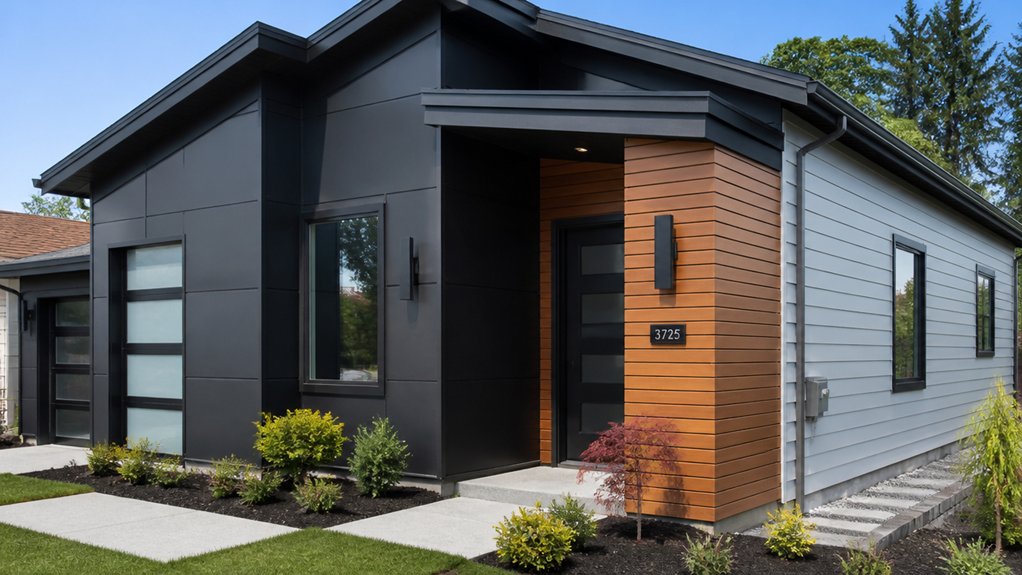
Once you’ve set priorities for aesthetics, budget, and wall performance, you can compare modern cladding options by looking past the finish to the full assembly: panel/board stability, fastening strategy (face-fastened vs concealed), required rainscreen cavity and furring layout, corrosion compatibility, and how each material handles water, UV, impact, and movement at joints.
Fiber-cement offers fire resistance and dimensional stability, but needs dust control and careful edge sealing; it suits wet, sun-exposed walls.
Engineered wood delivers warm texture and lighter weight, yet demands strict back-venting and coated fasteners; it fits protected elevations.
Metal panels (aluminum/steel) shed water fast and enable concealed clips, but dent and require isolation from treated lumber; use them for crisp, durable planes.
HPL and ACM are innovative material options with high color stability, though they cost more; pick them for large-format façades.
For sustainable design choices, favor recycled-content metals and FSC substrates.
Nail the Modern Look: Trim, Joints, and Color
Because modern façades read as a series of deliberate edges and shadow lines, you’ll get a cleaner result by designing trim, joint geometry, and color as part of the cladding system—not as afterthoughts.
Use trims to control terminations: metal reveals at corners, crisp window returns, and drip edges that protect vulnerable tops and sills.
Set joint cadence intentionally—tight butt joints for monolithic planes, open rainscreen reveals for depth, or expressed battens to punctuate bays and align with openings.
Keep fasteners concealed where possible so lines stay unbroken.
Choose a palette that supports the material’s undertone and gloss; darker hues deepen reveals, while light tones flatten texture.
Add Decorative accents sparingly at entry volumes or soffits.
Plan for Seasonal changes by selecting stable finishes and coordinating caulk-free movement joints.
Modern Cladding Cost, Installation, and Maintenance Planning
Although modern cladding often looks minimalist, you’ll need a disciplined plan for cost, installation sequencing, and long-term upkeep to keep the assembly performing like a system. Price by square, but also budget for rainscreen furring, WRB, flashings, trims, fasteners, and shop-fabricated corners; those accessories often decide durability.
Schedule substrate repairs first, then WRB continuity, window/door flashing integration, and panel installation with verified joint tolerances and expansion gaps. Confirm compatible sealants and gaskets to prevent staining or galvanic corrosion across metals.
Plan landscape integration so irrigation spray, splashback, and soil grades don’t wet the base course.
Reduce environmental impact by specifying recycled-content metals, FSC wood, or low-resin composites, and by detailing for easy replacement.
Maintain with annual joint inspections, gentle washing, and prompt coating touch-ups.
Frequently Asked Questions
Do I Need Planning Permission to Change My Home’s Exterior Cladding?
You might need planning permission, depending on your location, cladding material, and how much the facade changes. You should check local building permits requirements and any aesthetic guidelines for your street or conservation area.
If you’re altering insulation thickness, fire-rated assemblies, or drainage planes, inspectors may require drawings and product data sheets.
Leasehold or HOA rules can also trigger approvals. When in doubt, submit a pre-application query to your authority.
Will New Cladding Affect My Home Insurance Coverage or Premiums?
Yes, new cladding can affect your insurance coverage and premiums. You change the material, you change the risk, you change the rating.
Insurers may reassess fire performance, moisture ingress potential, fixings, and cavity barriers. Combustible systems can raise premiums or restrict cover.
Declare the upgrade, provide product datasheets, installer certification, and photos. Keep cladding maintenance documented.
The aesthetic impact can raise rebuild value, so update sums insured accordingly.
Can Modern Cladding Interfere With Wi‑Fi, Cell Signal, or Radio Reception?
Yes, modern cladding can interfere, especially when you install metal skins, foil-faced insulation, or conductive rainscreen membranes. These layers reflect and absorb RF, causing Wi-Fi interference indoors and attenuation of cell bands, particularly at higher frequencies.
Dense cementitious panels and brick slips can also add loss.
Poorly grounded metal can worsen radio disruption. You can mitigate it by adding RF-friendly gaps, using nonconductive backers, and repositioning access points.
How Do I Verify a Cladding Contractor’s Credentials and Past Work Quality?
Verify credentials by confirming you’re hiring a licensed, insured contractor and by checking manufacturer certifications for specific cladding material options.
Run contractor reputation checks through state licensing boards, bonding records, and litigation databases.
Inspect at least three completed projects in person, focusing on flashing terminations, fastener spacing, rainscreen gap consistency, and panel flatness.
Request mockups, material submittals, and warranty terms.
Call references and ask about leak history and callbacks.
Will Recladding Increase Resale Value, and How Much Return Should I Expect?
Like upgrading bearings in a machine, recladding can raise resale value if you choose high-performance assemblies. You’ll often see 50–80% ROI, sometimes more in competitive markets, but it depends on neighborhood comps and execution.
Buyers pay for cladding durability (UV, impact, moisture control) and aesthetic appeal (crisp lines, consistent color, modern profiles). Specify tested rainscreen details, proper flashing, and warranty-backed materials to protect valuation and reduce defects.
Conclusion
When you choose modern cladding, you’re not just changing curb appeal—you’re tuning the building envelope. Set priorities, then match materials to exposure: fiber cement for fire and stability, metal for crisp lines, engineered wood for warmth. On one job, swapping tired lap siding for rainscreen panels dropped measured moisture at the sheathing by 30%—like fitting a rain jacket that finally breathes. Plan cost, install tolerances, and maintenance cycles, and you’ll lock in performance.
About the Author