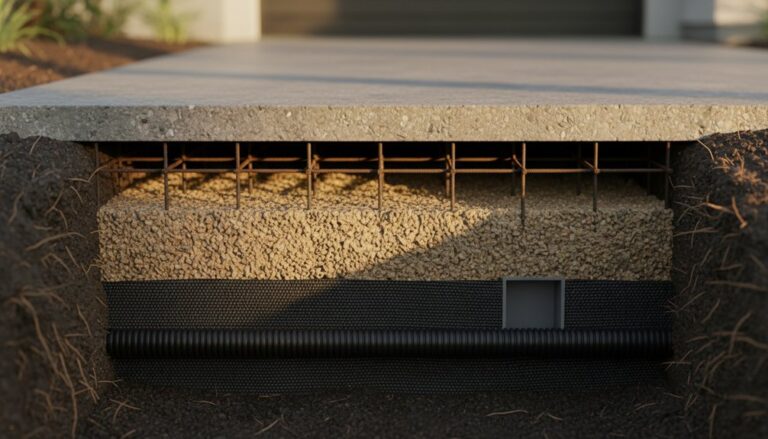
You’ll choose a garage door by matching style and specs: panel, carriage, flush, or full-view glass all change weight, stiffness, pinch risk, and the spring/opener settings you need. Pick materials by upkeep—steel fights dents but can rust, aluminum won’t corrode but dents, wood needs sealing, and composites need UV checks. Size insulation by R-value, plus tight weatherseals and no hinge/window gaps. Inspect rollers, hinges, tracks, and sensors monthly, and leave spring work to pros. Keep going for deeper selection and repair cues.
Key Takeaways
- Choose a door style (traditional, carriage, flush, full-view glass) that matches your home and affects weight, insulation, and safety.
- Pick materials wisely: steel is durable, aluminum resists corrosion, wood needs refinishing, and composites handle moisture but can UV-crack.
- Budget for the full system—door, tracks, torsion springs, opener, and installation—since cheap hardware increases failure and safety risks.
- Improve efficiency with proper sealing and insulation; higher R-values, thermal breaks, and perimeter weatherstrips matter most in extreme climates.
- Maintain monthly: lubricate moving parts, tighten hardware, align tracks, test photo-eyes and auto-reverse, and hire pros for spring adjustments.
How to Choose a Garage Door (Budget, Climate, Style)
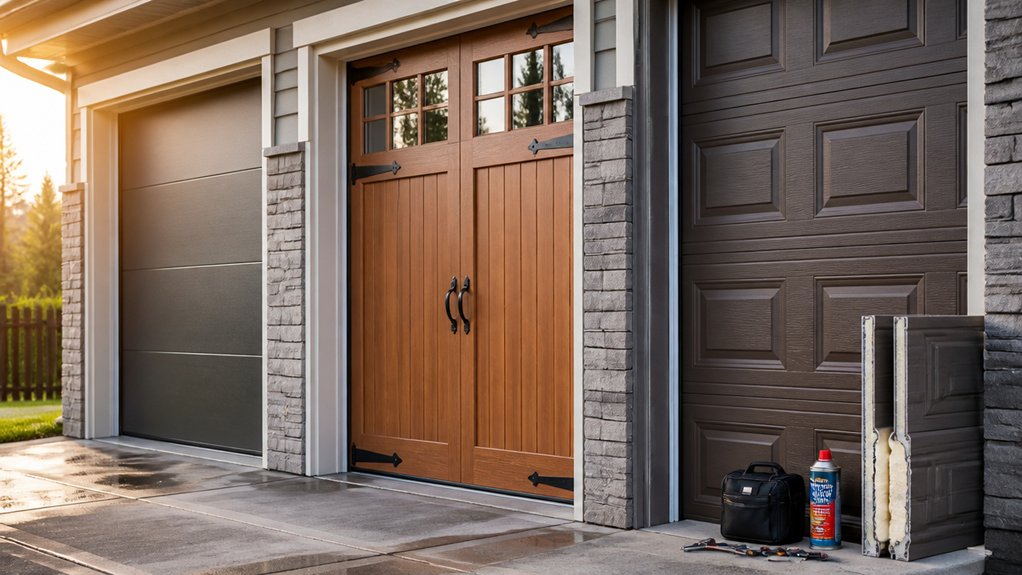
Three factors—your budget, your local climate, and your home’s style—should drive every garage door choice because they directly affect durability, energy performance, and safe day-to-day operation.
Set a budget that includes the door, tracks, torsion springs, opener, and professional installation; underspending often means thinner gauges, weaker hardware, and higher risk of pinch, derailment, or spring failure.
Match climate with insulation (R-value), thermal breaks, and corrosion-resistant finishes; coastal air demands galvanization, while cold zones benefit from perimeter seals to prevent ice binding.
Keep your home’s style coherent by selecting compatible window layouts and colors, then verify wind-load and impact ratings for code compliance.
Prioritize Garage door security with reinforced struts, tamper-resistant brackets, and rolling-code remotes, and add smart technology integration for monitored alerts and auto-close.
Garage Door Styles: Panel, Carriage, Flush, Glass
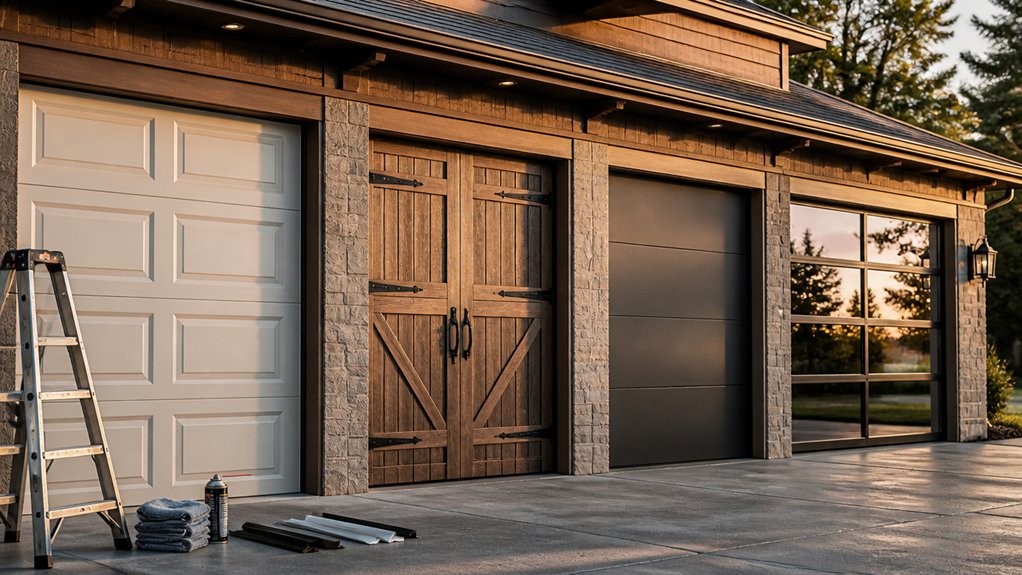
Once you’ve matched budget, climate, and architecture, the door’s style dictates the skin, section geometry, and glazing layout that affect weight, stiffness, insulation options, and even finger‑pinch risk at the joints.
Panel (raised or recessed) doors use defined section breaks; choose pinch‑resistant hinges and confirm roller track alignment to prevent binding.
Carriage styles mimic swing doors but run on overhead tracks, so you’ll want upgraded struts and balanced springs to handle added face detail without racking.
Flush doors minimize relief, improving wind load behavior and simplifying weatherseal contact.
Full‑view glass doors rely on frame mullions; specify tempered or laminated panes and check glare/privacy needs.
With Garage door automation and smart technology integration, verify opener force settings and photo‑eye sightlines for each style.
Garage Door Materials: Cost, Durability, Upkeep

Because the door’s material sets its baseline mass, stiffness, corrosion resistance, and thermal break potential, you’ll see it directly in upfront cost, cycle life, and the maintenance you’re signing up for.
Steel gives you the best cost-to-strength ratio, but you must watch for edge rust and repaint chips.
Aluminum resists corrosion and runs lighter on openers, yet it dents easily and may need panel swaps.
Wood costs more and demands sealing, hinge screw checks, and periodic refinishing to prevent rot and warp.
Fiberglass/composite handles moisture well, but you should inspect for cracking and UV degradation.
For Garage door security, choose reinforced struts, tamper-resistant brackets, and upgraded rollers.
Pair materials with smart garage options like auto-close timers and alerting sensors.
Maintain annually.
Garage Door Insulation and R-Value Basics
You’ll compare garage door insulation by its R-value rating, which quantifies resistance to heat flow and helps you estimate thermal performance panel-by-panel.
You can choose insulation materials such as polystyrene, polyurethane, or reflective barriers, and you’ll verify proper fit and intact facings so the door stays balanced and the hardware operates safely.
Your climate and energy goals should drive the target R-value, since the wrong insulation level can increase HVAC load, promote condensation, and reduce comfort in adjacent spaces.
Understanding R-Value Ratings
Although garage doors look like simple panels, their insulation performance depends heavily on the R-value rating, a number that quantifies how strongly the door resists heat flow through its sections. Higher R-values slow conductive heat transfer, helping stabilize garage temperatures and reducing condensation risk on interior steel skins.
You should read R-values as system performance, not just core insulation. Panel joints, end stiles, and metal fasteners can create thermal bridging that lowers real-world results.
During insulation installation, you’ll get closer to the rated value when sections seal tightly, weatherstripping compresses evenly, and there are no gaps around hinges or windows. Verify the rating applies to the entire door, not only the center-of-panel.
For safety, keep insulation clear of tracks, springs, and pinch points.
Insulation Material Options
Which insulation actually makes sense for your garage door: foam board, reflective barriers, or spray-applied products? Foam board (EPS/XPS/polyiso) gives predictable thickness and fit; you cut panels to each section, then secure with rated adhesive or retainers.
Reflective barriers work only with an adjacent air gap; you must tape seams with foil tape and avoid compressing the bubble core.
Spray-applied foam can seal irregular cavities, but you’ll need controlled expansion, masking, and ventilation to prevent overspray and inhalation exposure.
For insulation installation, verify the door’s balance afterward; added mass can change spring tension.
In your Material comparison, prioritize fire rating, moisture resistance, and compatibility with door skins so adhesives don’t attack coatings or warp panels.
Climate And Energy Impact
Because climate drives both heat flow and condensation risk, the “right” garage-door R-value depends on your region, whether the garage is attached, and how tightly you air-seal the perimeter.
In cold zones, target higher R-values and continuous perimeter seals to cut conduction and drafts that can freeze tracks and damage springs.
In hot zones, prioritize radiant barriers, light colors, and tight joints to improve solar efficiency and reduce heat soak into adjacent rooms.
If your garage is conditioned or shares walls with living space, match the door’s R-value to the wall insulation and verify label ratings (installed R differs from center-of-panel).
Control moisture by insulating end stiles and adding ventilation where codes require.
Better insulation lowers HVAC load and your environmental impact.
Garage Door Hardware and Safety Features to Know
When you understand how your garage door’s moving parts work together, you can spot hazards early and reduce failure risk. Your torsion or extension springs store high torque, so you shouldn’t loosen set screws or adjust lift cables without proper tools.
Check rollers, hinges, and center bearing plates for wear, wobble, and fastener loosening, and keep tracks aligned, clean, and securely anchored.
Your opener’s safety system matters just as much. Test Garage door sensors monthly by closing the door and breaking the beam; the door should reverse immediately.
Verify the auto-reverse force setting using a 2×4 laid flat under the door. Know where the Emergency release cord hangs, and confirm it disengages the trolley smoothly so you can operate the door manually during outages.
Repair vs Replace a Garage Door: Costs and Red Flags
Even if a failing garage door seems like a quick fix, you’ll save money—and avoid safety risks—by deciding early whether a repair actually restores reliable, balanced operation.
Minor fixes include sensor alignment, track cleaning, roller replacement, and hinge tightening; expect lower costs when the door stays square and the springs test within spec.
Replace when you see cracked panels, bent tracks, a sagging top section, repeated spring failures, or an opener that strains against an unbalanced door.
If you’ve got rot, severe rust, or delamination, repairs won’t hold, and you’ll compromise Garage door aesthetics and security.
You can apply noise reduction techniques—nylon rollers, lubrication, and new weather seals—but persistent grinding or popping usually signals structural fatigue.
Call a pro for spring work.
Frequently Asked Questions
What Garage Door Opener Type Is Best: Belt, Chain, Screw, or Direct Drive?
Direct drive is usually best because you get the quietest operation, fewer moving parts, and strong reliability.
You’ll also improve garage door security with integrated rolling-code remotes and automatic deadbolt options.
Choose belt drive if you need near-silent performance on a budget, chain drive if you prioritize lifting power, and screw drive if you want moderate noise with simple mechanics.
Pair any type with a sealed door for energy efficiency gains.
How Often Should Garage Door Springs Be Replaced?
Like a timer winding down, you should plan spring replacement every 7–12 years, or roughly 10,000–20,000 cycles, depending on usage and maintenance.
Track lifespan considerations: a door used 4–6 times daily wears springs faster, while high-cycle springs last longer.
You should inspect annually for gaps, rust, or uneven lift, and you must stop using the door if you hear loud snaps.
Hire a pro.
Can I Automate My Garage Door With Smart Home Systems?
Yes, you can automate your garage door with smart home systems by adding a Wi‑Fi or Z‑Wave controller compatible with your opener. You’ll wire it to the push-button terminals and install door-position sensors for safe status reporting.
Enable encrypted accounts, two-factor authentication, and timed auto-close to improve garage door security.
Use geofencing and schedules to reduce run time, improving energy efficiency.
Test safety reverse and photo-eyes after installation.
What Permits or HOA Approvals Are Needed for a New Garage Door?
You’ll often need a building permit, and sometimes HOA approval, before you swap a garage door; think of it as clearing airspace before takeoff. Permit requirements vary by city: structural changes, widening openings, new headers, or electrical work for an opener commonly trigger review.
Your HOA approval may require matching color, window style, and panel design. You should pull permits, schedule inspections, and keep documentation to protect safety, resale, and liability.
How Do I Reduce Garage Door Noise During Operation?
You’ll reduce garage door noise by tightening hardware, lubricating hinges/rollers with a silicone garage-door lube, and replacing worn nylon rollers.
Add vibration dampening: install rubber isolation pads under the opener and anti-vibration mounts on brackets.
Use soundproofing techniques like sealing gaps with perimeter weatherstripping and adding a mass-loaded vinyl panel to the door’s interior.
Unplug power before adjustments, and don’t touch torsion springs.
Conclusion
You’ve obsessed over curb appeal, yet the real drama lives in the parts you won’t see: R-value cores, torsion springs under load, and photo-eye sensors watching like silent sentries. Choose panels, carriage, flush, or glass to “simplify” life, then match steel, wood, aluminum, or composite to your climate and budget. Keep hinges lubricated, tracks aligned, and fasteners torqued. When cables fray or sections warp, don’t gamble—replace before it fails.
About the Author