You’ll never regret a driveway that prioritizes clean geometry, proper pitch, and durable materials. Choose a straight run for simple plow lines and setback clarity, or a gentle curve that protects root zones and eases turning at the apron. Stick with concrete (broom or exposed aggregate), brick pavers, or natural stone, and finish with tight edging and quiet patterns like running bond. Use warm, shielded 2700K lighting and disciplined beds with root-friendly plants. Keep going for layout, color, and maintenance specifics.
Key Takeaways
- Choose simple driveway layouts—straight, gentle curves, or circular courts—that improve turning, plowing, and long-term wear.
- Use durable, repairable materials like concrete, brick pavers, or natural stone, with proper bases, joints, and periodic sealing.
- Add crisp edging and clean transitions—soldier-course pavers, stone, poured curbs, or steel—to keep lines sharp and prevent undermining.
- Keep patterns subtle and timeless: broom-finish direction, restrained sawcuts, running bond, or understated herringbone with tight joints.
- Coordinate warm, natural-looking colors with the home and region, then reinforce with low-glare lighting and disciplined, root-friendly planting.
Timeless Driveway Layouts: Straight, Curved, or Circular

Whether you’re working with a narrow city lot or a wide suburban frontage, the layout you choose—straight, curved, or circular—sets the tone for how vehicles move, how water drains, and how the surface wears over time.
On tight parcels, you’ll keep a straight run to preserve setback clearances and simplify plow paths, then pitch it subtly to a trench drain or swale so runoff doesn’t sheet toward the garage.
If you’ve got mature trees or a corner sightline, you’ll bend a curve to protect root zones and maintain safe turning radii, easing tire scrub at the apron.
For larger sites, you’ll use a circular court to separate arrivals from exits and stage guest parking.
Study Famous landscape architects’ plans, and anchor entries with Innovative driveway sculptures as wayfinding.
Classic Driveway Materials (and Upkeep) That Last

Once you’ve picked a straight, curved, or circular layout, you lock in long-term performance by choosing materials that suit your site’s soil, drainage, and freeze-thaw cycles.
You can keep a classic concrete driveway looking sharp with a broom finish, exposed aggregate, or subtle stamping—then protect it with control joints, prompt crack sealing, and periodic resealing.
If you prefer brick pavers or natural stone, you’ll get decades of curb appeal when you install a compacted base, maintain tight joints, and seal stone on a schedule to block stains, salt, and moisture.
Timeless Concrete Finishes
Because concrete can swing from utilitarian to architectural with the right finish, it remains the most reliable “set it and forget it” driveway material in most climates. You’ll get the longest life when you match the surface to your site: a light broom finish for snowy driveways where tire traction matters, or salt-friendly sealed exposed aggregate near coastal air.
If you want character without fussy joints, concrete stamping can mimic slate or ashlar while keeping a monolithic slab that sheds water cleanly. In hot, sunny regions, choose pale integral color to cut heat gain and hide dust.
For slopes, textured finishes reduce slip and soften glare. Keep it timeless by re-sealing every few years, routing and filling cracks early, and keeping deicers minimal.
Brick Paver Longevity
If you want a driveway that can take freeze–thaw cycles, heavy SUVs, and easy spot repairs, clay brick pavers earn their reputation for longevity by flexing with the base instead of cracking like a slab.
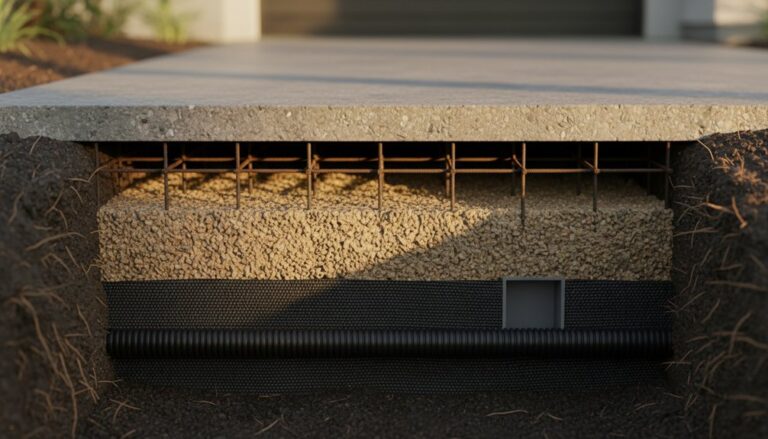
You’ll get the best life from a compacted, well-drained aggregate base with proper edge restraints, especially on sloped aprons and tight turn-in radii where tires shear surfaces.
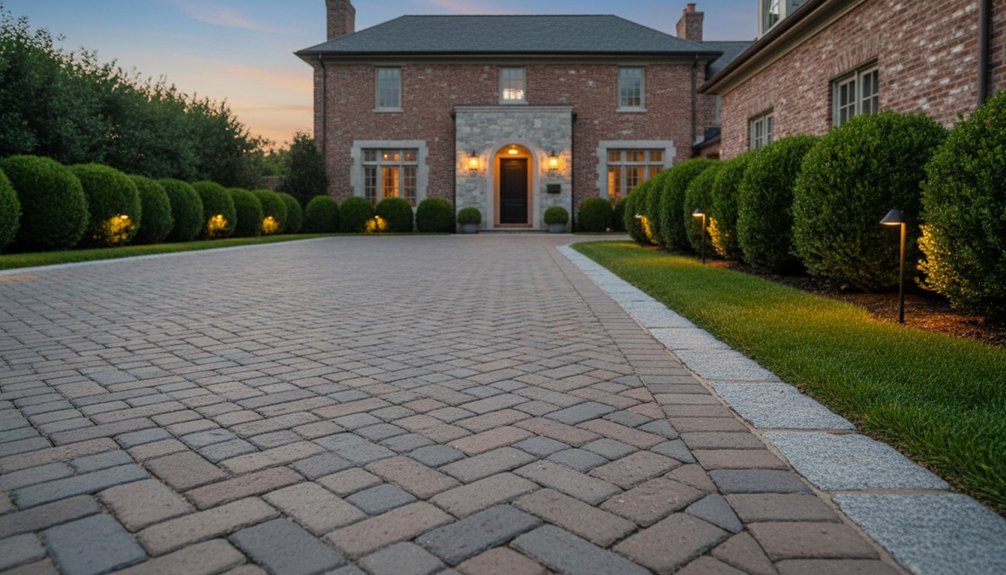
Brick paver craftsmanship shows in consistent joint spacing, tight soldier courses at borders, and clean cuts around drains, steps, and garage thresholds.
For longevity maintenance, you’ll sweep in joint sand after the first season, top it off after pressure washing, and reset any settled units before they rock.
Keep runoff directed away, and you’ll avoid rutting and uneven joints.
Natural Stone Sealing
Brick pavers last by moving with the base, but natural stone earns its keep by resisting wear—so long as you seal it to match your site’s moisture and de-icing reality.
On a shaded, slow-drying drive, choose a breathable, penetrating sealer so trapped vapor doesn’t haze bluestone or slate.
On sunny, open exposure, you can use a slightly higher solids sealer for stronger driveway stain prevention against oil, tannins, and fertilizer.
Before sealing natural stone, clean with a stone-safe alkaline degreaser, rinse thoroughly, and let the slab dry for 48–72 hours. Seal too soon and you’ll lock in dark patches.
Reapply every 2–4 years, sooner on salted edges and tire paths, and keep joints clear so meltwater drains instead of scaling the face.
Driveway Edging That Makes the Design Look Complete

Your driveway edging is the detail that locks the layout in place, whether you choose soldier-course pavers, cut stone, poured concrete curb, or steel edging that suits your soil, slope, and plow traffic.
You’ll get the cleanest look when the border sets a crisp grade line, tight joint, and flush connection to turf, gravel, or planting beds.
Keep it timeless with proven pairings—charcoal edging against light concrete, warm buff borders on gray pavers, or natural stone tones that echo your home’s trim and roof.
Material Choices For Edging
Because the edging line frames every curve and straight run, the material you choose should match your driveway’s surface, your site’s drainage needs, and the amount of tire wear it’ll take at the corners.
For asphalt, set steel or concrete curb edging deep enough to resist heaving and salt splash.
For pavers, use a rigid aluminum or concrete restraint anchored into compacted base so blocks don’t spread under turning loads.
In freeze-thaw zones, avoid thin plastic that gets brittle; choose stone set on mortar only where runoff won’t undercut it.
If you’ve got heavy vehicles, specify thicker curb sections and tight radii protection.
Let your edging material echo nearby retaining walls, and use decorative borders in brick or granite where pedestrians step.
Clean Lines And Transitions
Even if you’ve chosen the right edging material, the driveway won’t look finished until the lines land cleanly where pavement meets lawn, planting beds, or a walkway. Snap chalklines from the curb cut to the garage and carry that geometry through every turn, so your edge reads intentional from the street.
Set edging to a consistent reveal—flush with asphalt, slightly proud of pavers, or tight to a concrete slab—and keep the grade transitions crisp so water sheds without undermining the border.
Where the drive meets a path, align joints and cuts so the seams don’t “stutter.” Use tight radii with steel or aluminum, broader arcs with stone, and square terminations for minimalist aesthetics.
Clean, capped ends and true corners become modern sculptural elements.
Timeless Border Color Pairings
While layout and jointing set the geometry, border color is what visually “locks” the driveway into the house and landscape. You’ll get the most timeless result when you sample pavers in the exact light your site gets—morning shade from trees reads cooler, while late-day sun warms reds and tans.
For brick homes, pair a charcoal or deep cocoa soldier-course edge with mid-tone concrete pavers; the crisp color contrast hides tire scuffs and frames the field.
On stone or stucco facades, use warm granite-gray borders around buff or sand pavers to echo wall undertones.
If your drive meets dark asphalt, choose a darker border to prevent a harsh seam, then keep the field lighter for lift.
These border color pairings stay clean through seasons.
Subtle Driveway Patterns That Won’t Date Your Home
If you want your driveway to look current a decade from now, choose patterns that read as texture rather than a trend. Use subtle pattern variations in concrete by changing broom direction in wide bands, or by light sawcuts that echo your walkway joints.
In pavers, stay with running bond or a quiet herringbone, and keep joint widths tight so the surface feels continuous. Consider understated geometric designs like a single soldier-course ribbon at the apron, or a faint grid that aligns with your garage door panels.
On sloped sites, rotate pattern lines slightly off the fall line to reduce visual “water channels,” then specify a permeable base and edge restraint. You’ll get durability, traction, and a calm, tailored finish.
Timeless Driveway Colors That Fit Most Exteriors
Because your driveway sits in full sun, gets splashed by road grit, and frames the garage door like a wide border, you’ll get the most long-term payoff from colors that read as natural aggregate instead of “painted” concrete. Start with warm gray or greige; it matches brick, fiber-cement, and stucco and hides tire marks.
If your site runs dusty or shaded, choose mid-tone charcoal for crisp contrast without showing every leaf stain. For coastal or limestone-heavy regions, a soft sand or buff tone blends with local stone and keeps the slab from looking blotchy.
On asphalt, specify a deep black with brown undertones to soften heat glare. Tie borders to mulch and gravel for garden integration, and use darker aprons near hedges for driveway privacy.
Driveway Lighting for Safety, Wayfinding, and Style
After dusk, your driveway needs light that shows edges, slope changes, and turning radii without blasting the garage facade. Use low-glare fixtures aimed down and shielded so you keep the night sky dark and your neighbors happy.
Place bollards or recessed pavers at the apron, curve apex, and any pinch point near gates, retaining walls, or parked cars. On concrete, choose warm 2700K LEDs to soften the slab.
On brick or stone, tuck lights into joints or caps so the texture reads without hotspots. Add solar powered lighting on the outer run where trenching would scar finished surfaces.
Finish with decorative pathway illumination along the walk-to-door alignment, spaced evenly for steady cues and safer footing year-round.
Driveway Landscaping: Plants, Beds, and Clean Lines
Good driveway lighting traces edges and turning points at night, and daytime landscaping should reinforce those same lines with disciplined planting and crisp bed geometry.
Set steel or stone edging tight to the paver field so mulch can’t creep onto concrete, and keep bed widths consistent to match your turning radius.
Choose low, root-friendly plants—dwarf boxwood, thyme, sedge, or lavender—where tires swing, then step up to taller shrubs near the garage wall for scale.
Use gravel ribbons or permeable mulch for eco-friendly solutions that manage splash and runoff.
For garden integration, repeat one leaf color or texture from your front beds along the drive.
Prune hard, maintain clean corners, and you’ll keep the geometry sharp year-round.
Frequently Asked Questions
Do I Need a Permit to Widen or Replace My Driveway?
You probably do, especially if you’re widening, adding a new curb cut, or changing drainage. Check your city or county Permit requirements and driveway regulations before you order concrete, asphalt, pavers, or gravel.
Many jurisdictions require plans showing thickness, base material, slope, and runoff control, plus utility locates. Replacing in-kind may skip permits, but work in the right-of-way almost always triggers review.
Call permitting and public works first.
How Can I Improve Drainage Without Changing the Driveway’s Appearance?
You can improve drainage without changing the driveway’s look by adding hidden Drainage solutions: a slim trench drain at the garage edge, regrading the base to a 1–2% fall, and installing a subsurface French drain tied to daylight.
After one spring flood soaked her basement, a Raleigh homeowner kept her brick pattern by resetting sections over permeable pavers and an open-graded stone bed, so water vanished without visible changes.
What Driveway Designs Work Best for Steep Slopes or Hills?
For steep slopes, you’ll get the best results with a split-level drive using switchbacks, terraced landings, or a ribbon driveway with a center drain.
You’ll apply grading techniques like benching, crowning, and adding subtle cross-slope to control runoff and improve traction.
For material options, choose broom-finished concrete, textured pavers, or exposed-aggregate asphalt; avoid smooth stone.
Add stabilized gravel shoulders, robust edge restraints, and snowmelt zones if needed.
How Do I Prevent Snowplow Damage to Driveway Surfaces and Borders?
Prevent snowplow damage by marking edges with tall reflective stakes, setting plow shoes ½–1 inch above the surface, and keeping the blade angled off borders.
Use snow removal techniques like push-then-scoop near pavers, stamped concrete, and asphalt seams.
Add border reinforcement strategies: concrete curb haunching, buried steel edging, or granite setts on a compacted base.
Seal asphalt yearly, re-sand paver joints, and keep drains clear.
What’s the Best Way to Stop Weeds in Driveway Cracks Long-Term?
You’ll stop weeds long-term by treating cracks like open wounds: clean, kill, seal.
For durable weed control, pressure-wash and dry the joint, then apply a non-selective herbicide or boiling water, and pull debris.
After 48–72 hours, do crack sealing with a flexible polyurethane or hot-pour rubberized asphalt sealer; avoid rigid mortar on asphalt.
Top with polymeric sand only in pavers, then reapply pre-emergent seasonally.
Conclusion
You don’t need a flashy driveway to make a strong first impression; you need choices that age well. Set a straight run for crisp order, or a gentle curve for quiet welcome—then ground it in concrete, brick, or natural stone you’ll actually maintain. Finish the edges so the surface looks intentional, not unfinished. Keep patterns subtle, colors neutral, and lighting low-glare but clear. Pair clean gravel bands with trimmed beds for softness against structure.
About the Author