Start by choosing a contemporary lane—warm, minimal, or bold—so your finishes and layout stay cohesive. Reset the palette with warm white or greige, then layer clay, sage, or inky blue in textiles. Swap in low-profile, clean-lined pieces and pull seating off the walls to tighten conversation flow. Add one scaled statement pendant on a dimmer, then build depth with a textured rug and tailored curtains. Edit shelves to 30–40% empty, hide cords, and finish with 3–5 sculptural accents—more smart moves ahead.
Key Takeaways
- Choose a contemporary direction—warm, minimal, or bold—then lock in a cohesive palette, finishes, and hero pieces.
- Start with a modern neutral base, then layer clay, sage, or inky blue accents using repeated undertones for cohesion.
- Refresh layout with low-profile furniture, slim-leg pieces, and a tight conversation zone pulled off walls for better flow.
- Upgrade lighting with a scaled statement fixture and dimmers, then add textured rugs, throws, and tailored curtains for depth.
- Edit clutter using concealed storage, trays, and lidded boxes; hide cords with raceways and keep shelves 30–40% empty.
Pick Your Contemporary Decor Look (Warm, Minimal, Bold)

Before you buy a single piece, decide which contemporary lane you’re driving in—warm, minimal, or bold—because that choice will steer your layout, finishes, and budget.
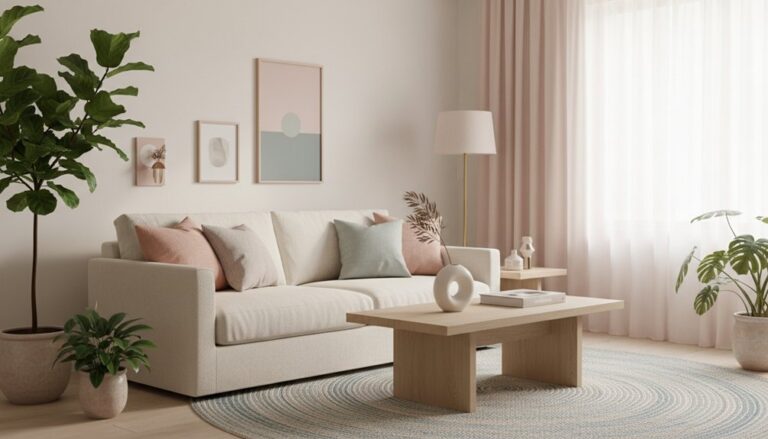
For warm contemporary, you’ll anchor the room with rounded silhouettes, tactile bouclé, oak, and brushed brass. Then plan conversational seating with a generous rug boundary.
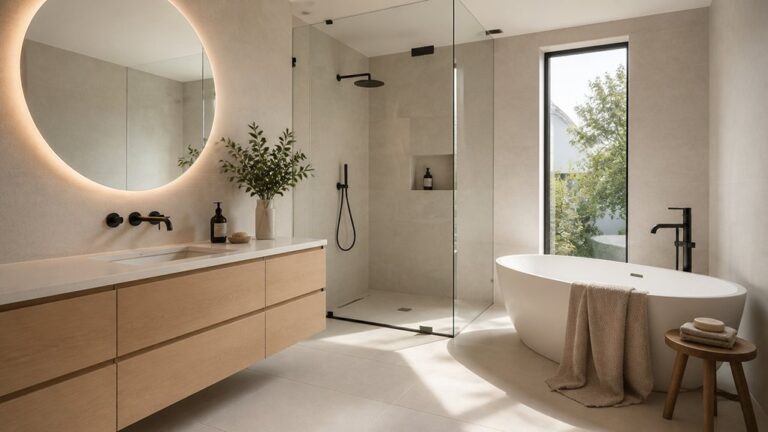
For minimal, you’ll edit hard: low-profile sectionals, slim-leg tables, and concealed storage. Keep circulation clear and let matte stone, glass, and blackened steel do the work.
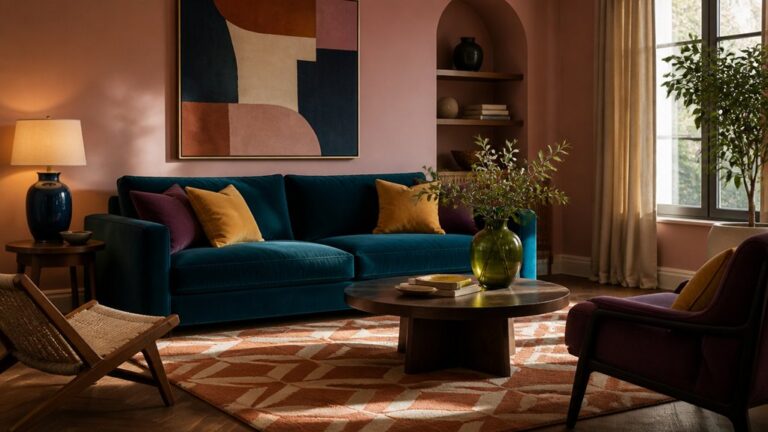
For bold, you’ll commit to sculptural forms, oversized art scale, and high-contrast materials like lacquer, chrome, and veined marble. Zone lighting to spotlight statements.
Lock in your Color schemes and decor styles early so every purchase supports the same visual rhythm.
Refresh Your Living Room Color Palette

Start with a modern base—think soft warm white, greige, or charcoal—to set clean sightlines and let your key pieces read as intentional.
Layer in trend-forward accents like clay, sage, or inky blue through textiles, art, and lacquered or matte finishes where you want the eye to land.
Then balance it all with neutrals in varied textures—bouclé, linen, light oak, and brushed metal—so the palette stays calm, cohesive, and contemporary.
Choose A Modern Base
If you want your living room to read “contemporary” at a glance, choose a modern base palette that sets a clean, flexible backdrop. Start with warm whites, soft greiges, or mineral taupes on walls to bounce light and make layouts feel open.
Anchor the room with one deep neutral—charcoal, ink, or espresso—on a large rug or sofa to ground sightlines and define zones.
Keep undertones consistent across paint, upholstery, and casegoods, then layer tactile materials: matte wood, brushed metal, boucle, and linen.
Use crisp black or bronze hardware to sharpen edges without visual clutter. This neutral framework lets Vintage accessories and Traditional artwork look intentional, not busy, because the background stays calm and gallery-like.
Finish with simple window treatments and streamlined trim for a tailored silhouette.
Add Trend Accent Colors
Because your modern neutral base already does the heavy lifting, you can refresh the room fast by threading in one or two trend-forward accent colors through high-impact, easy-swap pieces.
Start with Color psychology: earthy olive calms, cobalt sharpens focus, and terracotta warms conversation zones. Place the strongest hue where you want attention—behind the sofa, at the media wall, or framing a reading nook.
If you’re ready for paint, commit to an accent wall in a saturated matte to reduce glare and look more architectural. Echo that color in a velvet pillow, a lacquered tray, or a ribbed glass vase so it feels intentional, not random.
Keep finishes consistent, and use repetition to guide the eye across the layout.
Balance With Neutrals
Once you’ve introduced a bold accent color, keep it looking elevated by grounding it in a tight neutral framework that controls contrast and visual noise. Build your base with warm whites, oatmeals, greiges, or soft charcoals, then repeat them across the room to unify sightlines.
Treat walls and large upholstery as your “quiet zones,” and let the accent live on smaller, movable pieces like pillows, art, or a side chair. Layer materials for depth: linen drapery, matte ceramic, bouclé, light oak, and blackened metal read contemporary without feeling cold.
Use tonal variation instead of more hues—think cream sofa, sand rug, mushroom throws—for calming tones. With neutral color schemes, your accent pops, and the room stays edited and intentional.
Swap in Clean-Lined, Modern Furniture First

While accessories can shift the vibe, clean-lined, modern furniture does the heavy lifting by resetting your room’s proportions and flow. Start with a low-profile sofa and slender-armed chairs to open sightlines and make ceilings feel taller. Choose legs in blackened steel or light oak so the pieces visually “float,” a current look that reads airy, not bulky.
Dial in furniture arrangement by anchoring seating to a tight conversation zone, then pull pieces off the walls to create breathing room and clearer paths. Add a streamlined coffee table in stone, smoked glass, or walnut veneer for a layered, material-savvy mix.
Finally, refine lighting placement around how you actually use the room—reading, lounging, and circulation—so shadows fall cleanly and corners don’t feel dead.
Upgrade Lighting With One Statement Fixture
If your furniture has already streamlined the room, a single statement fixture can finish the reset by defining the living area and sharpening the sightlines. Center it over the seating zone to anchor the plan, then scale it to your ceiling height: a low-slung pendant for intimacy, a sculptural chandelier for volume.
Choose materials that read contemporary—brushed brass, matte black, opal glass, or ribbed acrylic—and keep the silhouette graphic so it holds its own without clutter. Put it on a dimmer to shift from bright task mode to warm ambient lighting at night.
For open layouts, use one bold piece to unify zones; for smaller rooms, pick a semi-flush profile that still delivers presence. Use statement fixtures strategically.
Layer Modern Textures With Rugs, Throws, Curtains
After you’ve dialed in the big pieces, modern texture is what keeps a contemporary living room from feeling flat. Start from the floor: choose Textured rugs with a low pile or flatweave for clean lines, then size up so at least the front legs of your sofa and chairs sit on it. Layer a smaller accent rug only if it clarifies zones, not clutter.
Add cozy throws in performance knits or brushed wool to soften leather, boucle, or sleek upholstery; fold them over an arm for controlled drape. Finish with curtains that manage light and acoustics—linen-look sheers for daytime glow, or tailored blackout panels for cinema contrast.
Keep the palette tight, but vary weave, nap, and sheen for depth.
Style With 3–5 Bold Contemporary Decor Accents
Once your textures feel cohesive, you can sharpen the room’s contemporary edge with just 3–5 bold accents that read intentional from across the space. Anchor one hero piece first: a sculptural coffee table in travertine, smoked glass, or blackened steel, sized to leave a clear 16–18 inches of circulation to seating.
Next, add statement lighting fixtures—an oversized globe pendant, linear LED bar, or arched floor lamp—to create a clean focal zone and layered glow.
Use Artistic wall displays to build a crisp vertical moment: a large-format canvas, a grid of framed abstracts, or a mixed-media panel, hung with the center at eye level.
Finish with one saturated accent, like a cobalt vase or rust boucle pillow, to punctuate the palette.
Clear Clutter to Keep the Room Feeling Contemporary
To keep your living room feeling contemporary, you’ve got to edit surfaces and shelves so negative space can read as intentional.
Hide cords and remotes with clean routing and low-profile organizers that disappear against wood, metal, or matte finishes.
Then anchor the plan with smart storage pieces—streamlined consoles, lidded baskets, or ottomans with hidden compartments—that keep essentials close but out of sight.
Edit Surfaces And Shelves
Even if you love collected pieces, contemporary rooms need breathing space, so edit every surface with intention. Start by clearing tabletops to a few sculptural surface accessories: a low ceramic bowl, a matte-black tray, and one oversized book. Group in odd numbers, vary height, and leave negative space so materials like stone, glass, and oak read clean.
Next, tune your shelving like a gallery wall. If you’re using artificial shelving or modular systems, align stacks to consistent edges and repeat finishes for a cohesive rhythm. Keep 30–40% of each shelf empty, and anchor the composition with one heavier object per bay.
Replace small knickknacks with one statement vase or a framed print, and rotate seasonal pieces instead of adding more. Your room will feel sharper instantly.
Hide Cords And Remotes
Because contemporary rooms read best when sightlines stay clean, you’ll want to disappear cords and corral remotes before you add any new decor. Start by mapping every power path from TV, lamps, and speakers, then shorten runs and route them along baseboards or behind furniture legs so they visually dissolve. Use paintable raceways, low-profile cord covers, and adhesive clips for clean cable management that matches your wall finish.
Upgrade where it counts: swap bulky hubs for Wireless technology, choose a wall-mounted power strip, and add a slim charging pad on the coffee table to cut visual noise.
For remotes, keep one minimal, matte sleeve or tray aligned with the sofa arm, and label buttons with tiny dots so you’ll grab the right one fast. Keep it disciplined, not fussy.
Choose Smart Storage Pieces
Once the cords and remotes stop stealing attention, smart storage keeps the room’s contemporary lines crisp and intentional. Choose low-profile media consoles with push-latch fronts, or floating cabinets that expose more floor for an airier plan.
For clutter control, assign zones: a tray for daily drop, a lidded box for chargers, and a file drawer for manuals and mail. Favor matte lacquer, light oak, smoked glass, or powder-coated steel to match today’s streamlined mix of warm and industrial.
Use modular shelves to frame art and hide baskets below; keep open cubbies to a minimum so styling stays deliberate. Add an ottoman with hidden storage to double seating and stash throws instantly.
Keep surfaces clear, and the room reads new.
Frequently Asked Questions
What Contemporary Decor Styles Work Best in Small Living Rooms?
In small living rooms, you’ll get the best results with Scandinavian minimalism, Japandi calm, or soft modern luxe. You keep furniture low-profile, float pieces off walls, and use modular seating to protect circulation.
Stick to tight color palettes—warm neutrals or monochrome with one accent—to reduce visual noise.
Choose slim lighting fixtures like track lights, sconces, and globe pendants to free floor space.
Mix matte woods, glass, and bouclé for depth.
How Can I Mix Contemporary Decor With Existing Traditional Pieces?
You can mix contemporary decor with traditional pieces by anchoring the room with a clean-lined modern sofa, then letting your classic wood table or heirloom chair act as a focal accent.
Keep scale consistent and edit extras. Use mixing textures—bouclé, leather, linen—against polished wood for contrast.
Focus on balancing colors: pull one warm tone from the traditional piece and repeat it in modern art and rugs.
Add slim metal lighting.
What’s a Realistic Budget Range for a Contemporary Living Room Refresh?
You’re looking at $500–$5,000, unless you’re auditioning for “Influencer Cribs,” then add a zero.
For Budget planning, set $500–$1,500 for textiles, lighting, and art; $1,500–$3,500 if you swap a rug, coffee table, and accent chair; $3,500–$5,000 with a new sofa.
Nail Color palette selection first, then space-plan sightlines.
Choose performance fabrics, matte metals, and durable wood veneers.
Where Should I Shop for Affordable Contemporary Decor and Furniture?
Shop big-box modern basics at IKEA, Target, and Walmart for clean-lined seating and storage. Then layer in West Elm Outlet, Article sale sections, and CB2 clearance for upgraded silhouettes. You’ll score Artistic accents at HomeGoods, Etsy, and Society6, plus Vintage finds at thrift stores, estate sales, and Facebook Marketplace.
Plan around your room’s traffic flow, prioritize durable performance fabrics, and choose wood/metal mixes for a high-low finish. That photographs.
How Do I Choose Contemporary Decor That’s Kid- and Pet-Friendly?
Choose contemporary decor by prioritizing performance and layout: you’ll want rounded edges, low-tip silhouettes, and secured shelving—key child proofing tips.
Specify pet friendly materials like performance velvet, solution-dyed acrylic, microfiber, and tightly woven rugs; skip looped piles and delicate bouclé.
Plan clear circulation paths and stashable toys with closed storage.
Use wipeable matte finishes, washable slipcovers, and wall-mounted lighting to keep surfaces and cords safe.
Conclusion
Your refreshed living room becomes a compass: warm, minimal, or bold, it points your days toward calm. You’ve tuned the palette like a new playlist, then anchored the plan with clean-lined furniture that lets circulation breathe. One statement light hangs like a modern moon, sharpening every edge. Rugs, linen throws, and textured curtains add quiet rhythm. Finish with 3–5 sculptural accents, then clear clutter—so the space stays sleek, current, and open.
About the Author