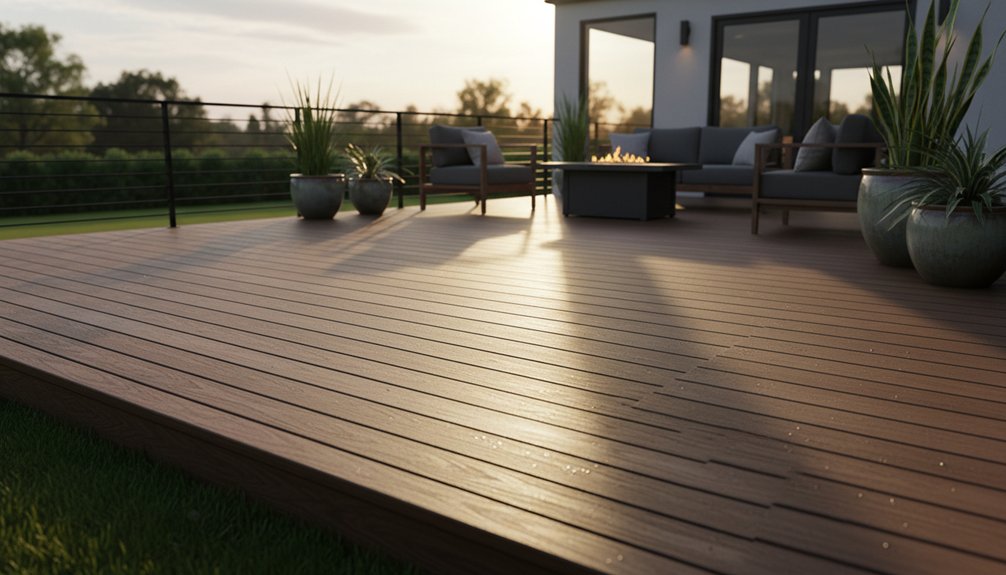
Composite decking is a sagacious pick for modern homes because you get a clean, consistent look with hidden fasteners and wood-grain options, plus long-term durability. It’s made from wood fibers and recycled plastics with UV stabilizers, and many boards add a protective cap to resist stains and fading. You’ll spend less time sanding, sealing, or fixing splinters, and it holds up better to rot, insects, and weather swings. Next, you’ll see how to choose the right cap, core, and warranty.
Key Takeaways
- Composite decking blends wood fibers and recycled plastics for uniform strength, fewer voids, and consistent screw holding.
- It resists rot, insects, warping, and splinters, delivering long-term durability with less maintenance than wood.
- Capped surfaces and UV stabilizers improve stain resistance and slow fading, keeping color consistent through harsh weather.
- Hidden fasteners, clean edges, and modern colorways complement minimalist architecture, metal rails, and large glass openings.
- Recycled content and low-VOC formulations support eco-conscious builds while reducing lifetime repairs, replacements, and upkeep costs.
What Is Composite Decking Made Of?

So, what’s composite decking actually made of? You’re typically looking at a blend of wood fibers (often reclaimed sawdust) and recycled plastics like polyethylene, plus pigments, UV stabilizers, and binding additives.
Some boards add a protective cap layer for extra stain and fade resistance, so you get a consistent surface without relying on heavy coatings.
During the manufacturing process, makers heat and mix the ingredients, then extrude or mold the blend into boards and cool it under controlled conditions. That tight control helps you get uniform density, predictable screw holding, and fewer voids.
If you’re weighing Environmental impact, check recycled content percentages, sourcing claims, and third-party certifications. You’ll also want to confirm whether the core, cap, or both contain recycled material.
Is Composite Decking Better Than Wood Decking?

Although composite decking often costs more upfront, it can beat wood decking in the areas that matter most day to day—maintenance, durability, and long-term appearance—while wood still wins if you want the lowest initial price, easy refinishing, or a natural grain you can stain to taste.
For a clear Cost comparison, count more than boards: composite usually needs fewer replacements, fewer sealers, and fewer weekend sanding sessions. You’ll also deal with fewer splinters, less warping, and better resistance to rot and insects, especially in wet or shaded yards.
Wood can perform well, but you’ll need a regular cycle of cleaning, staining, and spot repairs.
On Environmental impact, composites often use recycled content, while responsibly sourced wood can be renewable—check certifications and product disclosures.
Why Composite Decking Fits Modern Home Design
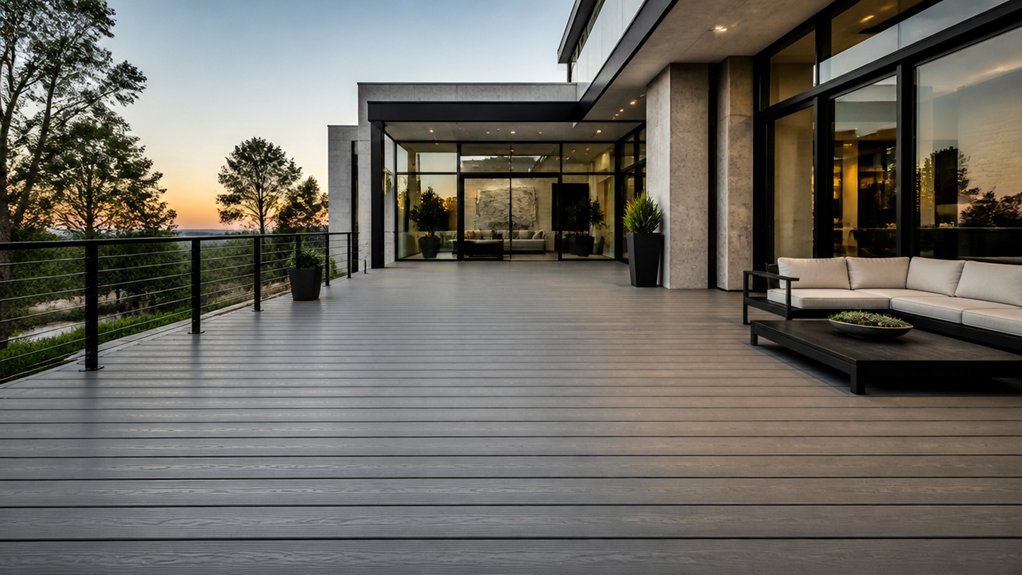
Composite decking already makes sense for low-maintenance, long-lasting performance. It also matches the clean lines and intentional finishes that define modern home design. You can choose consistent, uniform boards that complement minimalist facades, large glass openings, and metal rail systems without the visual noise of knots or uneven staining.
You’ll get aesthetic versatility through varied colorways, subtle wood-grain embossing, and matching fascia that creates crisp edges and seamless picture-frame borders. You can also specify hidden fasteners for a smooth surface and align board direction to guide sightlines from indoor flooring to outdoor zones.
If you’re prioritizing eco friendliness, you can select brands that use recycled content and offer low-VOC options, supporting a cleaner, more intentional material palette overall.
How Does Composite Decking Handle Real Weather?
When real weather hits—summer heat, freeze-thaw cycles, driving rain, and hard UV exposure—you need a deck surface that stays stable without constant upkeep. Composite decking is engineered to limit moisture uptake, so boards resist swelling, splitting, and warping when humidity swings or snowmelt lingers.
Its capped surface helps block staining from rain-borne grime and slows UV fade, keeping color more consistent through long sunny seasons. In cold climates, the dense core reduces cracking from repeated expansion and contraction, supporting better weather resilience year after year.
You’ll still want proper spacing, ventilation, and fastener placement to manage drainage and thermal movement, but the material tolerates harsh swings with fewer structural surprises. Over time, that predictable performance supports real material longevity and value.
Composite vs Wood: Maintenance and Cleaning
When you compare composite to wood, you’ll notice the upkeep schedule changes fast—composite typically needs routine washing, while wood often demands regular sealing or staining.
You can clean composite with a hose, mild soap, and a soft-bristle brush.
Wood, on the other hand, may require specialty cleaners and more careful scrubbing to avoid damage.
You’ll also deal with fewer stain and mold headaches on composite, while wood can absorb spills and moisture unless you stay on top of protection.
Upkeep Frequency Compared
Although both materials can look great outdoors, their upkeep schedules couldn’t be more different. With composite decking, you’ll typically stick to light, routine attention and a seasonal once-over to keep surfaces looking consistent. You won’t plan for annual sealing, staining, or repainting, so your calendar stays open for actual relaxation and hosting.
Composite also supports gardening compatibility because you can focus on planting and watering nearby without budgeting extra time for frequent finish touch-ups.
With wood, you’ll schedule more recurring work: regular inspections for splinters, warping, and fastener issues, plus periodic refinishing based on sun and moisture exposure. If you keep heavy outdoor furniture in place, you’ll likely monitor wear patterns more often and plan quicker corrective upkeep.
Cleaning Methods And Tools
Because dirt and spills behave differently on plastic-wood blends than on natural grain, you’ll get the best results by matching your cleaning tools to the deck material.
On composite, start with a soft-bristle broom and a hose rinse; scrub traffic lanes with mild soap and warm water using a nylon brush, then rinse thoroughly. Use a fan-tip washer only on low pressure and keep the wand moving to avoid surface wear.
On wood, you’ll need stiffer bristles and a wood-safe cleaner; follow the grain and don’t soak boards. Sweep under outdoor furniture weekly so grit doesn’t grind in.
For pest control, clear leaf litter from gaps and around posts, and vacuum crevices where insects hide. Finish by checking fasteners and resetting furniture pads.
Stain And Mold Resistance
Why do some decks shrug off red wine and pollen while others seem to “remember” every spill? Composite boards seal pigment and moisture out, so you’ll wipe most messes with warm water and mild soap.
On wood, stains sink into pores and grain, so you often need sanding, brighteners, or spot staining to reset the surface. For mold, composite resists absorption, but you still must clear leaf litter and rinse shaded areas so spores can’t feed on trapped debris.
Wood holds moisture longer, so you’ll scrub more and re-seal regularly. Composite also helps with color consistency: cleaning won’t strip finish or create patchy touch-ups.
Plus, fewer harsh cleaners and coatings can reduce environmental impact over the deck’s lifespan.
Composite Decking Safety: Slip, Splinters, Heat
When you’re choosing composite decking, safety should sit right alongside style and longevity. You’ll get better footing because many boards use textured embossing and added grip, helping reduce slips from rain, pool splash, or morning dew.
You also avoid painful splinters and snagged socks since composite won’t crack or shed sharp fibers like weathered wood. In hot sun, boards can warm up, so you’ll want to place shade sails, pergolas, or planters to cool key walking zones, especially for kids and pets.
Smart Garden integration lets you route paths through shaded planting beds, while aesthetic customization helps you pick lighter tones and matte finishes that absorb less heat. Clean debris often for traction.
How to Choose Composite Decking Boards (Cap, Core, Warranty)
Although composite decking boards can look similar on the rack, you’ll get very different real‑world performance depending on the cap, the core, and the warranty behind them.
Start with the cap: choose a fully capped board (all four sides) if you want stronger stain, fade, and moisture resistance, especially near grills or pools. Check texture and color consistency to protect your outdoor aesthetics over time.
Next, compare the core. A higher wood-plastic ratio can feel more rigid, while more polymer boosts water resistance. Ask for lab ratings on swelling and slip.
Look for solid or reinforced profiles in high-traffic spans to improve material durability.
Finally, read the warranty details: coverage length, labor exclusion, and what voids it (improper spacing, nonapproved fasteners). Match specs to your site.
Frequently Asked Questions
How Much Does Composite Decking Typically Cost per Square Foot Installed?
You’ll typically pay $25–$55 per square foot installed for composite decking, depending on board grade, substructure work, and local labor rates.
You can keep costs down by choosing midrange boards and a simple layout.
Material durability often justifies higher-priced lines in harsh climates.
Maintenance requirements stay low, but you still budget for cleaning and occasional fastener or railing checks.
Get itemized quotes to compare.
Can Composite Decking Be Installed Over an Existing Concrete Patio?
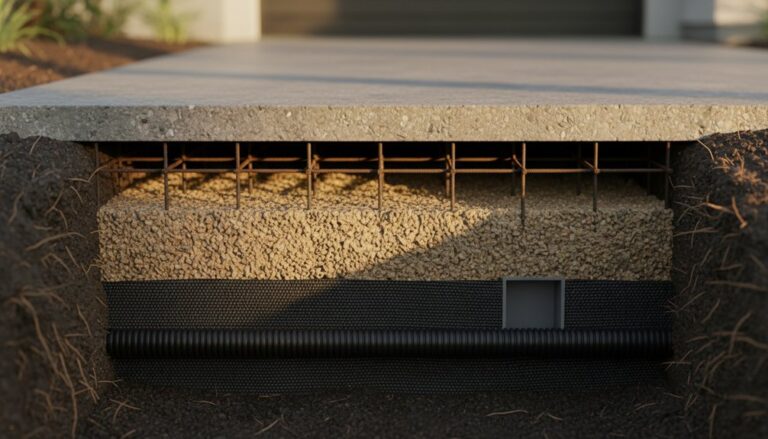
Yes, you can install composite decking over an existing concrete patio—solid slab beneath, warm boards above. You’ll start with subsurface preparation: clean, level, and fix cracks or drainage so water won’t pool.
Then you’ll add structural support using sleepers or a low-profile frame, anchored to concrete with appropriate fasteners. Keep airflow gaps, maintain proper slope, and avoid trapping moisture.
If the slab’s heaving, you shouldn’t cover it.
Does Composite Decking Fade or Stain From Grills, Wine, or Sunscreen?
Yes, composite decking can fade a bit and it can stain, but you can manage both with smart Deck maintenance and good habits.
You’ll see the most fading from strong UV over time, especially on darker boards.
Grills, wine, and sunscreen can leave spots if you don’t wipe them quickly.
For Surface durability, use mats under grills, clean spills with soap and water, and avoid harsh solvents.
Are There Eco-Friendly or Recycled Composite Decking Options Available?
Yes—you’ve got eco-friendly and recycled composite decking options. Picture plastic bags and sawdust reborn as clean, splinter-free boards: landfill clutter versus a tidy, durable deck.
Look for brands using high-percentage Recycled materials (post-consumer and post-industrial) and verify claims with EPDs or third-party certifications.
Choose boards with low-VOC, Eco friendly finishes to reduce odors and emissions.
Ask about take-back programs and local sourcing, too.
What Deck Board Colors Best Boost Resale Value for Modern Homes?
Choose mid-tone, natural hues—warm gray, driftwood, light walnut, or greige—to boost resale value in modern homes. You’ll get broad buyer appeal, easy color coordination with black aluminum rails, white trim, and neutral siding, and strong aesthetic appeal without looking trendy.
Avoid bold reds or very dark boards unless your exterior is high-contrast; they can polarize buyers and show heat or fading faster. Match undertones to your façade.
Conclusion
Choose composite decking and you’ll feel like you’ve outsmarted every warped, splintery wood board on the planet. You get a clean, modern look that won’t quit, plus boards built to shrug off sun, rain, and freeze-thaw tantrums. You won’t be sanding, staining, or chasing rot every season—just quick washes when it’s grimy. Pick capped boards for stain resistance, check the core for strength, and lock in a strong warranty.
About the Author