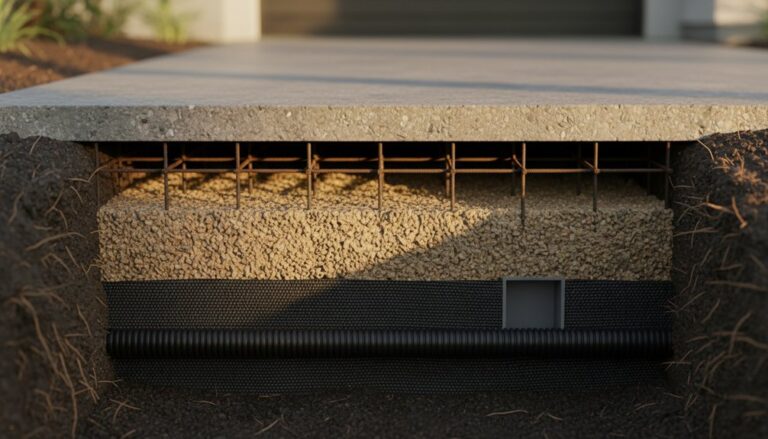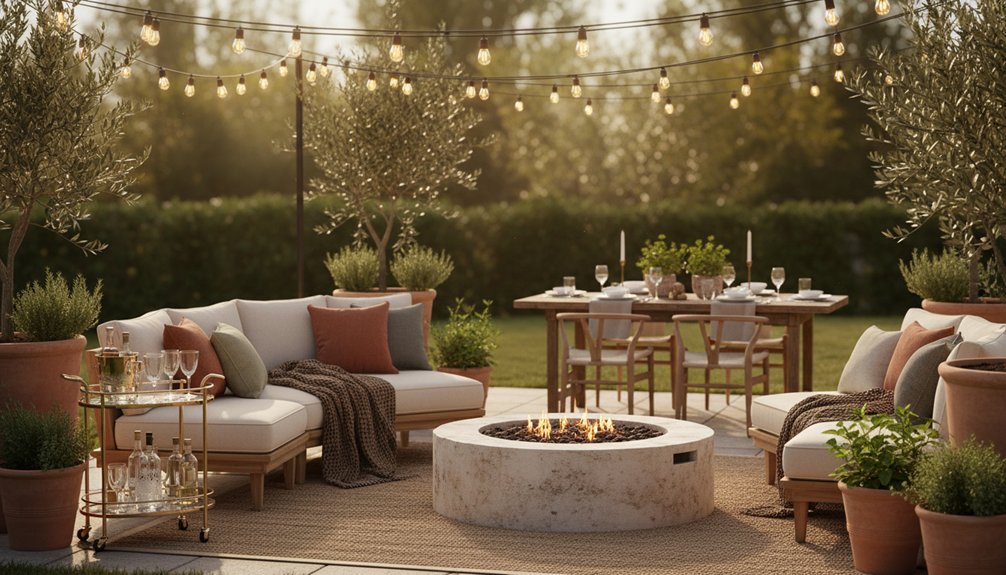
Start by zoning your patio for dining, lounging, and clear 36-inch pathways, then place dining near the door, cooking downwind, and a quiet nook behind breezy slatted screens. Map sun, wind, and drainage so you can add the right shade—sails, a pergola, or a retractable awning. Choose scaled seating with washable, solution-dyed cushions, plus nesting tables and a vented storage box. Finish with warm 2700K solar LEDs, recycled rugs, and planter-based privacy—more tips follow.
Key Takeaways
- Plan distinct zones for dining, cooking, and lounging, and connect them with 36-inch pathways that avoid pinch points and poor drainage.
- Place dining near the door, cooking downwind, and a quiet nook screened with slatted panels, bamboo, or planters for breezy privacy.
- Choose compact, weather-resistant seating with washable cushions, layered throws, and an outdoor rug sized to anchor front legs for cozy comfort.
- Add versatile surfaces using nesting side tables, adjustable-height coffee tables, and a slim rolling cart to flex between relaxing and hosting.
- Layer warm 2700K lighting with task lights, string lights, and accent uplights, using solar fixtures and outdoor-rated power for safety.
Plan Your Cozy Patio Zones and Pathways
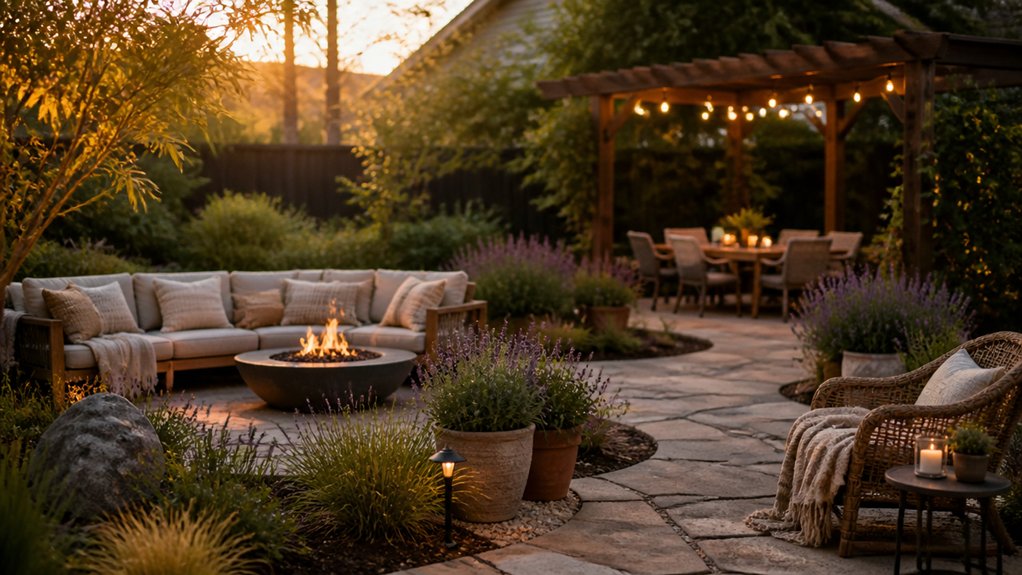
Before you buy furniture or lay a single paver, map out how you’ll actually use the patio by defining clear zones and the pathways that connect them. Measure sun, shade, wind, and drainage, then place activity areas where conditions fit: a dining zone near the door, a cooking zone downwind, and a quiet nook screened from views.
Align the plan with your garden layout so beds, trees, and water access support each zone without pinch points.
Set pathways at least 36 inches wide, widen at turns, and keep grades under 5% when you can. Choose permeable pathway materials—gravel, decomposed granite, permeable pavers, or spaced flagstone over groundcover—to reduce runoff and heat.
Edge with reclaimed stone to limit spread.
Choose Cozy Patio Seating for Lounging and Guests
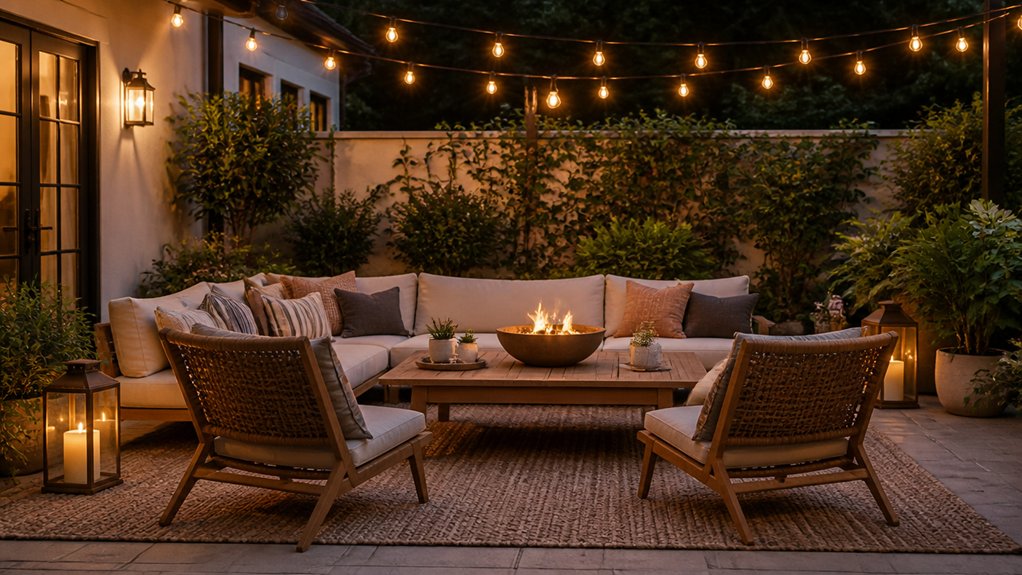
Balance lounging and meals by mixing a compact dining set with a low-profile sofa or pair of lounge chairs, scaled to your patio’s footprint and traffic flow.
Layer durable, washable cushions and throws in weather-resistant, recycled or natural fabrics so you stay comfortable without constant replacements.
Keep guests covered with flexible extra seating—stackable chairs, folding stools, or a storage bench you can pull into the circle when needed.
Mix Lounge And Dining
How do you make a patio feel inviting for both slow mornings and last-minute guests? Mix lounge and dining zones so you can sip coffee, then serve a meal without rearranging everything.
Anchor a compact dining set near the outdoor kitchen to shorten trips and keep traffic off planted areas. Place low lounge chairs or a loveseat opposite, angled toward conversation and the best view.
Leave a clear 36-inch path between zones for easy flow and safer carrying. Choose FSC-certified wood, recycled aluminum, or modular pieces you can reconfigure as your guest list changes.
Use landscaping elements—planter boxes, a narrow hedge, or permeable pavers—to define edges, reduce runoff, and soften sound.
Add a small side table for shared snacks and drinks.
Layer Cushions And Throws
Even if your patio furniture stays minimal, you can make it feel instantly welcoming by layering cushions and throws that add warmth, color, and comfort on demand. Choose outdoor textiles rated for UV and moisture so they won’t fade fast or feel clammy after a cool evening.
Mix a few firm seat cushions with softer back pillows to support long chats, then drape a throw where you’ll actually reach for it.
Keep your palette tied to your planters and exterior paint, and use texture—bouclé-look, canvas, or woven stripes—to add depth without clutter.
For sustainability, buy replaceable covers, not disposable pillows, and store them in a breathable bin.
Stay on top of cushion maintenance: shake out debris, spot-clean spills, and air-dry fully to prevent mildew.
Add Flexible Extra Seating
Once you’ve layered cushions and throws, make sure you’ve got enough places for people to actually settle in. Build your layout around modular seating so you can shift pieces from a quiet chaise setup to a conversation circle without crowding pathways.
Choose weather-rated frames and replaceable covers so you extend life and cut waste. Tuck a slim bench along the wall, then pull it forward when you host.
Keep a pair of portable chairs on hooks or in a deck box; they’re easy to grab for extra guests and quick to stow after.
Prioritize FSC-certified wood, recycled aluminum, or responsibly made resin, and add felt pads to protect pavers and reduce noise. Keep circulation clear.
Add Patio Tables, Trays, and Movable Surfaces
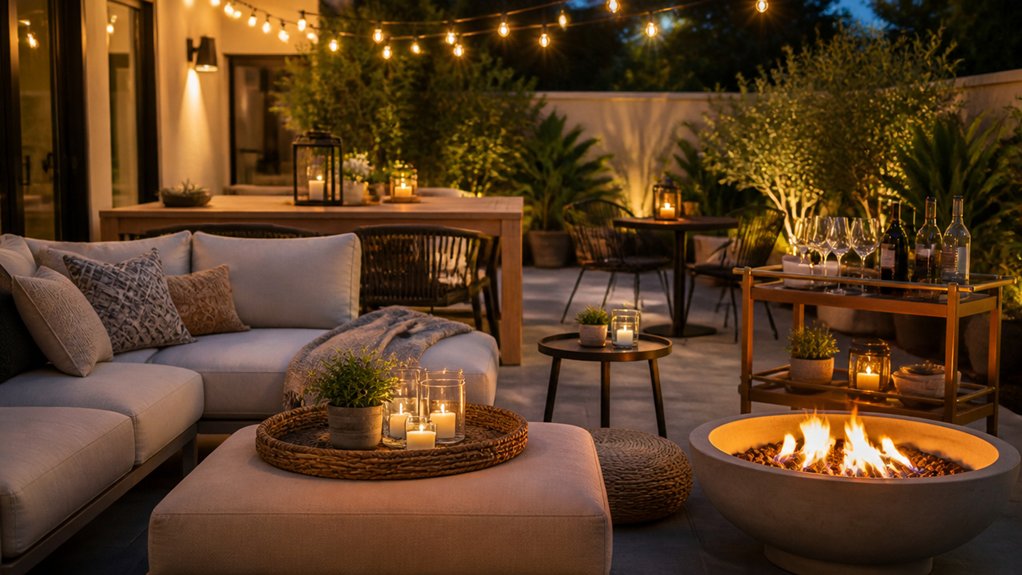
Once you’ve set your seating, anchor the layout with versatile patio tables that fit your footprint and handle drinks, plates, and a book without crowding pathways.
Choose durable, weather-ready materials like FSC-certified wood, recycled metal, or powder-coated aluminum so you won’t replace them season after season.
Add trays and a slim cart to move snacks, candles, and plants where you need them, then tuck everything away fast when the weather shifts.
Choose Versatile Patio Tables
Because your patio needs to flex from morning coffee to dinner with friends, choose versatile patio tables and movable surfaces that can shift with the moment. Start with a compact bistro table for tight corners, then add a nesting side table that tucks under seating when you need floor space.
Look for multifunctional furniture with slim profiles and stable, weighted bases that won’t tip on pavers or decking gaps. Choose convertible tables that adjust height from lounge to dining, so you can swap from snacks to full plates without rearranging everything.
Prioritize FSC-certified wood, recycled aluminum, or powder-coated steel for long life and easier maintenance. Add felt pads or leveling feet to protect your surface and keep things steady outdoors year-round.
Use Trays And Carts
When you want your patio to shift from solo lounging to hosting without clutter, rely on trays and a slim outdoor cart to create instant “landing zones” wherever you need them. Choose weather-safe trays in recycled plastic, bamboo, or powder-coated steel, and size them to your armrest, ottoman, or dining table so glasses don’t wobble.
Use tray organization to group napkins, citronella, coasters, and a small vase, then carry everything out in one trip and back in just as fast.
Add a cart with locking casters, a removable top, and drainage-friendly shelves for bottles and a pitcher. With cart mobility, you’ll roll snacks to the conversation area, park by the grill, and stash extras under a fitted cover between gatherings.
Layer Cozy Patio Lighting (Power, Safety, Ambiance)
Although your patio may feel inviting in daylight, layered lighting turns it into a comfortable, usable space after dark by balancing power needs, safety, and ambiance.
Start with task lighting where you cook, serve, and step—sconces near doors, a downlight over the grill, and low path lights along pathways to prevent trips.
Add mid-level glow with string lights or lanterns to soften edges without glare.
Finish with accents—uplights on a planter or wall wash on textured siding—to create depth.
Choose solar power for portable stakes and table lamps, then reserve hardwired fixtures for high-use zones.
Use warm LEDs (2700K) to cut energy use.
Prioritize electrical safety with outdoor-rated cords, GFCI outlets, and weatherproof covers.
Add Cozy Patio Shade and Privacy Screens
Good lighting keeps your patio usable after sunset, but shade and privacy make it comfortable for longer stretches of the day and more relaxing at night. Start by mapping sun angles and sightlines from neighbors, then choose shade solutions that fit your footprint: a retractable awning for flexible coverage, a UV-rated sail for a sleek span, or a pergola with adjustable louvers for airflow.
Specify FSC-certified wood or recycled-aluminum frames, and use light-colored, solution-dyed fabrics to cut heat and resist fading. For privacy options, mount exterior-grade slatted panels, bamboo rolls, or perforated metal screens where you need visual buffering without blocking breezes.
Anchor posts to proper footings, verify wind ratings, and keep access paths clear.
Use Planters to Soften and Define the Patio
Because hard edges and wide-open paving can feel stark, you can use planters to carve out “rooms” on your patio while softening the perimeter with living texture. Place large, frost-proof pots at corners to visually anchor seating zones, and line narrow edges with troughs to guide circulation without building permanent walls.
Match planters to your microclimate: choose drought-tolerant herbs and natives for hot exposures, and shade lovers where screens block sun.
Build container gardens with peat-free mix, compost, and a topdressing of gravel to reduce splash and evaporation. Add saucers only where runoff won’t stain paving.
Use vertical planters on blank fences to lift greenery off the slab, boost privacy, and create habitat. Group pots to share drip lines and simplify watering.
Finish Your Cozy Patio With Rugs, Pillows, and Decor
Once you’ve shaped the patio with planters and clear pathways, add outdoor rugs, pillows, and a few purposeful decor pieces to make the space feel finished and comfortable underfoot. Choose a recycled-polypropylene rug sized to tuck under front legs of seating, so it anchors conversation without blocking drainage.
For outdoor textile layering, pair quick-dry cushions with one weatherproof throw, and store extras in a vented deck box to prevent mildew.
Keep decorative accent choices intentional: a solar lantern for task light, a small side table for drinks, and one statement planter or wall hook for vertical interest. Pick washable, solution-dyed fabrics, and swap plastic decor for FSC wood, metal, or ceramic.
You’ll get comfort, durability, and less waste season after season.
Frequently Asked Questions
How Do I Weatherproof Patio Furniture Cushions for Year-Round Use?
Weatherproof your patio cushions by choosing Outdoor fabric covers with UV and water-resistant coatings. Then seam-seal and add zipper flaps to block leaks.
Spray a PFAS-free, eco-certified fabric protectant, and reapply seasonally after cleaning with mild soap.
Elevate cushions off wet decking, and rotate them for even sun exposure.
Prioritize breathable Cushion storage: vented deck boxes or dry bags prevent mold while reducing waste.
Repair small tears.
What Is the Best Patio Layout for Small Balconies and Tight Spaces?
You’ll get the best layout by hugging seating to the perimeter and keeping a clear “soft pathway” through the center.
Use Compact furniture arrangements: a foldable bistro set, slim bench with storage, or wall-mounted drop-leaf table.
Add Balcony railing decor with planters or a hanging herb rail to free floor space.
Choose FSC wood, recycled metal, and washable covers, and favor stackable pieces so you can reset the space quickly.
How Can I Keep Mosquitoes and Bugs Away Without Harsh Chemicals?
You can keep mosquitoes and bugs away by blocking entry, removing breeding spots, and using gentle deterrents. Install bug netting around seating or under an umbrella to create a physical barrier.
Dump standing water weekly, scrub saucers, and keep gutters clear.
Use Natural repellents like citronella, lemon eucalyptus, or cedarwood in candles or diffusers, and plant basil or lavender.
Add a fan; airflow disrupts flight and bites outdoors.
Which Patio Materials Stay Coolest Under Direct Summer Sun?
You’ll keep patios coolest with light-colored, permeable materials like pale concrete pavers, limestone, or decomposed granite. Dark surfaces can run 10–25°F hotter in peak sun, so choose high-albedo color schemes.
Specify permeable joints to cut heat and manage stormwater. Add shade sails and trees, then use low-glare, warm-temperature lighting options (2700–3000K LEDs) to avoid re-heating surfaces at night and reduce energy use too.
Do I Need a Permit for a Patio Cover, Fire Pit, or Outdoor Heater?
You’ll often need a permit, but it depends on your city, HOA, and project scope.
For Patio cover permits, check size, attachment to the house, electrical, and wind/snow-load requirements; many jurisdictions require plans.
Fire pit regulations usually address setbacks, fuel type, spark screens, and burn bans.
Outdoor heaters may trigger gas-line or electrical permits.
You should call your building department and fire marshal first, then choose efficient, low-emission options.
Conclusion
You’ve turned your patio into a flexible retreat by zoning traffic, choosing lounge-ready seating, and adding movable surfaces for easy hosting. Layer safe, efficient lighting and pair shade with privacy screens so you can linger longer. Finish with planters, rugs, pillows, and decor that hold up outdoors and avoid fast-waste. One standout stat: good outdoor lighting can cut energy use by up to 75% when you switch to LEDs, keeping your vibe bright and your bills light.
About the Author